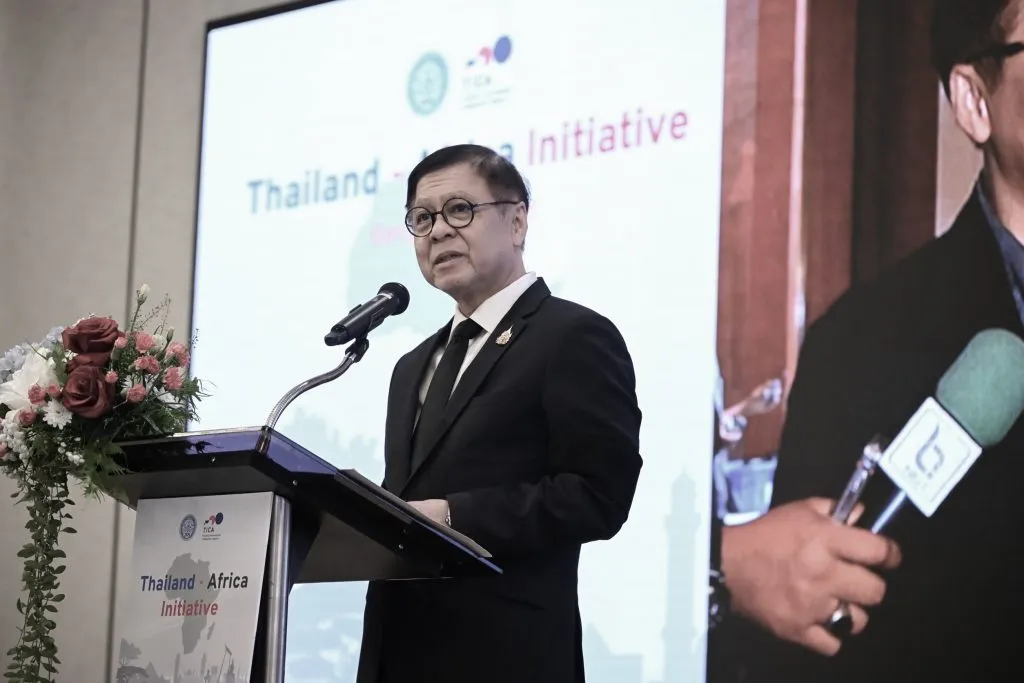
On December 8th, 2025, Thailand formally relaunched the Thailand-Africa Initiative (TAI), positioning it as a more structured and results-oriented framework for engaging African partners at a time of shifting global alignments. Presiding over the relaunch in Bangkok, Thai Foreign Affairs Minister Sihasak Phuangketkeow underscored the renewed initiative as being about sustained cooperation between fellow developing economies.
First introduced in 2013, TAI has now been recalibrated around four pillars of cooperation, specifically political, economic, developmental, and global strategic cooperation. Thai officials say the redesign reflects an effort to adapt the initiative to current global conditions, with an emphasis on structured, consistent, and sustainable partnerships that deliver practical benefits.
For Thailand, the initiative reinforces its aim to serve as a bridge between Asia and Africa. For African nations, it offers improved access to Asian markets, applied technologies, and development expertise, particularly in sectors where Thailand has accumulated considerable practical experience.
Rice diplomacy with actual impact

One of the clearest expressions of TAI’s new emphasis on deliverables has been in the agricultural sector, as highlighted by a flagship partnership between Kasetsart University and the Africa Rice Center (AfricaRice). The two institutions signed a memorandum of understanding during the relaunch, witnessed by Minister Sihasak and his Nigerian counterpart, Yusuf Maitama Tuggar, who was on an official visit to Bangkok.
The collaboration targets four areas critical to Africa’s food security:
- Climate-Resilient Varietal Development – Accelerating the development of suitable rice strains via advanced breeding, germplasm exchange, and genome-editing technologies.
- Nutrition and Biofortification – Tackling micronutrient deficiencies through enhanced rice products adapted for African consumers.
- Mechanization and Post-Harvest Technologies – Promoting rice mechanization solutions, including possibly establishing a post-harvest equipment assembly facility.
- Capacity Building and Youth Engagement – Strengthening African research and extension systems through joint training programs, technical exchanges, and skills development.
Advanced rice-breeding techniques and genome editing are intended to accelerate varieties suited to drought, flooding and poor soils, which are persistent constraints across much of the African continent.
The partnership reflects the principles of shared expertise and mutual benefit, combining AfricaRice’s regional reach with Thailand’s scientific capabilities to deliver practical results.
Investment corridors for mutual prosperity
Beyond agriculture, TAI is designated to catalyze two-way economic engagement. Priority sectors include renewable energy, mining and natural resources, digital innovation, agribusiness, and tourism. Thai authorities are keen to frame Africa not as a distant frontier market, but as a set of diverse, fast-growing economies where Thai firms can partner, co-invest, and localize. Recent Uganda-focused business forums in Bangkok illustrate this approach in practice, highlighting investment incentives, regional market access through East Africa and COMESA, and early successes in tourism cooperation. Officials point to rising bilateral trade figures as evidence that interest is already translating into deals.
A cautious but confident outlook

The relaunch of TAI also comes with an expressed emphasis on risk management and sustainability. Thailand is pitching its stable business environment, skilled workforce, innovation hubs as a secure base from which companies can expand into African markets, while encouraging socially responsible investment aligned with global development goals.
For African partners, the appeal lies in a partnership framed as cooperation between peers, rather than a traditional donor-recipient relationship. The relaunch therefore reflects a shift towards more practical, implementation-focused diplomacy, with an emphasis on projects that can be pursued over the long term.
In an era where middle-power partnerships are gaining increasingly prominent weight, Thailand’s recalibrated Africa policy signals a mature and pragmatic effort to turn long-standing goodwill into measurable, long-term cooperation.