Thailand has been positioning itself as a pragmatic bridge-builder at a time when global cooperation is becoming increasingly strained. Speaking at the 5th Sustainability Week Asia, Thai Foreign Minister Sihasak Phuangketkeow delivered the keynote, calling for a more agile regional response to energy shocks, climate pressures, and a fractured multilateral system.
Addressing more than 1,000 policymakers, industry executives, and civil society leaders gathered at the forum, the Foreign Minister framed current geopolitical tensions as both a constraint and an opportunity, arguing that middle powers, including Thailand, must step forward. In this evolving landscape, ASEAN is increasingly seen as a testing ground for whether regional cooperation can still deliver meaningful results.
Energy security as a wake-up call
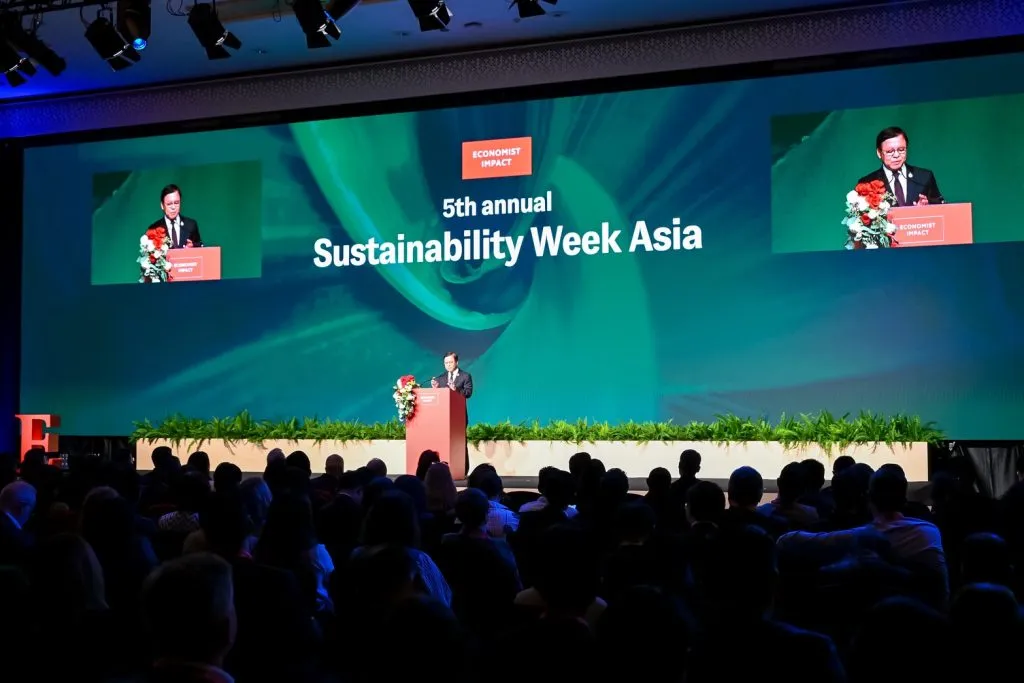
Sihasak also did not shy away from acknowledging areas of concern, pointing to the ongoing crisis in the Middle East as a stark reminder of Southeast Asia’s vulnerability to external shocks.
“Recent tensions in the Middle East have reminded us how vulnerable we are to fossil fuel dependence and concentrated supply chains,” said Sihasak. Energy security, he argued, must now be treated as an urgent regional priority.
Furthermore, the Foreign Minister stressed the need to accelerate the transition to renewable energy without compromising stability, adding that resource-rich members such as Indonesia, Malaysia, and Brunei could play a more strategic role in strengthening regional resilience.
At the same time, Thailand is pressing ahead with its net-zero commitments and legislative efforts to position itself as a driver of both sustainable policy and practice.
Rethinking ASEAN’s playbook
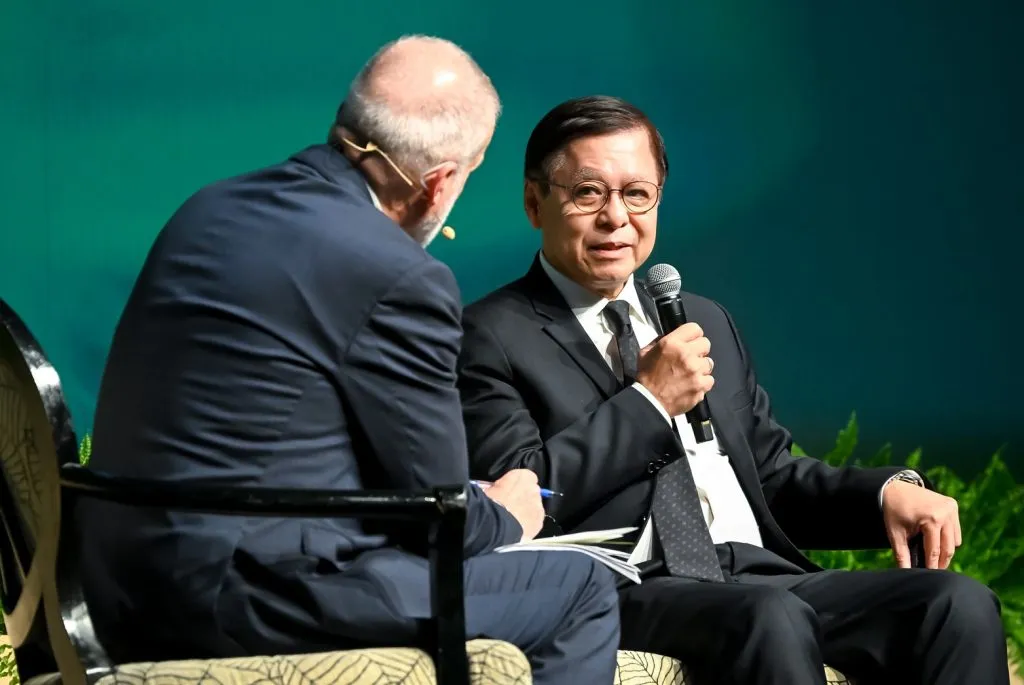
Perhaps the most candid part of Sihasak’s remarks centered on ASEAN’s internal dynamics. The bloc’s longstanding reliance on consensus, he noted, often leads to diluted outcomes and a “lowest common denominator” approach that struggles to keep pace with fast-moving crises.
He, therefore, suggested that greater flexibility and a willingness to rethink principles like strict non-interference may be necessary in an interconnected world where domestic issues quickly spill across borders. The goal, he emphasized, should be to make ASEAN’s identity more responsive and capable of translating its oft-cited “centrality” into real-world impact.
Sustainability beyond slogans
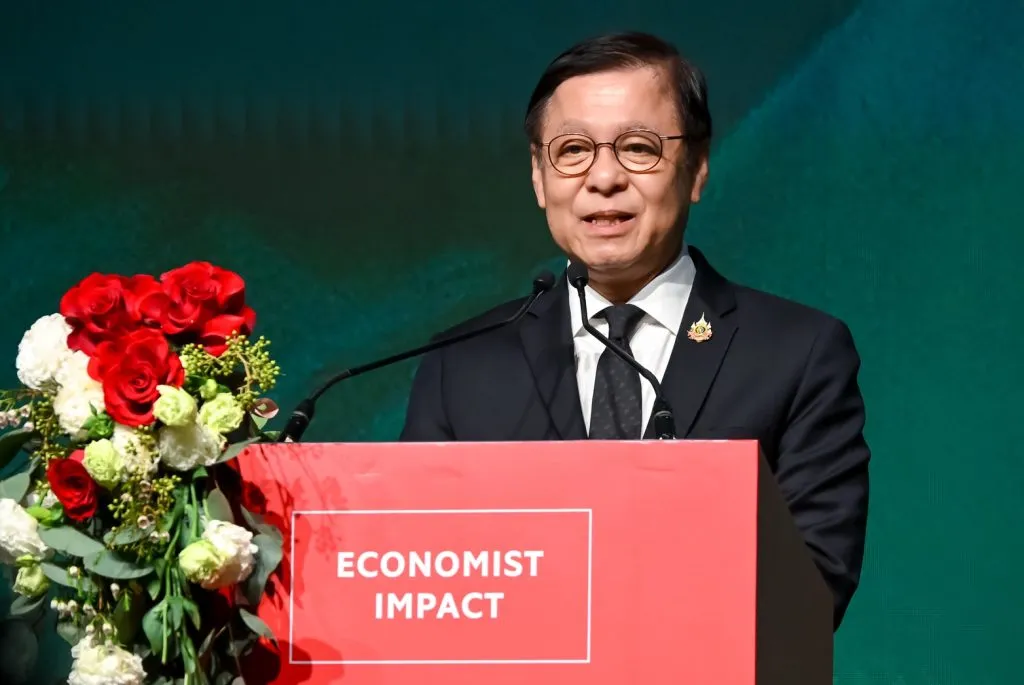
Throughout his keynote, Sihasak cautioned that sustainability should not be sidelined by geopolitics. Instead, he said it must be integrated into the region’s strategic thinking, linking energy security, economic growth, and long-term stability.
“You cannot build a green factory in a red zone,” he said, in one of his speech’s most pointed lines. “The most pressing challenge to sustainability today is not just carbon. It is peace.”
He also highlighted Thailand’s efforts to extend this vision beyond Southeast Asia, including development cooperation initiatives with African partners under the Thailand–Africa Initiative (TAI).
As Sustainability Week Asia marked its fifth edition in Bangkok — itself a growing hub for green finance and policy dialogue — the broader shift unfolding was that progress in a divided world will likely depend less on grand global consensus and more on whether regions like ASEAN can act decisively.
For Thailand, that means deliberately stepping into leadership roles alongside fellow ASEAN member states to help shape what sustainable cooperation will look like in the years ahead.
“Thailand stands ready to play its part as a connector, a contributor, and a country committed to a sustainable and inclusive future,” Sihasak declared.