Thailand’s weeklong diplomatic push in France concluded on Wednesday, May 27th with Thai Prime Minister Anutin Charnvirakul referring to the visit as both an economic mission and a broader effort to position the Kingdom within a shifting global order.
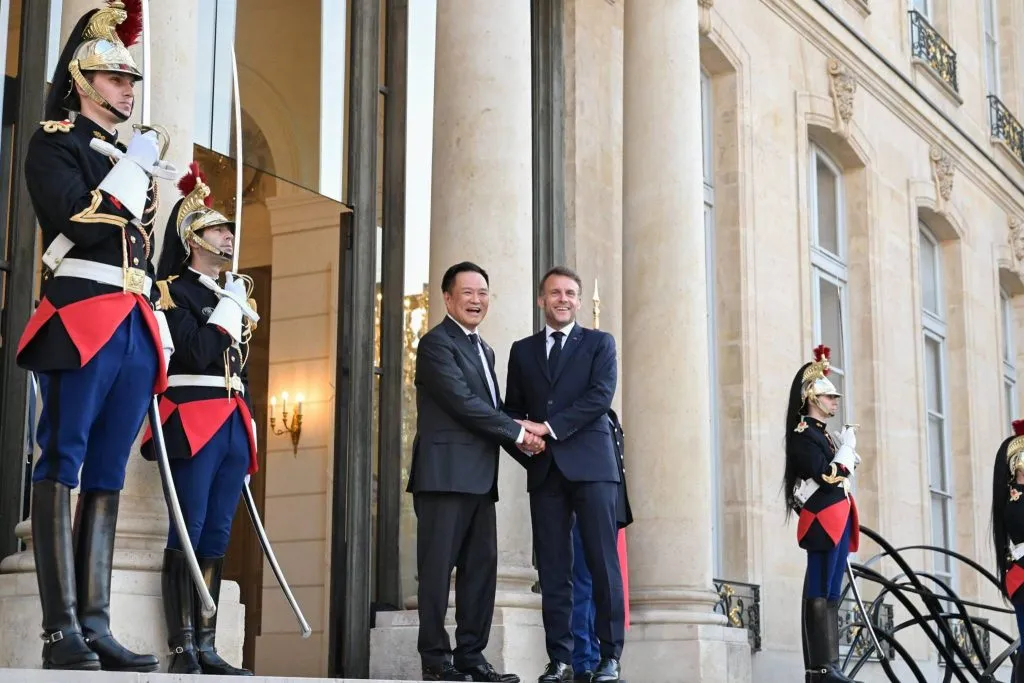
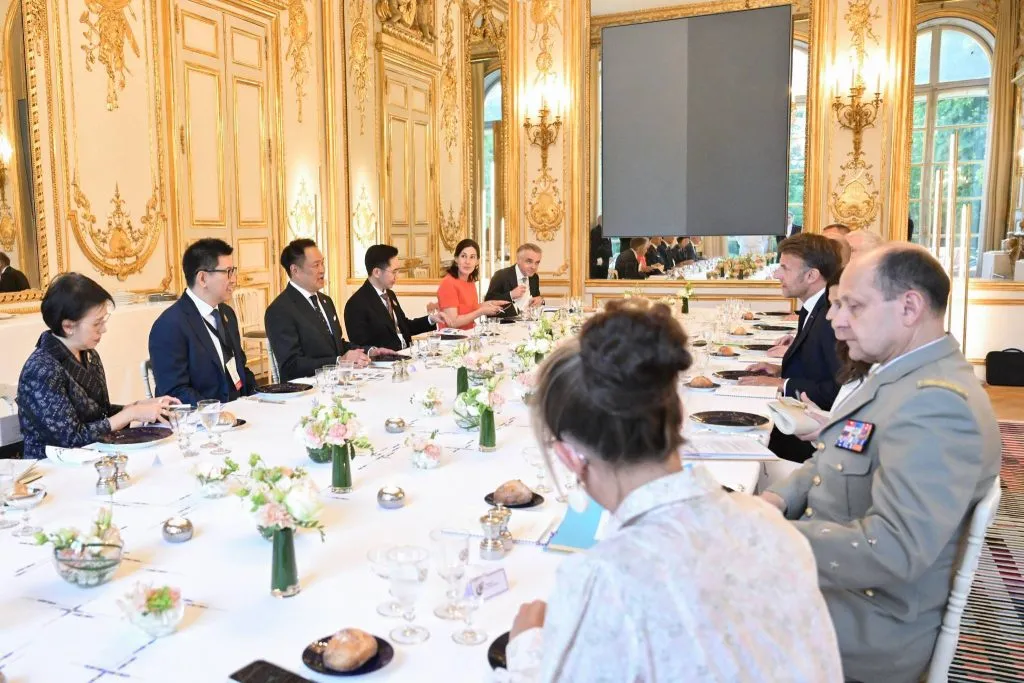
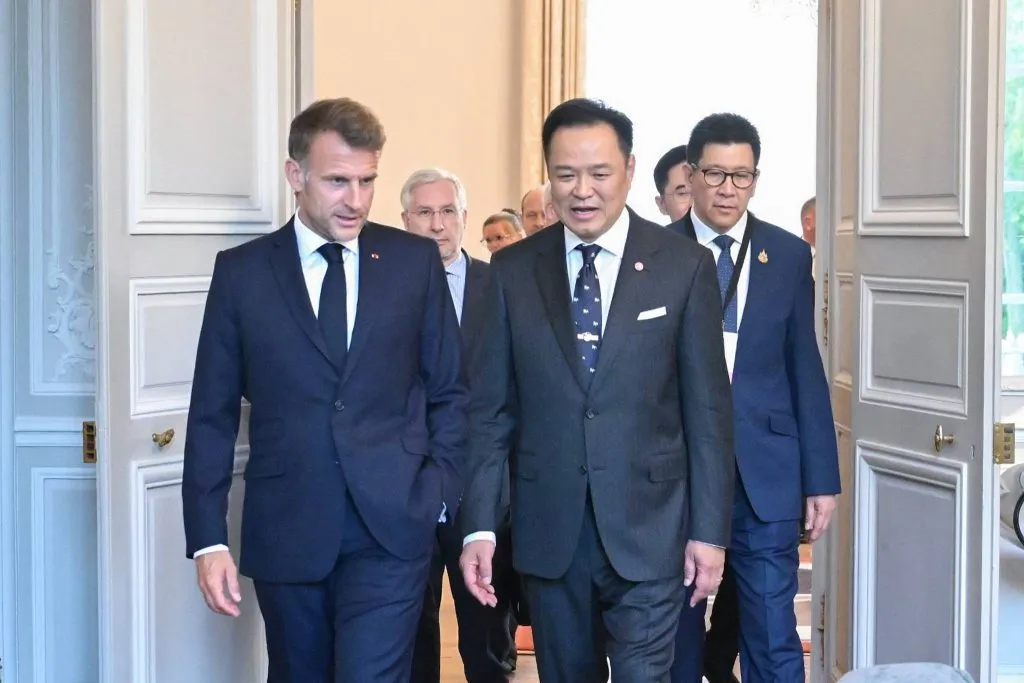
The trip, the second overseas mission of the Anutin administration and its first outside ASEAN, culminated in high-level talks with French President Emmanuel Macron at the Élysée Palace, where both sides agreed to deepen cooperation in trade, cybersecurity, clean energy, and advanced technologies while laying the groundwork for elevating bilateral ties into a formal strategic partnership.
At the center of the discussions was Thailand’s ambition to attract greater European investment as geopolitical tensions and supply-chain realignments reshape global business decisions. Thai officials promoted the Kingdom as a regional hub for artificial intelligence infrastructure, electric vehicles, aerospace, renewable energy, and advanced manufacturing.
France, Thailand’s fourth-largest trading partner within the European Union, has invested heavily in the Thai market in recent years, with nearly 100 French investment projects launched over the past five years.
Strategic industries and the EU trade push
Bangkok also used the visit to reinforce momentum behind negotiations for the Thailand-EU Free Trade Agreement (FTA), which Thai officials hope to conclude this year.
The proposed deal has become a cornerstone of the government’s broader economic strategy as Thailand seeks deeper integration with Western markets while maintaining its long-standing balancing approach between major powers.
Anutin’s delegation, which included senior ministers overseeing finance, commerce, foreign affairs, science and culture, met executives from major French firms including aerospace giant Airbus, defense and cybersecurity group Thales Group, and battery-materials producer Imerys.
Thai officials highlighted investment incentives tied to the Eastern Economic Corridor (EEC), the government-backed industrial development zone intended to anchor the country’s next phase of high-tech growth.
Cambodia tensions enter diplomatic spotlight
While economics dominated much of the agenda, regional security issues were also raised during the Paris meetings, particularly ongoing tensions along the Thailand-Cambodia border.
Anutin said he personally briefed Macron on the situation, emphasizing Thailand’s position that it has acted in defense of sovereignty and in accordance with international law. The Thai leader noted that, unlike many foreign counterparts who rely solely on field reports, he had personally visited operational areas along the border over recent months.
The issue also arose during discussions with UNESCO after Cambodia requested inspections of World Heritage sites allegedly affected by the conflict. Anutin has urged that any assessment include sites on both sides of the border to provide a factual understanding of events.
Middle-power diplomacy in a shifting world
Analysts in Bangkok meanwhile viewed the France visit as part of a wider strategic recalibration amid efforts by middle powers to navigate mounting geopolitical competition between the United States and China.
Political analyst Chettha Sapyen described the trip as an attempt to strengthen Thailand’s diplomatic flexibility while building partnerships with nations similarly wary of becoming overly dependent on any single global power.
In many ways, the France visit captured the balancing act that middle powers across Asia are increasingly facing. As competition between major powers intensifies, Thailand appears intent on expanding its room to maneuver through economic diversification, strategic partnerships, and a more assertive diplomatic presence abroad.