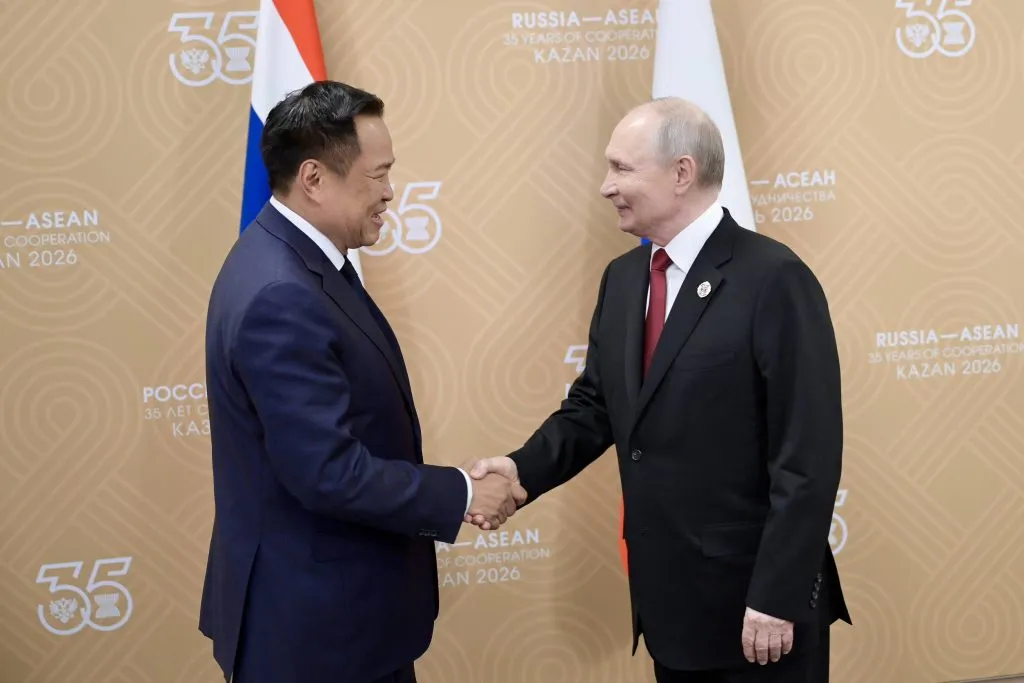
Prime Minister Anutin Charnvirakul has concluded his visit to the Russian cultural and educational hub of Kazan after participating in the ASEAN-Russia Commemorative Summit, using the gathering to position Thailand as a bridge between Southeast Asia and the wider Eurasian region. He also advocated for deeper economic integration and stronger regional connectivity.
Held to commemorate the 35th anniversary of ASEAN–Russia dialogue relations, the summit brought together leaders from across Southeast Asia and Russian President Vladimir Putin for discussions on the future of political, economic, and humanitarian cooperation amid an increasingly complex global landscape.
Anutin’s appearances at both the leaders’ summit and the ASEAN-Russia Business Forum underscored the Thai delegation’s mission to expand commercial links while supporting a multilateral order anchored in international law and ASEAN centrality.
Anutin proposes Thailand as Russia’s ASEAN gateway
Addressing business and political leaders in Kazan, Anutin cast Thailand as a “strategic gateway” connecting Russia with the ASEAN market of more than 700 million people.
He also highlighted the Kingdom’s logistics infrastructure, deep-sea ports, aviation links, and digital economy initiatives as assets facilitating broader regional integration, while pointing to government efforts to modernize investment regulations and attract foreign direct investment.
The Thai premier also promoted sectors ranging from food production and tourism to healthcare, green industries, and semiconductor manufacturing, noting that Thailand is well-positioned to serve as a platform for future-oriented investment.
A recurring theme throughout his engagements was connectivity, whether it was through transport networks, digital platforms, supply chains, or people-to-people exchanges.
Thailand backs EAEU free trade negotiations
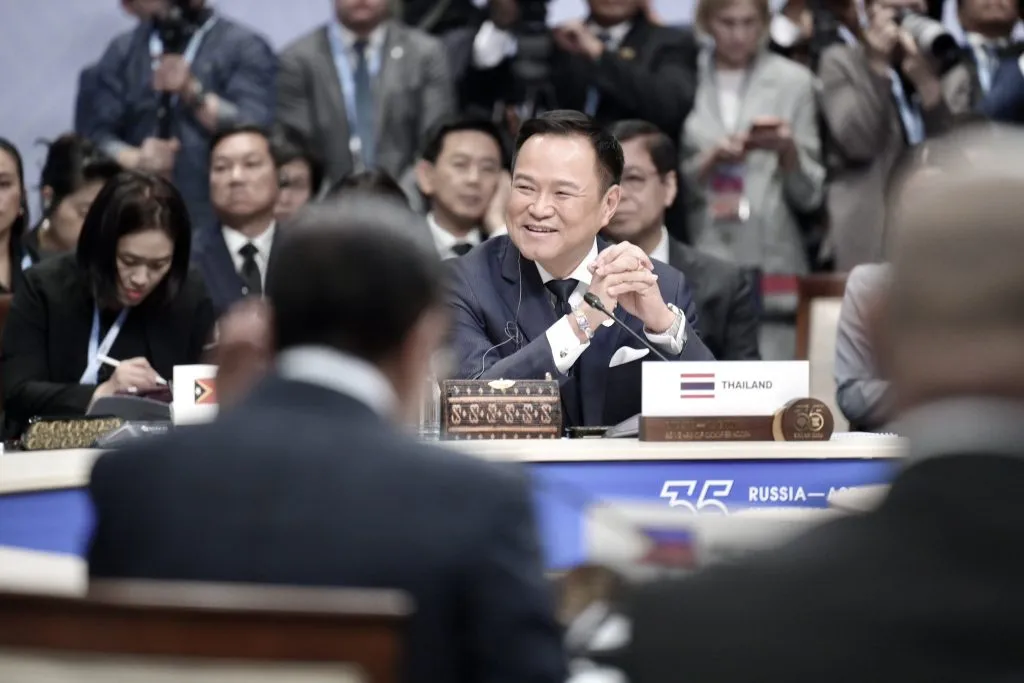
Among the clearest policy signals from Thailand’s delegation was support for launching negotiations on a free trade agreement between Thailand and the Eurasian Economic Union (EAEU), a move Anutin said could create new opportunities for trade and long-term investment.
Speaking during a working lunch on Eurasian integration, the prime minister argued that peace and stability remain the essential foundations for deeper economic cooperation. He added that Thailand stands ready to play a larger role in linking Southeast Asia with partners across the Eurasian region.
Thailand also emphasized strengthening resilience in areas such as energy and food security while encouraging cooperation in education, culture, science, technology, and artificial intelligence to support future growth.
Leaders endorse blueprint for next phase of ties
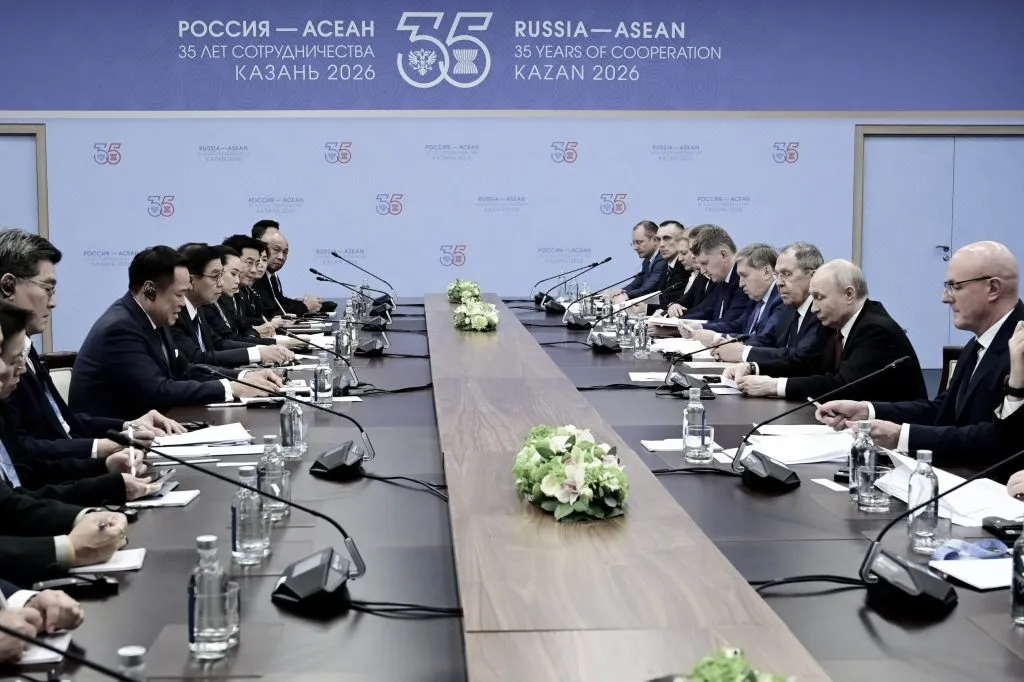
The meeting concluded with the adoption of four outcome documents, including the 2026 Kazan Declaration and a Comprehensive Plan of Action for the ASEAN–Russia Strategic Partnership covering 2026 to 2030.
Following the summit’s adoption of a fresh roadmap for cooperation, ASEAN and Russia now embark on a new five-year strategic partnership intended to enhance collaboration across a wide range of political, economic, cultural, and humanitarian fields.
Thailand, under the Anutin administration, is primed to leverage its geographic position and economic reforms to deepen engagement with both bloc partners and the broader Eurasian region, while also keeping trade, connectivity, and practical cooperation in clear diplomatic focus.