

Thailand has sought to turn its participation in the BRICS grouping into a platform for deeper cooperation between Southeast Asia and the wider Global South, presenting itself as a potential bridge between BRICS and ASEAN.
Deputy Prime Minister and Foreign Minister Sihasak Phuangketkeow delivered Thailand’s statement on behalf of Prime Minister Anutin Charnvirakul at the open session for the 18th BRICS Leaders’ Summit in the Indian capital New Delhi on September 13th.
The statement reflects the Kingdom’s broader Economic Diplomacy Strategy aimed at expanding partnerships, strengthening Thailand’s competitiveness and opening new opportunities for Thai businesses in markets around the world.
Held under the theme “Resilience, Innovation, Cooperation, and Sustainability,” the summit brought together leaders to confront the challenges and opportunities facing emerging and developing economies as they seek to have more say in an increasingly multipolar global order.
Key Takeaways
- Thailand used participation in the 18th BRICS Leaders’ Summit in New Delhi on September 13, 2026, to present itself as a potential bridge between BRICS and ASEAN.
- Deputy Prime Minister and Foreign Minister Sihasak Phuangketkeow said Thailand wants the Global South to have greater weight in shaping global agendas and the changing world order.
- Thailand proposed deeper cooperation on food security, supply chains, the digital economy, green finance, and access to the BRICS-linked New Development Bank.
- Sihasak Phuangketkeow used summit meetings with the United Arab Emirates, Belarus, Cuba, Bahrain, the Philippines, and WTO Director-General Ngozi Okonjo-Iweala to advance trade, investment, energy, regional cooperation, and WTO reform.
- Thailand’s BRICS engagement supports its wider strategy of linking regional institutions, trade corridors, and Global South partners ahead of Thailand’s ASEAN chairmanship in 2028.
Connecting two sides of the Global South
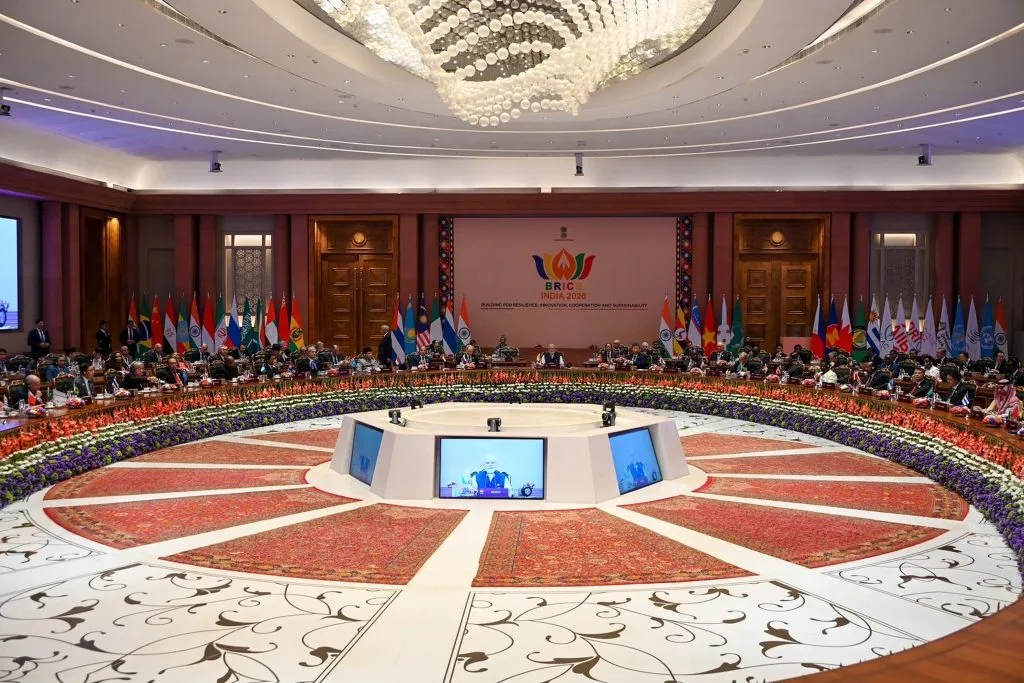
Delegates attend the open session of the 18th BRICS Leaders’ Summit at Bharat Mandapam in New Delhi, India.
Source: Ministry of Foreign Affairs of Thailand
Sihasak said Thailand was ready to work with developing nations to ensure that the interests of the Global South have greater weight in shaping global agendas.
“Thailand must participate, express its views on important issues in the global situation, and participate in determining the direction of the changing world order,” he said after the summit.
Instead of presenting BRICS and ASEAN as competing structures, however, Team Thailand emphasized the potential connections between them.
Thailand has proposed increased cooperation in food security, supply chains, and the digital economy, offering to serve as a bridge linking the respective strengths of the two regional groupings while giving developing economies a stronger collective voice.
The approach builds on the Kingdom’s broader push for South-South cooperation, including its Thailand-Africa Initiative (TAI) and efforts to establish a global partnership against online scams. Bangkok also highlighted its advocacy for greater access to green finance, including through the BRICS-linked New Development Bank.
Thailand puts trade squarely on the table
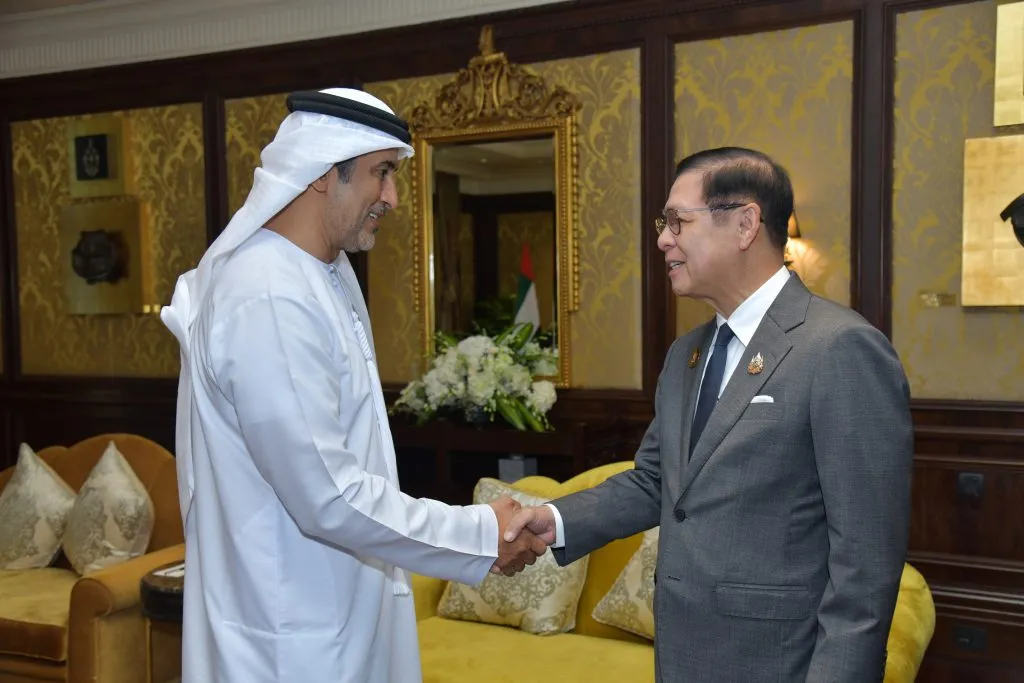
Left: UAE Minister of State H.E. Saeed Bin Mubarak Al Hajeri. Right: Thai Deputy Prime Minister Sihasak Phuangketkeow.
Source: Ministry of Foreign Affairs of Thailand
The summit’s sidelines meanwhile highlights how Thailand is working to translate this positioning into practical economic relationships.
Sihasak held talks with representatives from the United Arab Emirates (UAE) , emphasizing the need to accelerate negotiations toward a comprehensive economic partnership agreement (CEPA) and expand cooperation on energy security. The UAE is Thailand’s largest trading partner in the Middle East.
Discussions with Belarus focused on agriculture, food, tourism, aviation, and trade, including support for launching negotiations towards a Thailand-Eurasian Economic Union (EAEU) free trade agreement. The planned opening of direct Bangkok-Minsk flights in October could further strengthen those links.
With Cuba, Thailand explored greater cooperation in trade, investment, pharmaceuticals, agriculture, and tourism, while talks with Bahrain touched on trade, investment, and ASEAN-Gulf cooperation.
An expanding role in a multipolar world
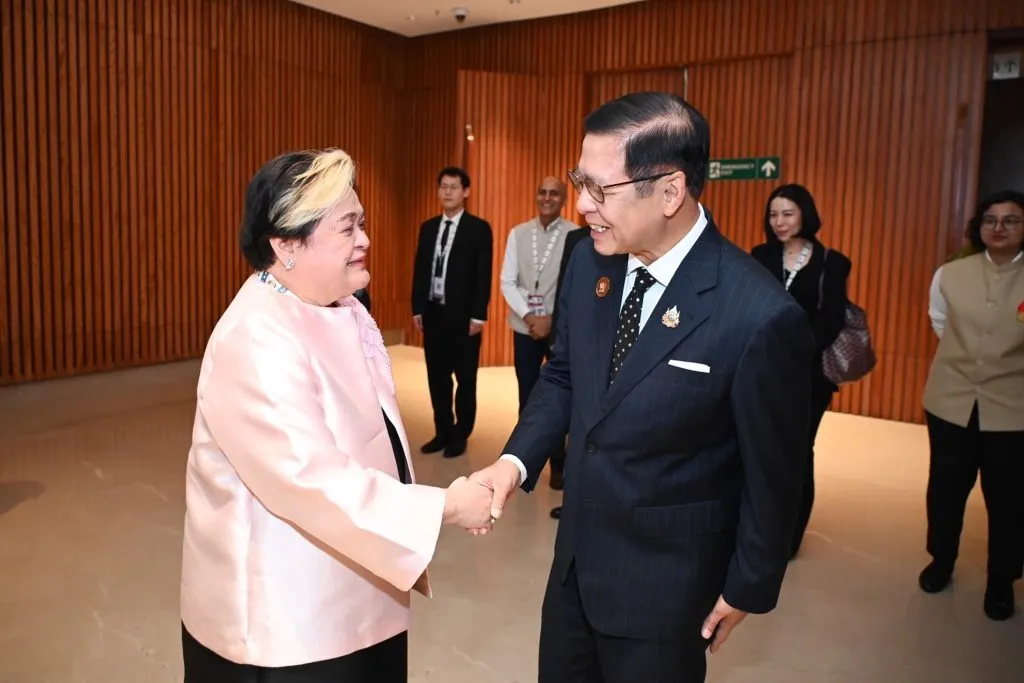
Left: Philippine Foreign Affairs Secretary Maria Theresa P. Lazaro. Right: Deputy Prime Minister Sihasak Phuangketkeow.
Source: Ministry of Foreign Affairs of Thailand
Thailand also engaged the Philippines, the current ASEAN chair, on high-level exchanges and on Myanmar, while talks with World Trade Organization (WTO) Director-General Ngozi Okonjo-Iweala focused on preserving a rules-based global trading system and advancing WTO reform.
The meetings reflect the importance of maintaining connections across multiple geopolitical and economic networks, rather than aligning exclusively with any single bloc.
With Thailand preparing to assume the ASEAN chairmanship in 2028, its BRICS engagement underscores its ambition to become a connector between regional institutions, trade corridors, and an increasingly influential Global South.

 Teerin Julsawad