

Thailand has used the 17th ASEAN Health Ministers’ Meeting in Kuala Lumpur to push for stronger regional cooperation on public health security, backing a new five-year agenda while calling for faster progress on a long-awaited ASEAN emergency response center.
Public Health Minister Pattana Promphat led the Thai delegation at the meeting that ran from September 7th to 11th, held under the theme “Healthy ASEAN: Together Towards Equitable, Future-Ready Health Systems.” The gathering brought together health ministers from ASEAN’s 11 member states as the bloc launched the ASEAN Strategic Health Agenda (ASHA) 2026-2030.
Key Takeaways
- Thailand called for accelerating the operation of the ASEAN Centre for Public Health Emergencies and Emerging Diseases by the end of 2026.
- Public Health Minister Pattana Promphat stressed that ASEAN must strengthen cross-border surveillance and health systems resilience to manage emerging diseases.
- The 11 ASEAN member states launched the ASEAN Strategic Health Agenda 2026–2030 to address non-communicable diseases, pandemic threats, and food safety.
- Thailand advanced bilateral health partnerships with China, South Korea, Japan, and the United States on medical AI, digital health, and aging societies.
- Thailand urged the World Health Organization to support pooled procurement of medical supplies and vaccine registration across Southeast Asia.
Thailand backs a more resilient ASEAN
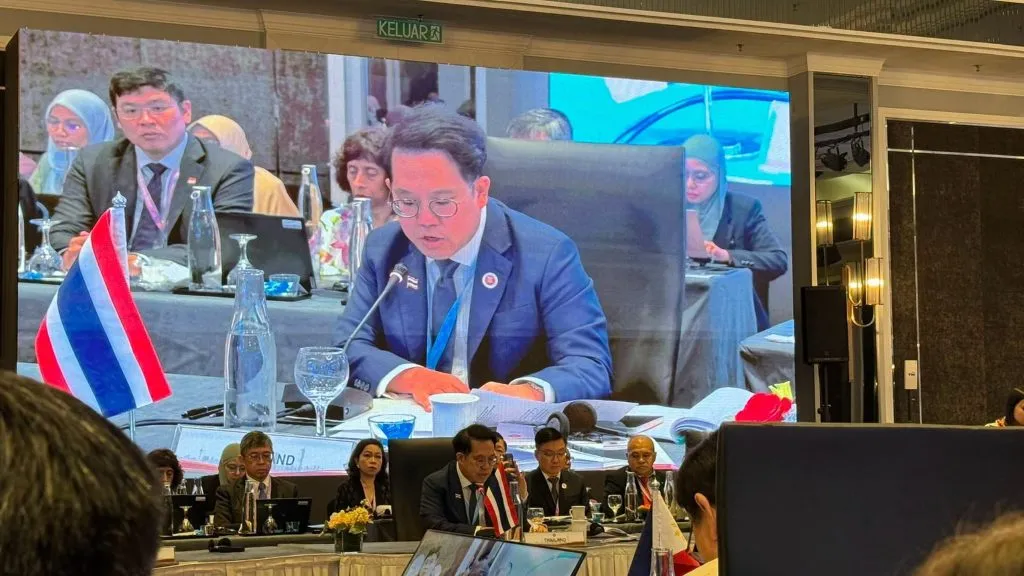
A Thai delegate addresses the 17th ASEAN Health Ministers’ Meeting and Related Meetings in Kuala Lumpur, Malaysia.
Source: NBT World – Facebook
The Thai delegation to Malaysia affirmed Thailand’s support for ASHA, which sets common priorities around healthier lifestyles and non-communicable diseases, emerging public health threats, stronger health systems and healthcare access, as well as food safety.
In his address on “Synergising Health Systems for Resilience, Well-being and Health Security,” Pattana stressed that ASEAN must improve its ability to address threats that don’t stop at national borders, including emerging diseases and antimicrobial resistance.
Dr. Wanchai Jaroonvattana, a senior physician at Thailand’s Health Systems Research Institute (HSRI), echoed this point earlier in the year when discussing health-security planning for migrants.
“Caring for migrant populations is not caring for foreigners, but protecting the health of Thai people, because infectious diseases have no borders,” he said.
Thailand has called for more intercorrected surveillance systems, sustainable financing, and broader adoption of the One Health approach, which links human, animal, and environmental health.
Bangkok also urged ASEAN to accelerate the establishment of the ASEAN Centre for Public Health Emergencies and Emerging Diseases (ACPHEED), with a target of bringing the center into operation by the end of 2026. The push reflects a broader ASEAN effort to ensure the region is better prepared for the next pandemic, rather than reacting to crises after they’ve already emerged.
Widening regional health cooperation
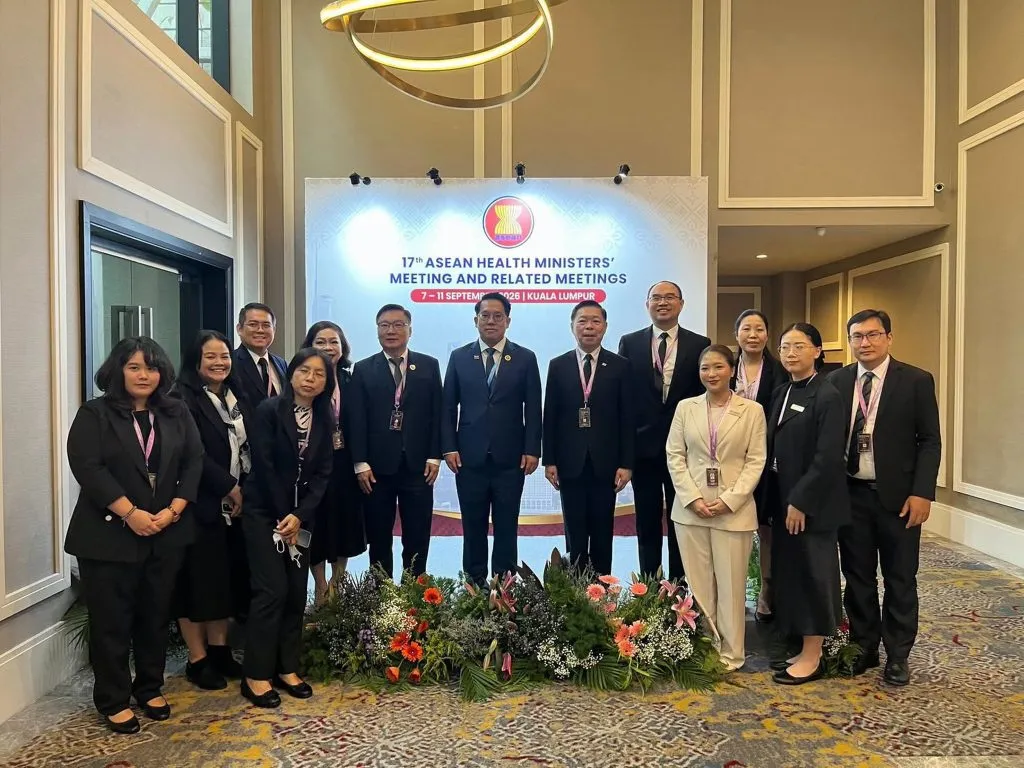
Members of Thailand’s delegation pose during the 17th ASEAN Health Ministers’ Meeting and Related Meetings in Kuala Lumpur, Malaysia.
Source: NBT World – Facebook
Team Thailand also used the meetings to promote health cooperation with ASEAN’s major dialogue partners, linking those initiatives to the new strategic agenda.
In talks with China, Thailand proposed cooperation on sustainable health systems, maternal and child healthcare, and food safety. With South Korea, the focus was on interconnected health information systems and artificial intelligence for medical applications, alongside governance and data protection.
Additionally, Thailand proposed working with Japan on healthcare innovation for aging societies, utilizing the ASEAN Centre for Active Ageing and Innovation (ACAI) as a regional mechanism.
Cooperation with the United States, meanwhile, involved emergency preparedness, laboratory networks, pharmaceutical research, and medication innovation, including the implementation of the ASEAN-U.S. Health Cooperation plan for 2027-2030.
The Kuala Lumpur meetings also marked the first ASEAN-U.S. and ASEAN-Japan health ministers’ meetings, alongside consultations with China, South Korea, and the World Health Organization (WHO).
Thailand and other ASEAN members called for stronger WHO support, including cooperation on vaccine registration and pooled procurement of medical supplies and vaccines.
The gathering provided the opportunity for Thailand to reinforce its longstanding emphasis on regional health cooperation, while further positioning health security as another arena for ASEAN’s expanding diplomatic partnerships.

 Teerin Julsawad