

Chinese New Year in Thailand is a living tradition shaped by family, faith, commerce, and community, one that continues to evolve while remaining deeply familiar. In 2026, the Year of the Horse brings with it a sense of movement and renewal, inviting both locals and visitors to step into the new year with intention, warmth, and momentum.
Chinese New Year follows the Chinese lunisolar calendar, which determines both the date of the festival and the zodiac animal of the year. In 2026, Chinese New Year’s Day falls on February 17th, ushering in the Year of the Horse (Golden Horse). In Thai-Chinese belief, the horse symbolizes movement, progress, adaptability, and positive momentum — an auspicious sign for change and forward motion.
As is customary in Thailand, celebrations unfold over three key days:
- Day of Spending (วันจ่าย): February 15th, 2026
- Day of Worship (วันไหว้): February 16th, 2026
- Day of Visiting/New Year’s Day (วันเที่ยว): February 17th, 2026
Chinese communities in Thailand
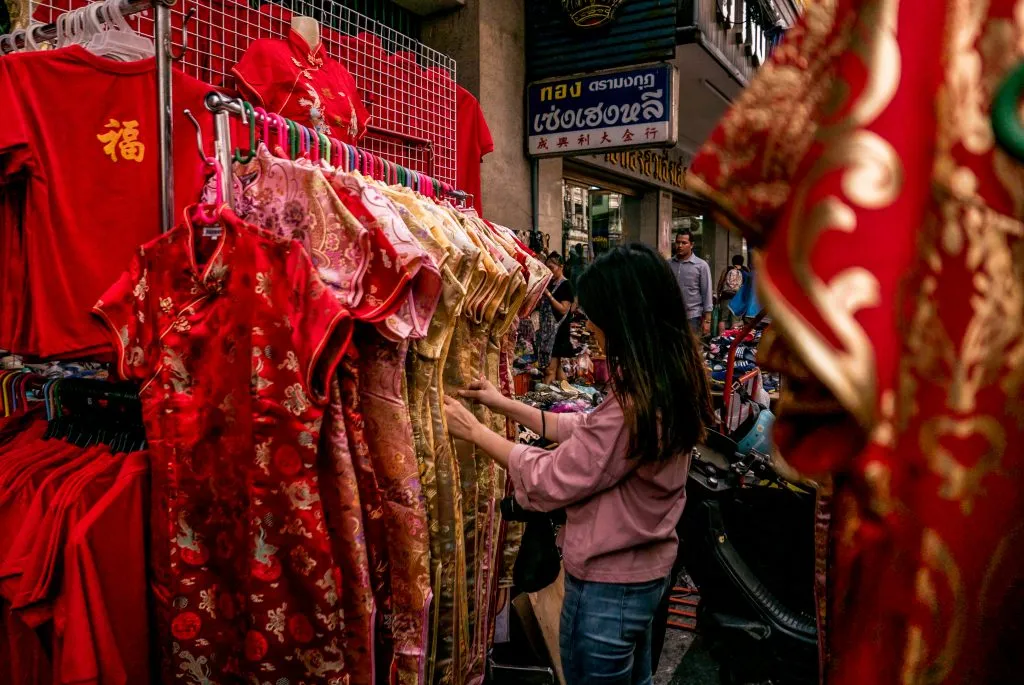
Thailand is home to long-established Chinese and Thai-Chinese communities, many of whom have been part of the country’s social and economic fabric for centuries. Over time, Chinese New Year has evolved into a shared cultural moment that extends far beyond any single group.
In Bangkok, Yaowarat (Chinatown) and Charoen Krung remain focal points, drawing crowds for dragon and lion dances, stage performances, and food stalls that spill late into the night.
Beyond the capital, major celebrations also take place in Nakhon Sawan, Phuket, Chiang Mai, Hat Yai, and Suphanburi, each shaped by local history and community traditions.
Alongside public festivities, many families visit shrines and temples to pray for health, safety, and prosperity. Well-known sites include Wat Mangkon Kamalawat (Wat Leng Noei Yi) in Bangkok and Jui Tui Shrine in Phuket, though smaller neighborhood shrines often become just as important during the season.
Family at the center
At its core, Chinese New Year is about family. Relatives return home for reunion meals, ancestral rites, and shared rituals that mark the transition into a new year.
Homes are prepared with offerings for ancestors, often featuring symbolic foods associated with luck, longevity, and abundance. After prayers are completed, families gather to eat together, turning ritual into reunion.
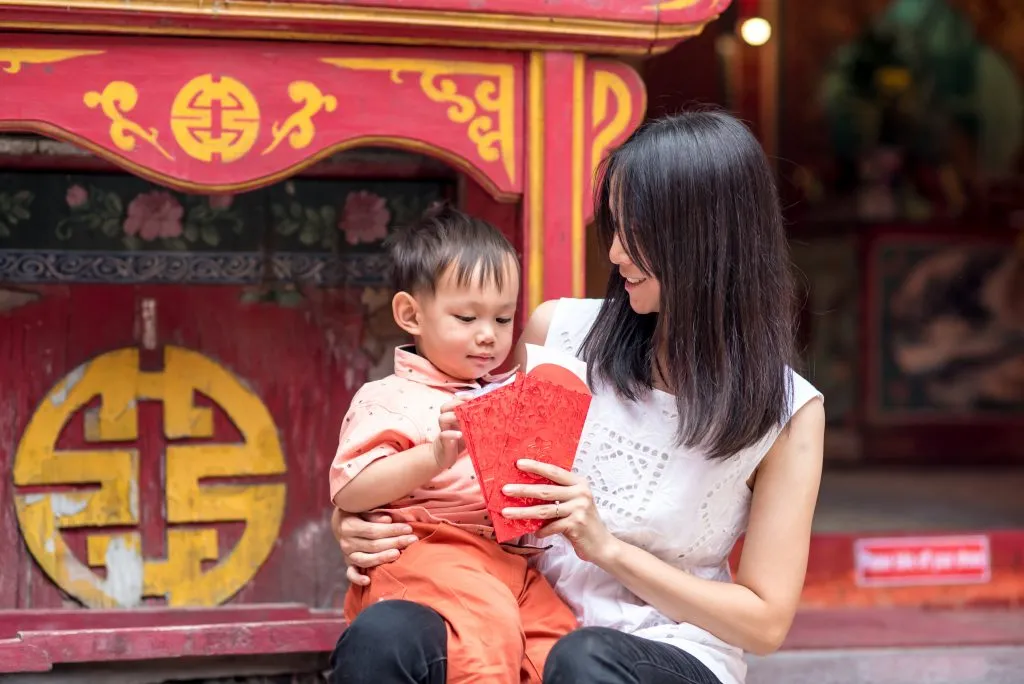
One of the most recognizable traditions is the giving of ang pao — red envelopes filled with money — typically from elders to children and younger family members. Beyond financial value, ang pao represent blessings, protection, and goodwill for the year ahead.
What to wear for Chinese New Year
Choosing what to wear during Chinese New Year is both cultural expression and personal ritual. In 2026, Thai media and popular belief highlight several auspicious colors aligned with the Year of the Horse:
- Red: A classic symbol of luck, joy, and prosperity. Universally worn across all three days.
- Gold: Associated with wealth, abundance, and success, often paired with red for added fortune.
- Green: Linked to health, growth, and balance.
Yellow: A color tied to prosperity and traditional Chinese symbolism. - Pink: Popular for those seeking harmony, affection, and positive relationships.
Traditionally, black, white, and muted tones are avoided during the main celebration days, as they are associated with mourning and solemn occasions.
A major tourism and economic moment
Chinese New Year has become one of Thailand’s most important tourism periods. For 2026, the Tourism Authority of Thailand (TAT) forecasts:
- Over 3.5 million visitors nationwide
- Tourism revenue of approximately THB 42.23 billion
- Around 241,000 Chinese tourists, alongside strong domestic travel
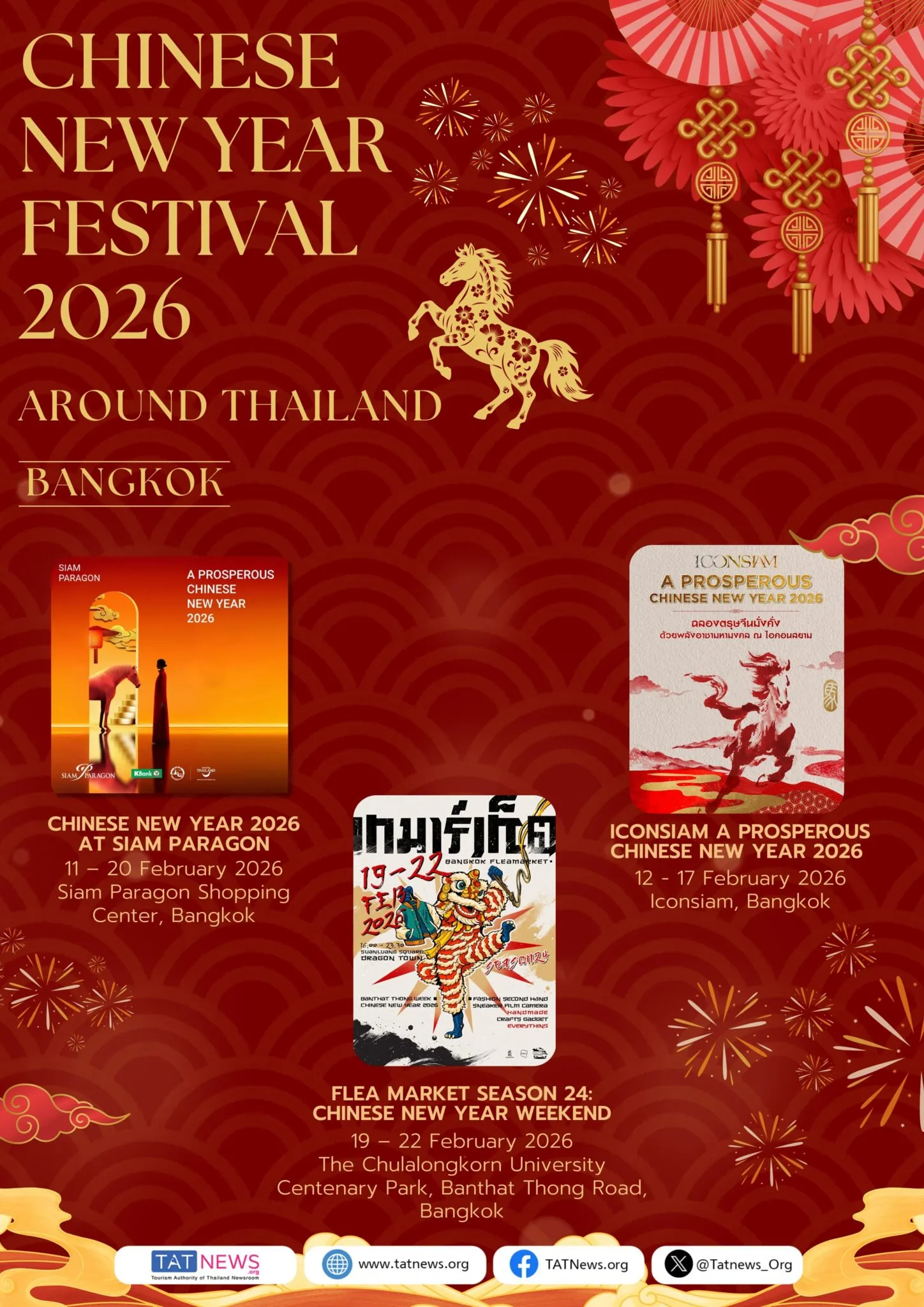
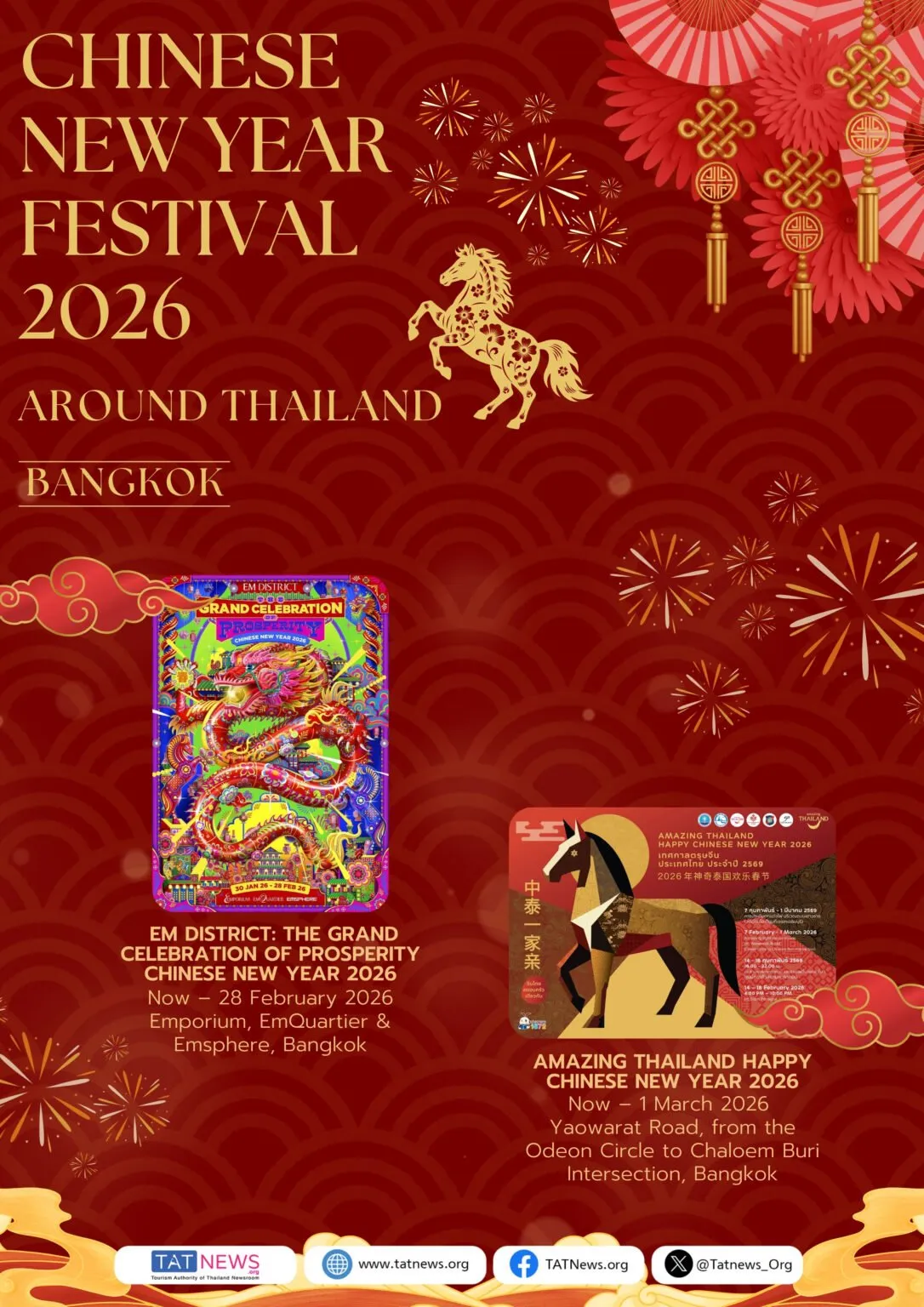
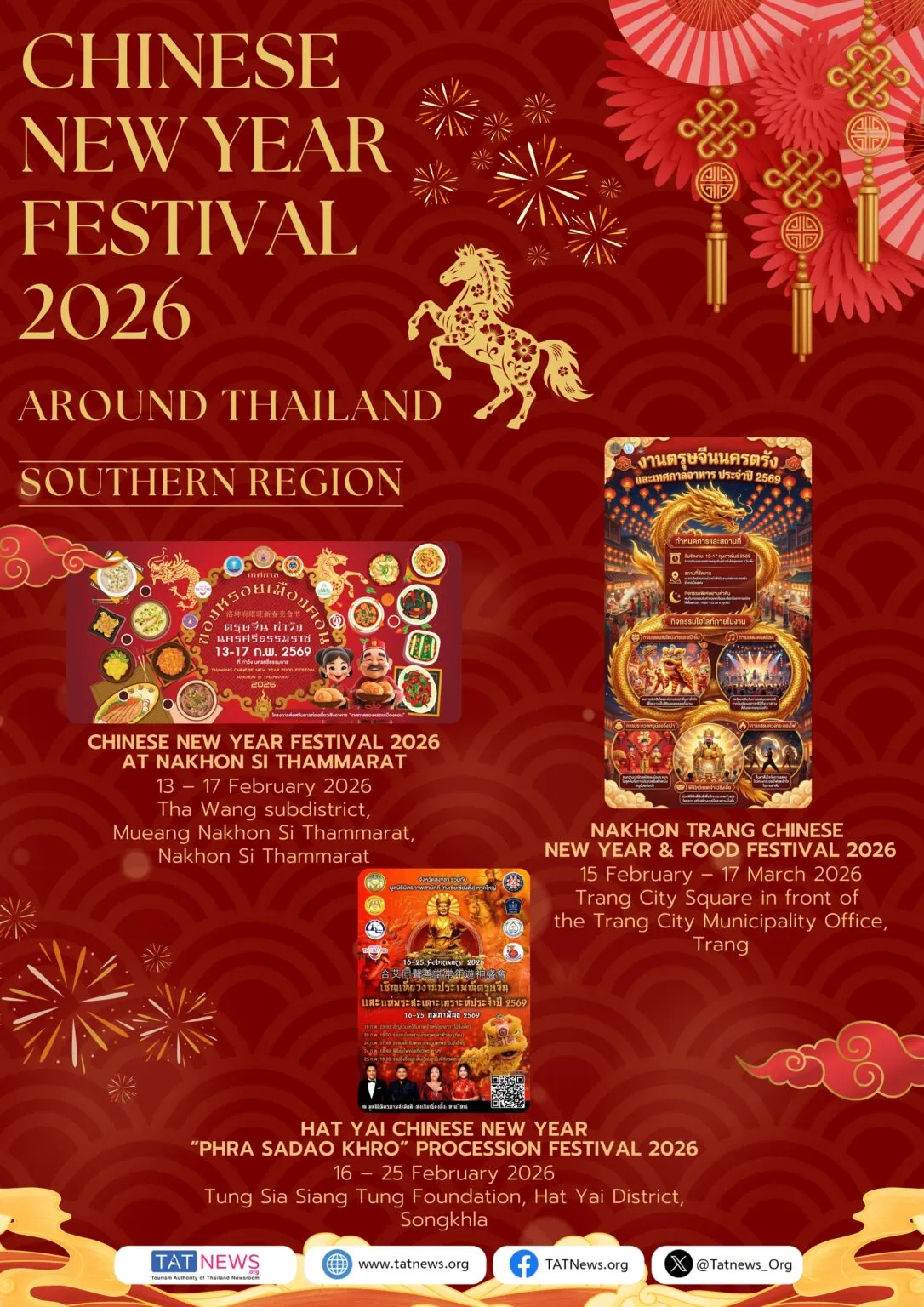
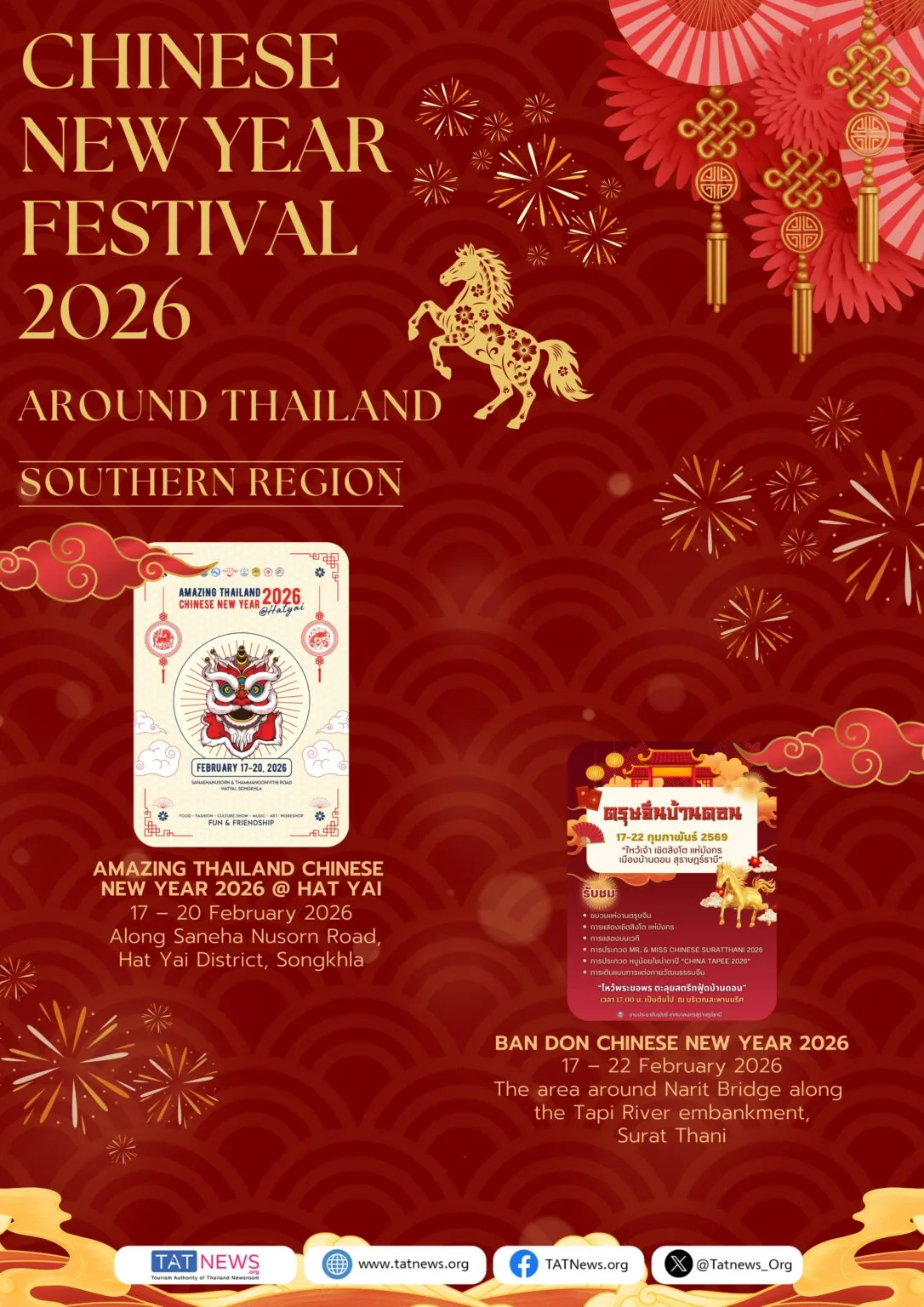
Major TAT-supported celebrations are planned in Bangkok and Hat Yai, with additional backing for events in Nakhon Sawan and Suphanburi. Shopping centers, cultural districts, and local communities across the country are also staging their own programs, blending tradition with modern production.
Beyond numbers, the festival reinforces Thailand’s long-standing people-to-people ties with China. In 2026, Chinese New Year also coincides with continued celebrations of Thai–Chinese friendship, reflecting both historical connections and modern diplomatic relations.
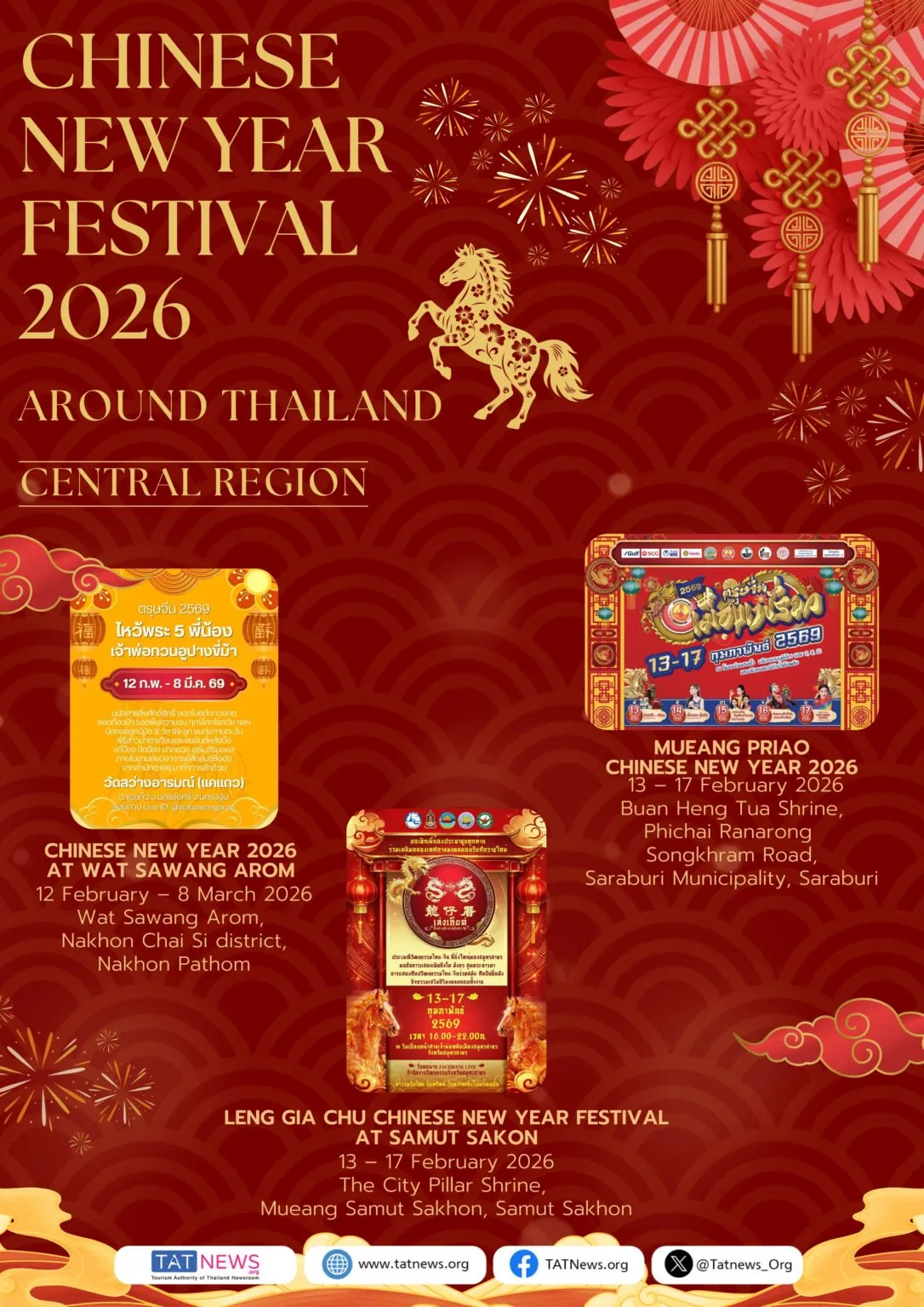
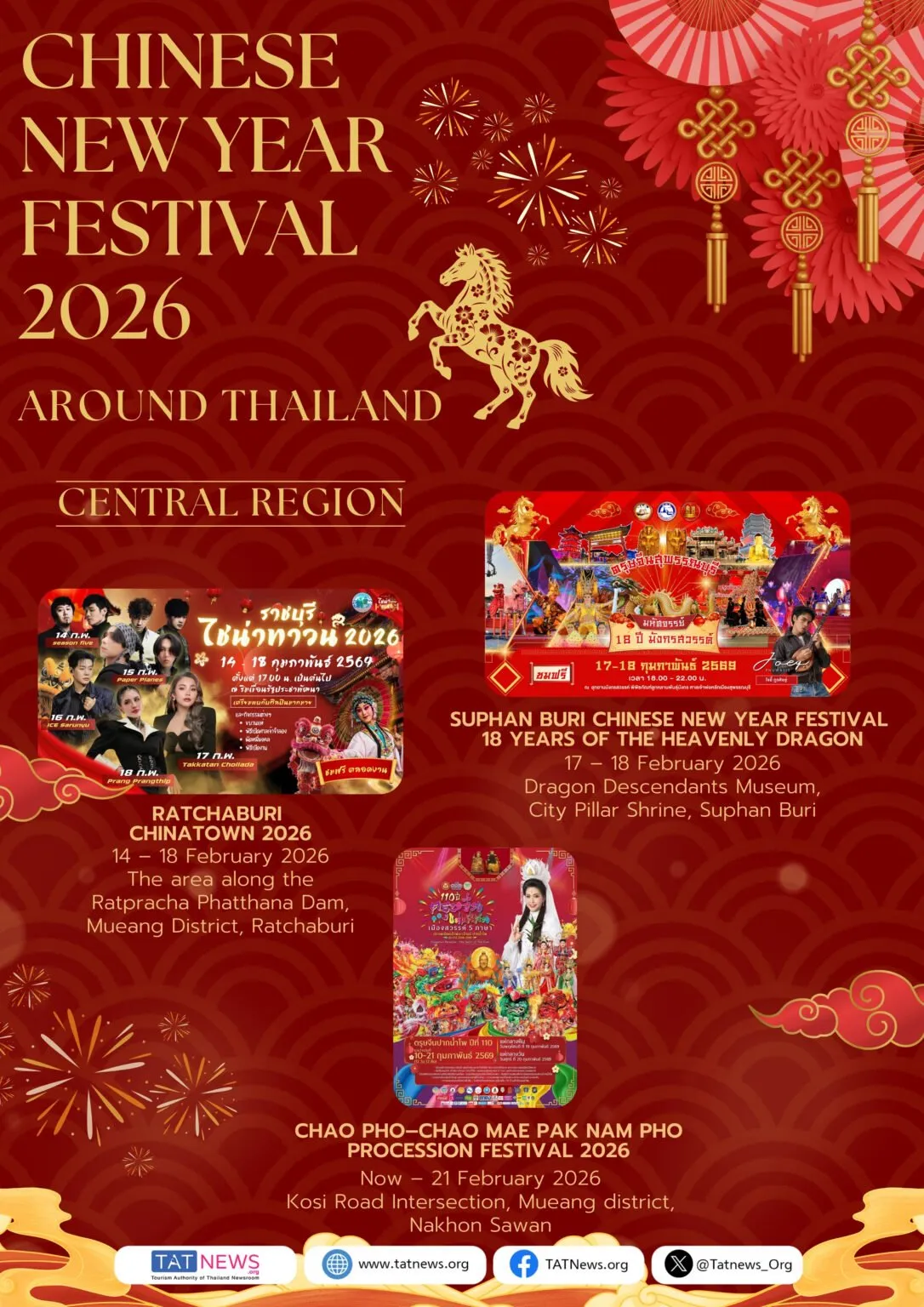
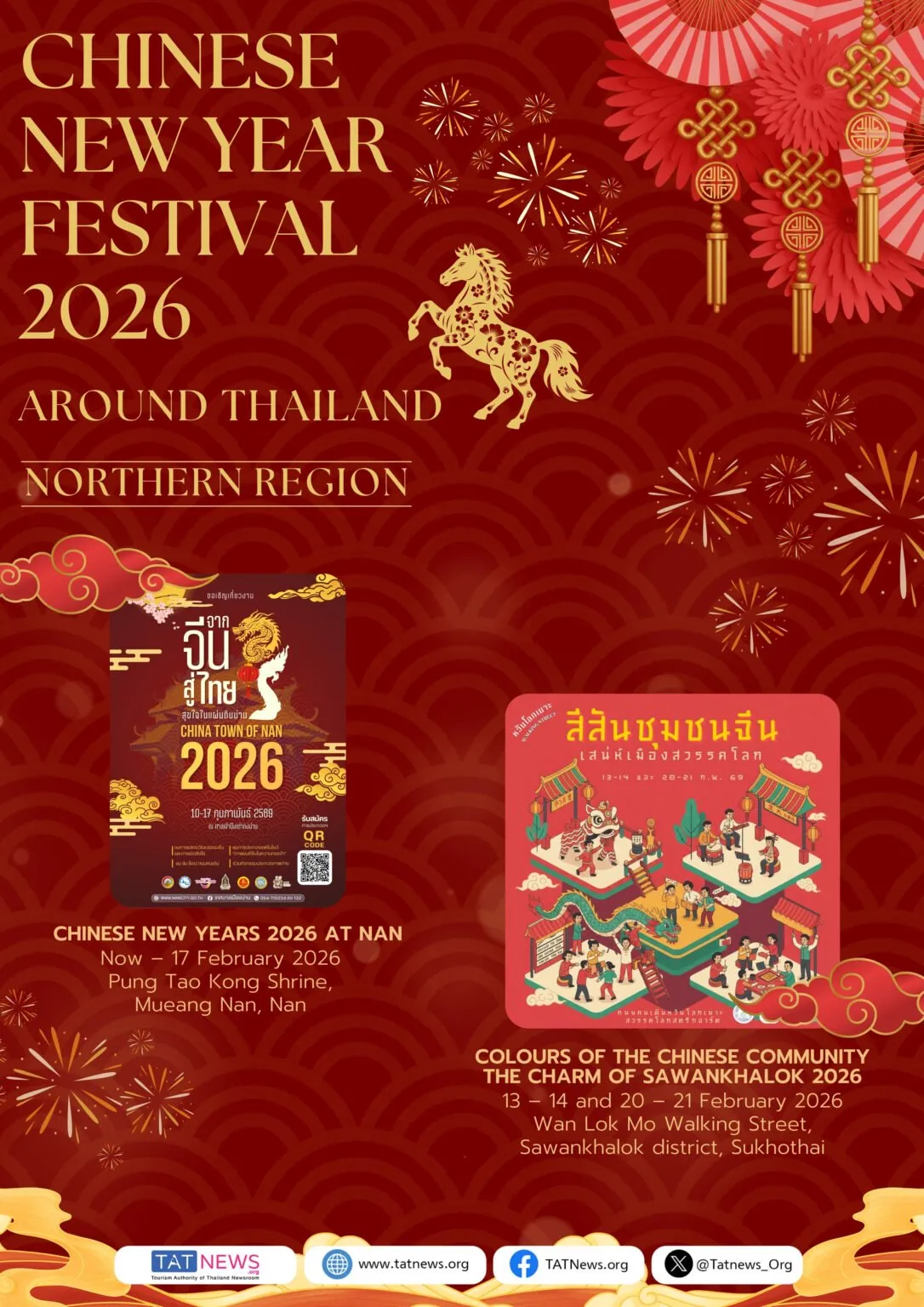
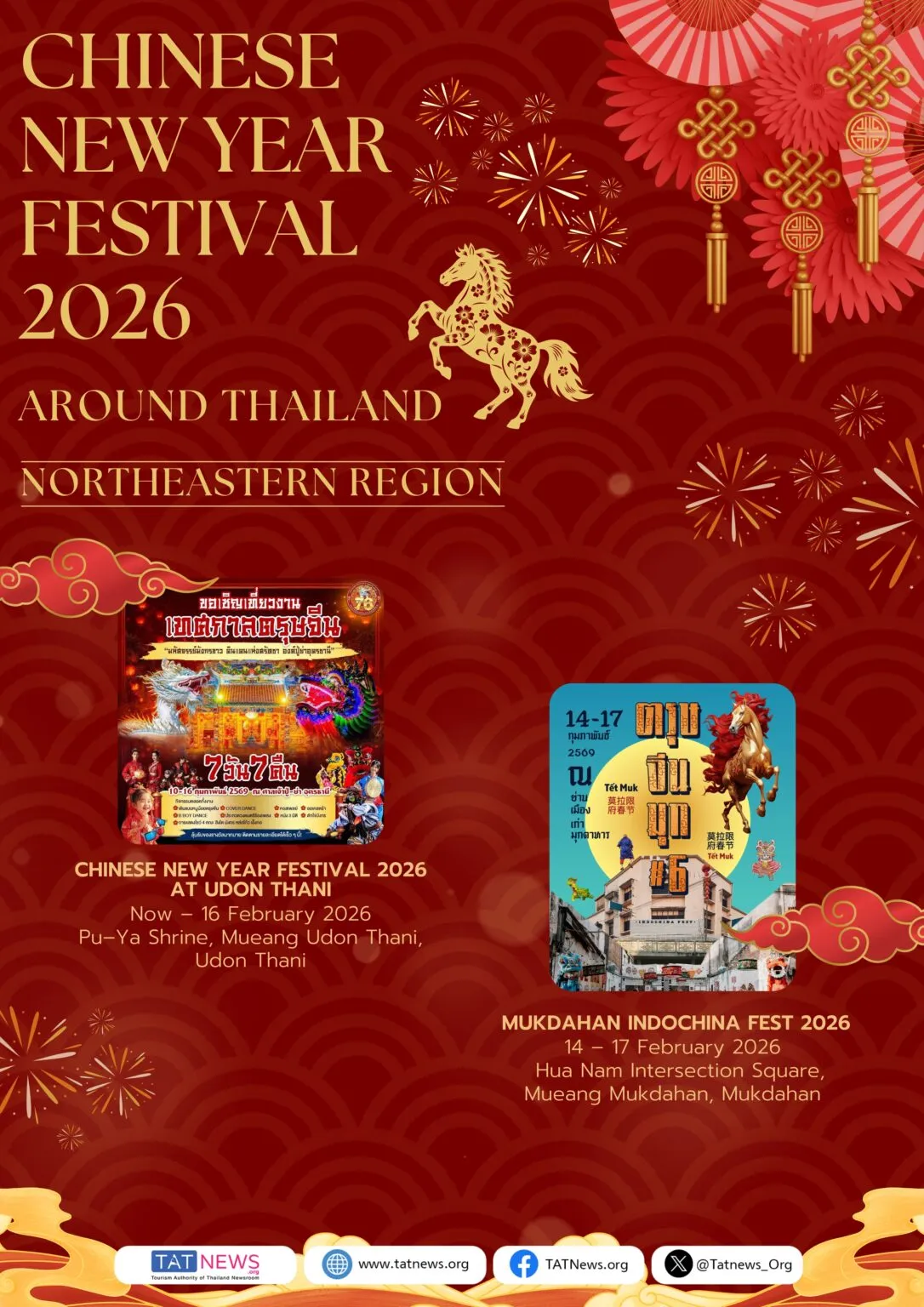
Several provinces have significant celebrations planned to coincide with Chinese New Year 2026.



Celebrating more mindfully
As with other large festivals, Chinese New Year has traditionally involved burning joss paper, lighting firecrackers, and extensive use of incense. In recent years, environmental concerns — particularly air pollution — have encouraged new approaches.
Thai authorities and event organizers increasingly promote reduced burning, alternative rituals, and digital offerings such as QR-based fortune services. These shifts reflect a broader effort to balance tradition with sustainability, especially in urban areas.