

Some figures shape history through speeches, policies, or moments frozen in photographs. Her Majesty Queen Sirikit, the Queen Mother, shaped Thailand in a quieter, more continuous way. Through presence. Through work. Through a long arc of attention to how people actually live.
Her legacy is often discussed in parts: rural healthcare, conservation, artisanal crafts, humanitarian relief, and cultural preservation. Taken separately, each looks like a major undertaking. Taken together, they reveal something more coherent. A way of thinking about care, dignity, and continuity that runs across decades and disciplines.
Thailand NOW’s Culture Compass: The Legacy of Queen Sirikit, The Queen Mother explores how one life intersected with public health, humanitarian relief, environmental conservation, cultural preservation, and rural livelihoods over the course of more than half a century.

Growing Up in Transient Times
Queen Sirikit was born in 1932, the same year Thailand shifted from absolute monarchy to constitutional rule. Change framed the world she entered.
Her early life unfolded across borders and disruptions. Her father’s diplomatic career meant long separations from her parents and formative years spent abroad. World War II followed soon after, bringing uncertainty, scarcity, and the everyday instability of a world at war. These experiences demanded discipline and adaptability early on, shaping a comfort with movement, interruption, and responsibility long before they became public expectations.
Education in Europe deepened that formation. Studying in England, France, and Switzerland, she was immersed in structured environments that emphasized language, music, and rigorous discipline. Piano training, in particular, reinforced patience, precision, and long-term focus.
Living outside Thailand offered perspective without detachment. Exposure to European cultural institutions showed how heritage could be protected without being frozen, and how tradition could evolve without losing meaning. Museums, orchestras, and craft systems revealed ways culture could be sustained within modern life rather than preserved at a distance.
Together, these experiences shaped an ability to bridge worlds. Rural Thailand and international systems. Local knowledge and global standards. Tradition and adaptation. That perspective later defined her approach to cultural and social work, grounded in real conditions and oriented toward continuity rather than idealized preservation.
Many trace the roots of her later work in public health, culture, and humanitarian care to her role as Queen Mother. But the instincts behind that work were formed much earlier, through a childhood and education shaped by transition, distance, and the need to navigate complexity with steadiness.
Marriage and Early Responsibilities
Queen Sirikit married His Majesty the Late King Bhumibol Adulyadej the Great in 1950, when both were still young and learning what their roles would demand. Within a few years, responsibility arrived quickly and without ceremony. In 1956, while King Bhumibol temporarily entered the monkhood, her growing responsibilities culminated in her formal appointment as Regent of Thailand, effectively acting as head of state.
The appointment signaled trust and capability, not just symbolism. At an age when most people are still finding their footing, she was managing state affairs, representing continuity, and shouldering public responsibility during a period when Thailand was still consolidating its modern institutions.
This early experience shaped how she would later operate. Leadership, for her, was practical, situational, and accountable. That sense of responsibility runs quietly through everything that followed.
Presence Before Policy

Across health, culture, and humanitarian work, Queen Sirikit’s approach followed a consistent logic. Oftentimes, she went to places herself, where she observed conditions directly. Action followed observation, not the other way around.
Problems were also never treated in isolation, either. Health was linked to livelihoods, and culture was tied to dignity. Conservation was connected to education and long-term survival. Solutions crossed categories because daily life does.
This way of working explains why her initiatives often cut across sectors. Rural medicine addressed immediate illness, but also dignity and access. Environmental projects considered long-term sustainability alongside community participation. Cultural programs tied heritage to income, ensuring continuity rather than nostalgia.
The emphasis was always on what people needed where they were, and not on what policy frameworks assumed they needed.
Much of Thailand’s later institutional development reflects this method. Systems grew from lived conditions, which is why many of them continue to function under pressure.
This approach sits behind many of the systems Thailand now takes for granted.
Culture as Survival
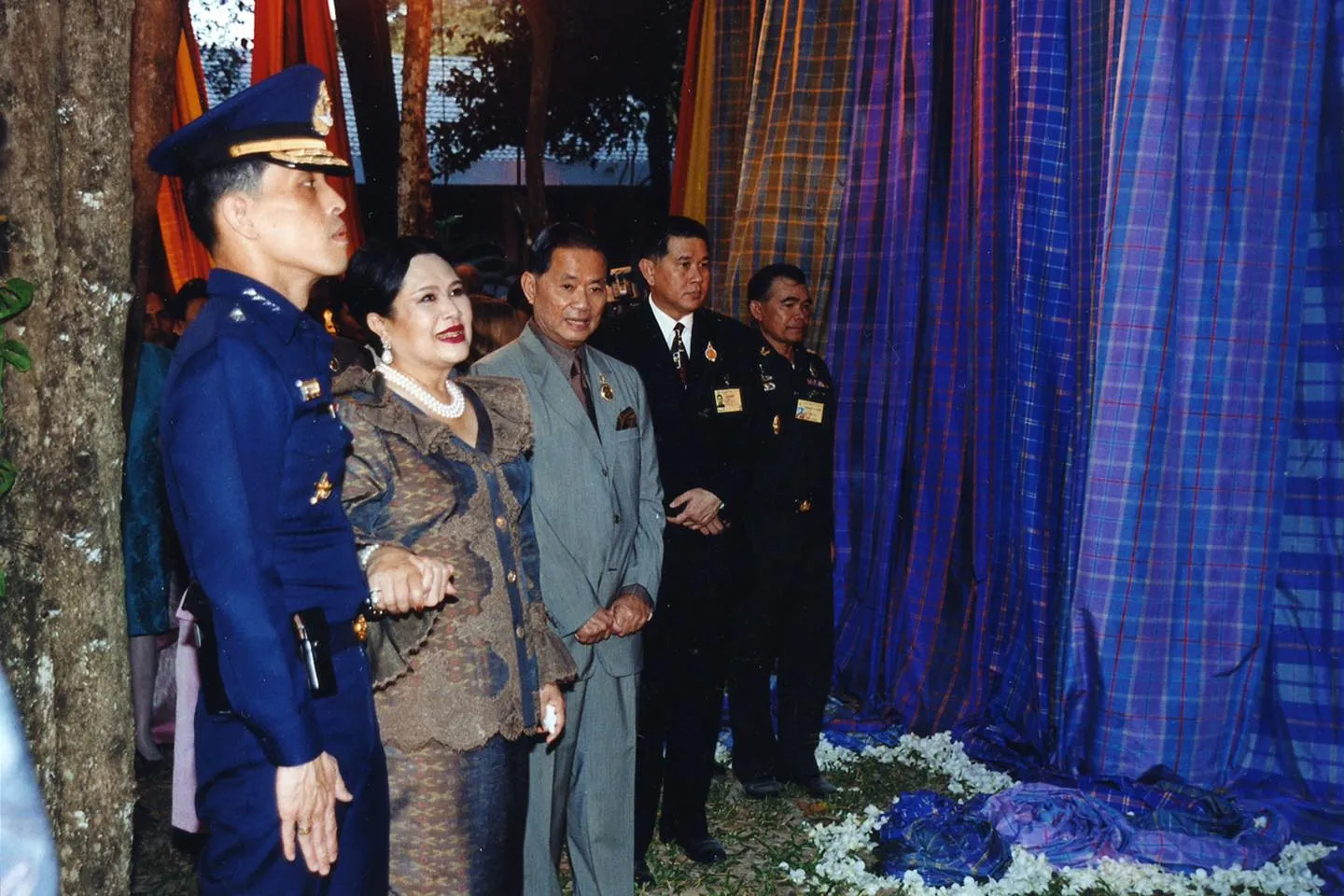
In Queen Sirikit’s work, culture was never treated as something separate from daily life. Crafts, textiles, and performance traditions were understood as sources of income, identity, and continuity, especially in rural communities.
Preservation was never treated as an end in itself. Skills lasted because they supported families, and knowledge endured because it stayed relevant to how people actually lived. Cultural work brought stability by creating livelihoods where alternatives were limited.
In many ways, this kind of framing avoided nostalgia. Tradition was supported as a living system, responsive to contemporary needs.
The same logic applied to classical performance, too. When forms like khon faced declining relevance, the response was reintegration rather than conservation alone. Because of her, culture remained visible because it remained useful.
This approach explains why her cultural initiatives had economic and social impact without being framed as development policy.
Care at Scale
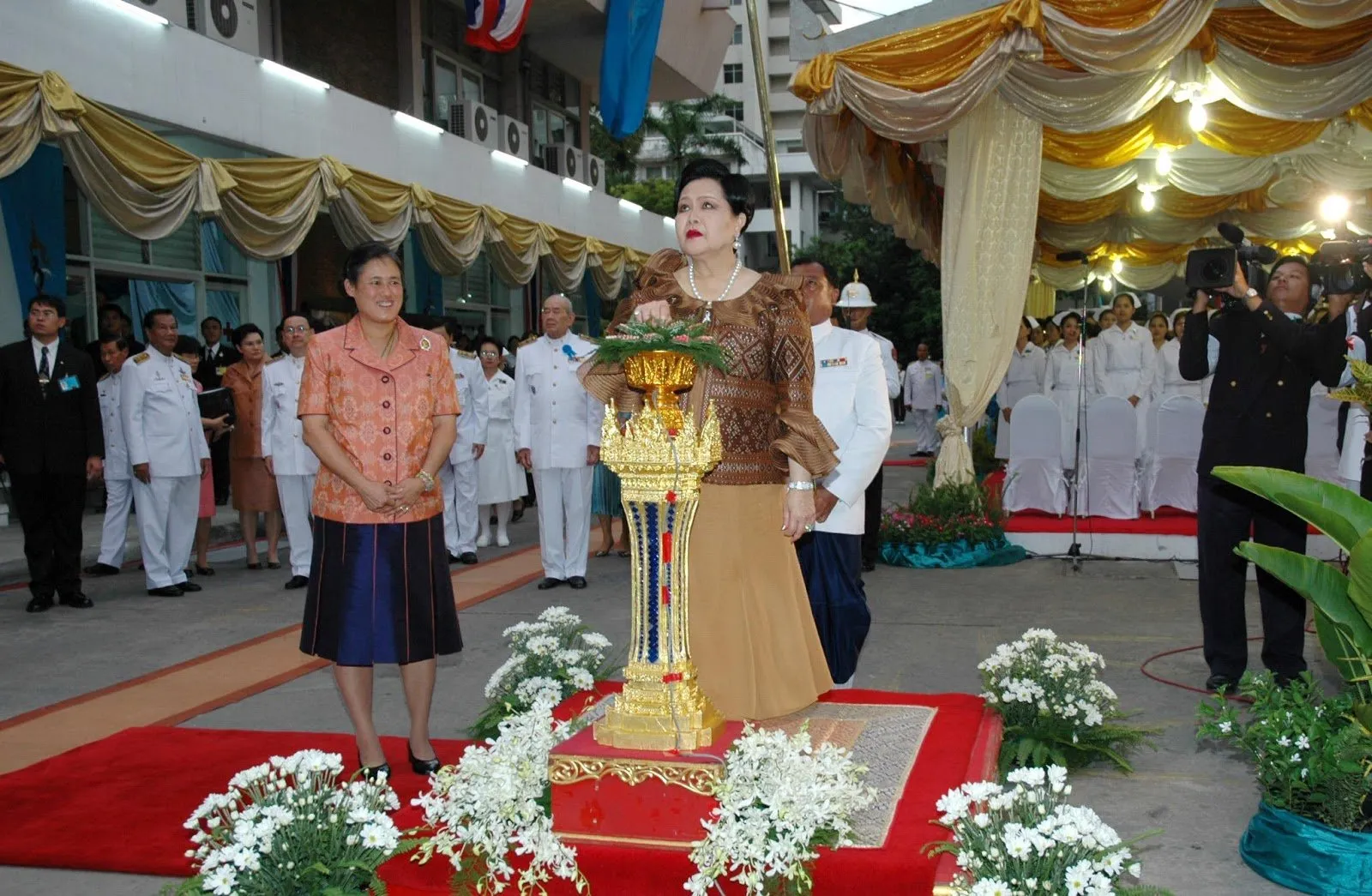
What began as individual acts of care gradually evolved into durable systems. The most visible example is her long association with the Thai Red Cross Society, where bedside care expanded into humanitarian logistics, disaster response, and long-term social support.
The same principles applied. Inclusion was practical, and care followed people rather than paperwork. In other words, preparedness mattered as much as response. Over time, this way of thinking allowed institutions to function under pressure, whether during refugee crises, natural disasters, or public health emergencies.
This shift from personal intervention to institutional capacity didn’t abandon the earlier work necessarily, but it grew out of it. The values stayed steady, even as the scale widened.
Experiencing the Legacy Today
The beauty of it all is that Queen Sirikit’s legacy isn’t something you only encounter in history books or formal ceremonies. It actually lives in places you can still walk through, institutions that continue to work quietly, and systems that shape daily life without calling attention to themselves.
At Queen Sirikit Botanic Garden, conservation is research, education, and long-term stewardship made visible. In Bangkok, Queen Sirikit Park offers something similar in a different form. A public green space designed for balance, health, and everyday use, woven into the rhythm of a dense city.
At Arts of the Kingdom Museum, the work on display comes from craftspeople trained under her patronage. Many are the sons and daughters of farmers from remote regions, carrying techniques passed down across generations. Some pieces rely on methods dating back to the Ayutthaya period. Others reflect techniques developed later, during the reign of King Bhumibol. None are made from prototypes. Each one is the result of skill, patience, and lived experience.
Even Bangkok’s modern landmarks carry her imprint. The Queen Sirikit National Convention Center, renovated in recent years, stands as a venue for global exchange. Its name reflects something larger than function. It signals openness, progress, and a belief that Thailand belongs confidently on the world stage.
Taken together, these places tell the same story from different angles.
Queen Sirikit’s legacy is something you can continue to walk through it. Learn from it. Feel its effects in ordinary moments. And perhaps that is the most fitting way to understand her life. Not as a chapter that has closed, but as a presence that continues to shape how Thailand cares, creates, and moves forward.
Thailand NOW’s Culture Compass guides readers through the cultural landscape of Thailand with a curated list of interconnected stories that, together, present a holistic map of how identity, tradition, economy, and policy intersect in the modern Thai society.

 Paul Rujopakarn