

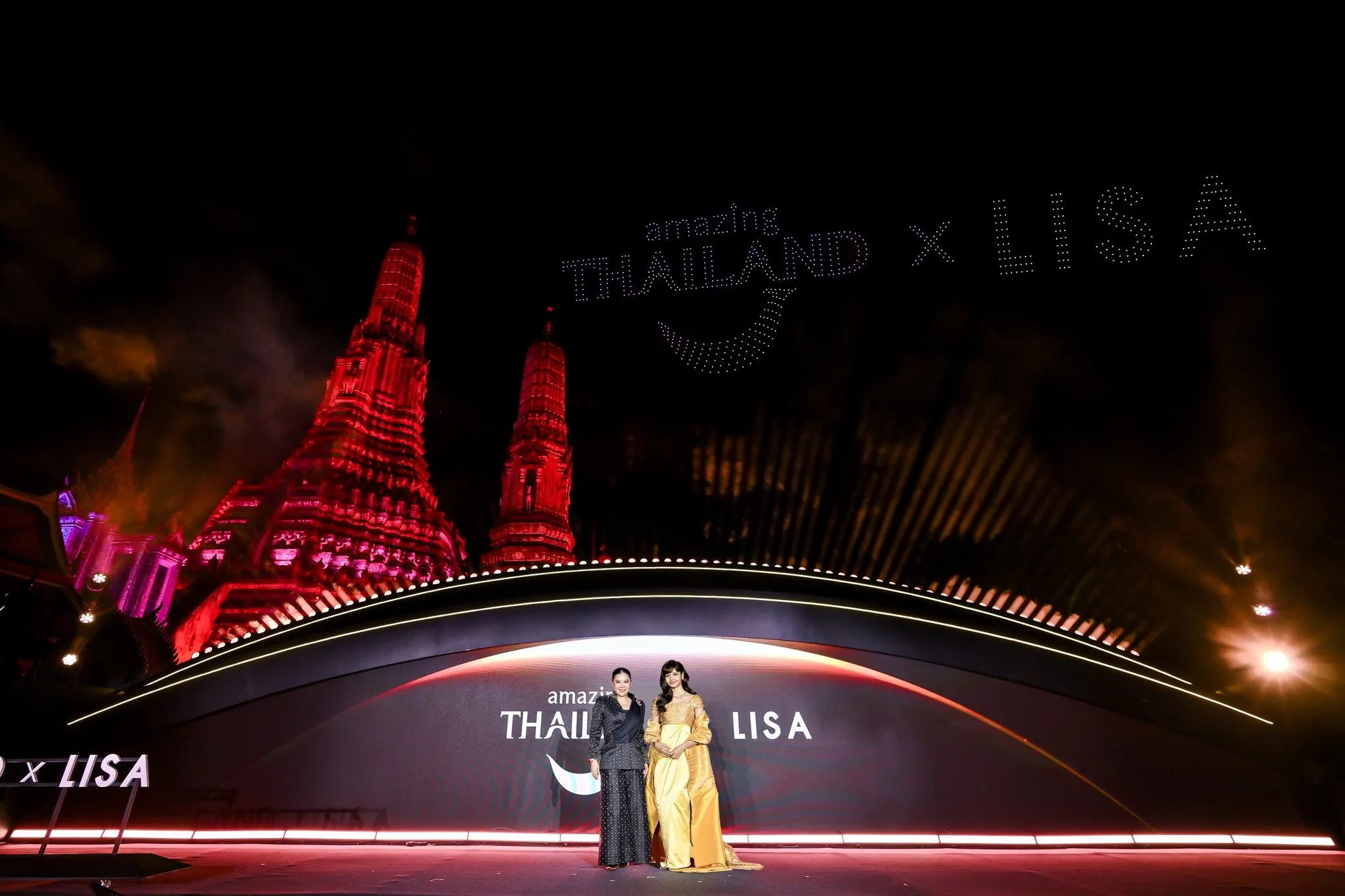
When the Tourism Authority of Thailand (TAT) officially introduced Lalisa “Lisa” Manobal as the new Amazing Thailand Ambassador on January 28th, the setting alone carried weight. Wat Arun, lit against the Chao Phraya River, framed the announcement. But it was Lalisa’s own words that lingered.
“Thailand isn’t just beautiful places or good food,” she said. “Every time I come back, I feel warmth and happiness. That feeling is what touches people who visit Thailand. It makes travel here more meaningful.” She paused, laughed softly, then added what many visitors eventually noticed for themselves. It’s the friendliness, and the smiles, that stay with you.
Those remarks sit at the center of the TAT’s latest campaign, “Feel All the Feelings,” which shifts the focus from Thailand as a checklist of destinations to something more experiential. In one evening at Wat Arun, that idea surfaced through fashion, memory, and cultural reference points that ran deeper than the setting suggested.
A Dress That Carried a Lineage
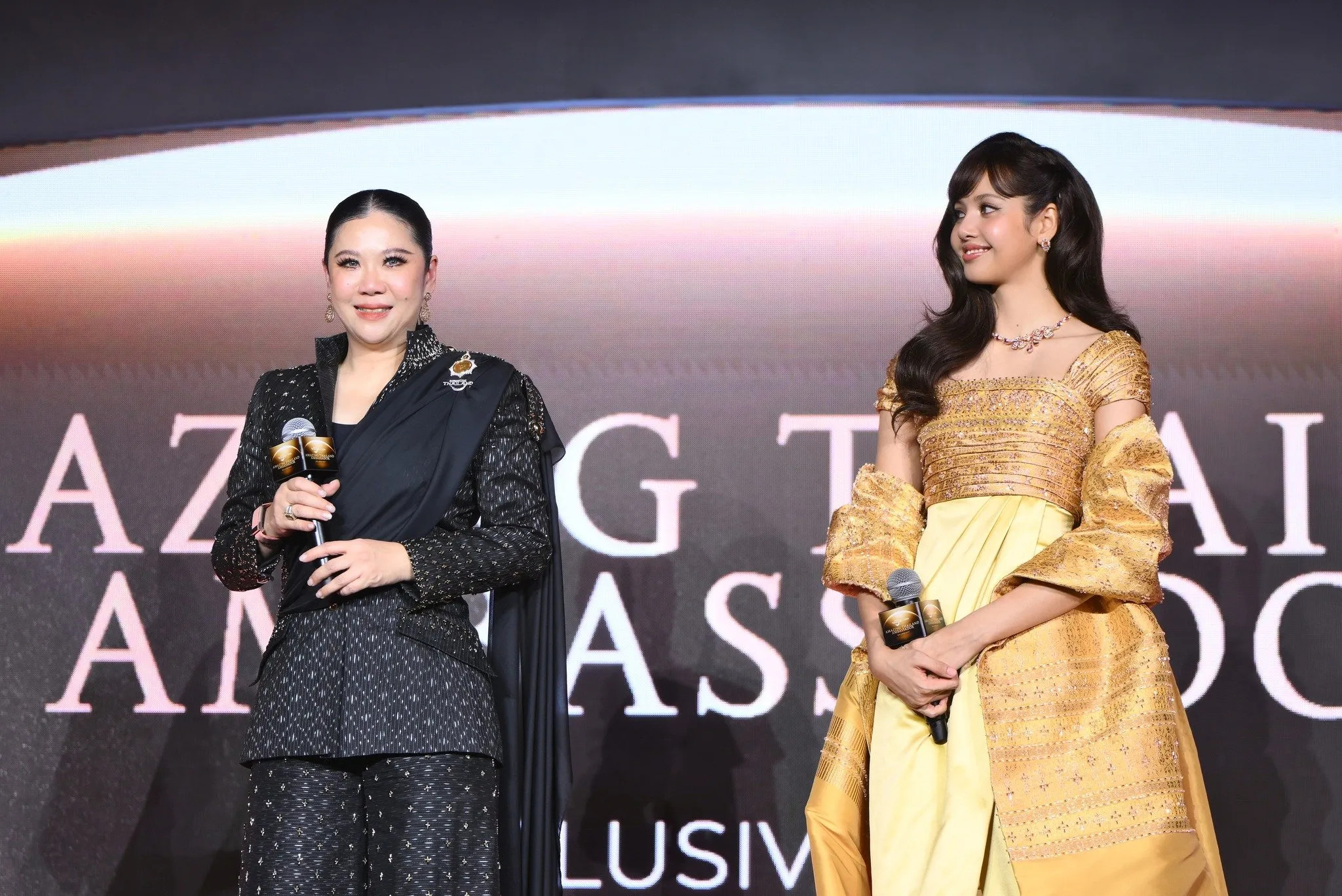
Lalisa’s appearance that night quickly became part of the conversation. She wore a gold silk evening gown that felt unmistakably Thai, yet firmly contemporary. The dress drew inspiration from royal attire associated with Her Majesty Queen Sirikit, The Queen Mother, whose influence on Thai fashion extends well beyond ceremonial dress.
The design traces its roots back to a 1960 evening gown by Pierre Balmain, later adapted under Queen Sirikit’s patronage using Thai silk and gold brocade. What emerged from that reinterpretation was not imitation, but translation. Western couture techniques met Thai materials, sensibilities, and craftsmanship, resulting in a silhouette that could move confidently between cultural worlds.
This lineage matters. Queen Sirikit’s engagement with fashion was never simply about aesthetics. During the mid-20th century, when Thailand was positioning itself on the global stage, she used dress strategically to elevate Thai textiles and craftsmanship, proving they belonged in international settings without losing their identity. The evening gown that inspired Lalisa’s look was part of that broader effort, one that transformed traditional materials into symbols of modern nationhood.
Chut Thai as Living Language
Lalisa’s gown also points to a broader understanding of chut Thai, which is often misread as static or purely ceremonial. In practice, Thai dress has always shifted with context and time. Under Queen Sirikit’s guidance, traditional forms were refined and standardized in ways that made them wearable, adaptable, and relevant beyond ritual settings.
That approach reframed fashion as both cultural expression and economic support. By linking Thai silk production, weaving communities, and artisan skills to contemporary use, Queen Sirikit positioned clothing as a source of income and continuity, particularly for rural families. Thai dress endured because it remained in circulation, not because it was preserved unchanged.
In that sense, Lalisa’s gown followed the same logic. It was not a reproduction or a nostalgic gesture, but a continuation. One that allowed Thai fashion history to speak in the present tense.
Soft Power That Feels Personal
The TAT has been clear about why Lalisa was chosen. She is a Thai artist with global visibility whose success feels current, not inherited. Her appointment signals a way Thailand wants to be seen: confident, culturally grounded, emotionally resonant, and open to reinterpretation.
That confidence shows up in the campaign’s messaging. Thailand, Lalisa suggested on stage, is not defined solely by landmarks or cuisine, but by how it makes people feel when they are there: warmth, ease, and a sense of welcome. These are intangible qualities, but they are also powerful drivers of memory and return visits.
In this context, fashion becomes narrative. Lalisa standing at Wat Arun in a gown inspired by Queen Sirikit’s royal attire quietly tied together multiple threads of Thai soft power: history, craftsmanship, global fluency, and lived experience.
From The Queen Mother to a New Generation
Queen Sirikit’s legacy in fashion was never about freezing tradition in place. It was about ensuring continuity through relevance. Lalisa’s appearance as Amazing Thailand’s ambassador reflects that same principle, where the past is present without being performative.
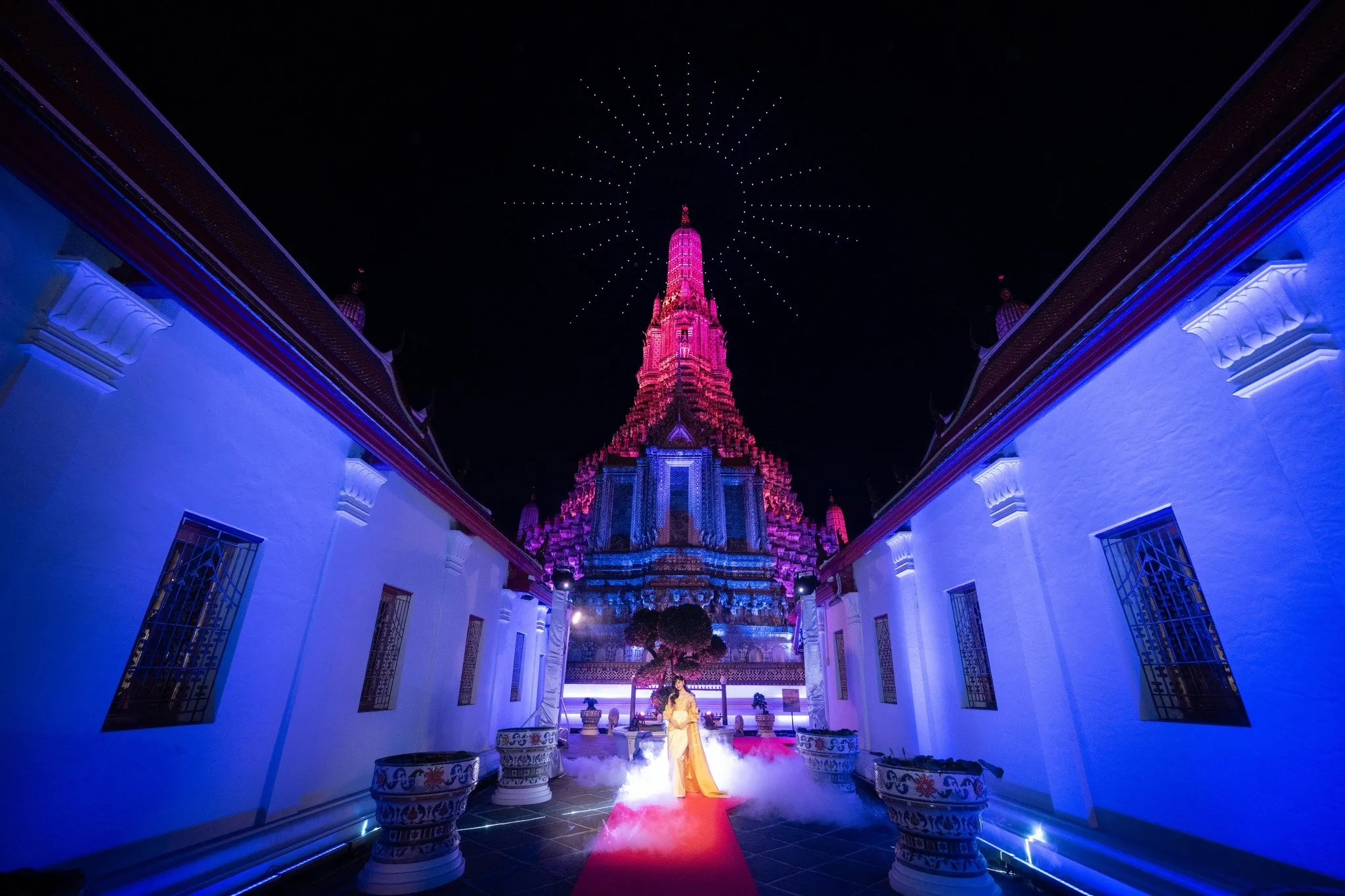
As the campaign invites visitors to experience Thailand through feeling as much as sight, the image that emerged from Wat Arun was a simple one. A global pop figure speaking casually about home. A dress carrying decades of cultural intention. A setting that anchored both in place.
Together, the moment suggested how identity moves forward when it is allowed to evolve rather than be preserved unchanged. And how Thai identity already moves, looks, and sounds when it is comfortable with itself.

 Paul Rujopakarn