Thailand is looking to deepen its longstanding economic relationship with Japan while shifting cooperation towards new industries, as Prime Minister Anutin Charnvirakul used a visit to Tokyo to promote investment, strengthen supply chains, and position the Kingdom for its next phase of growth.
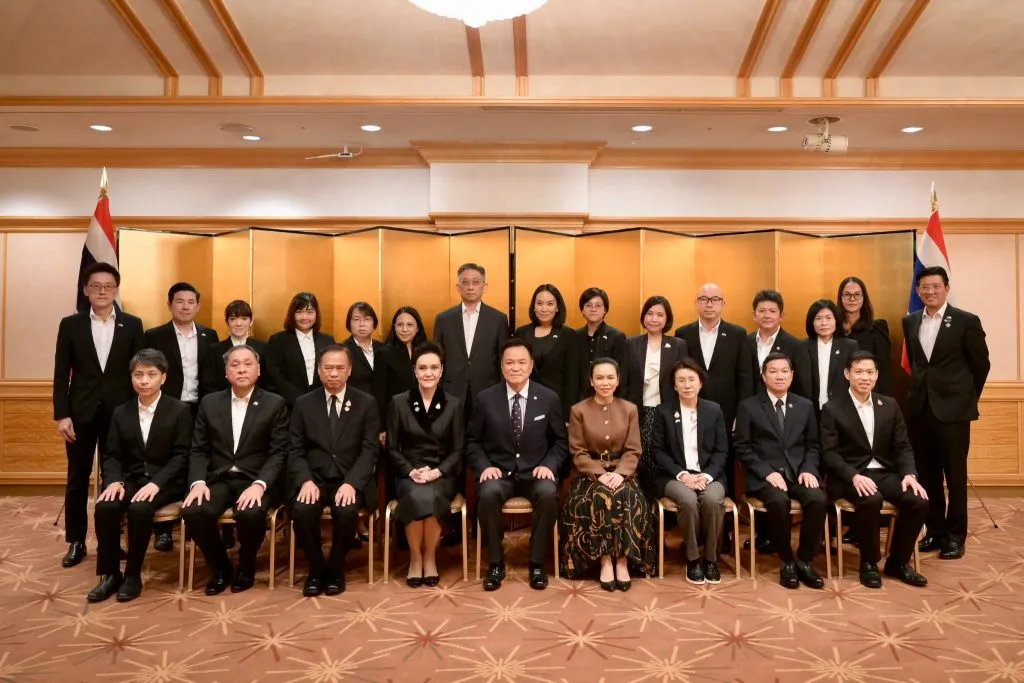
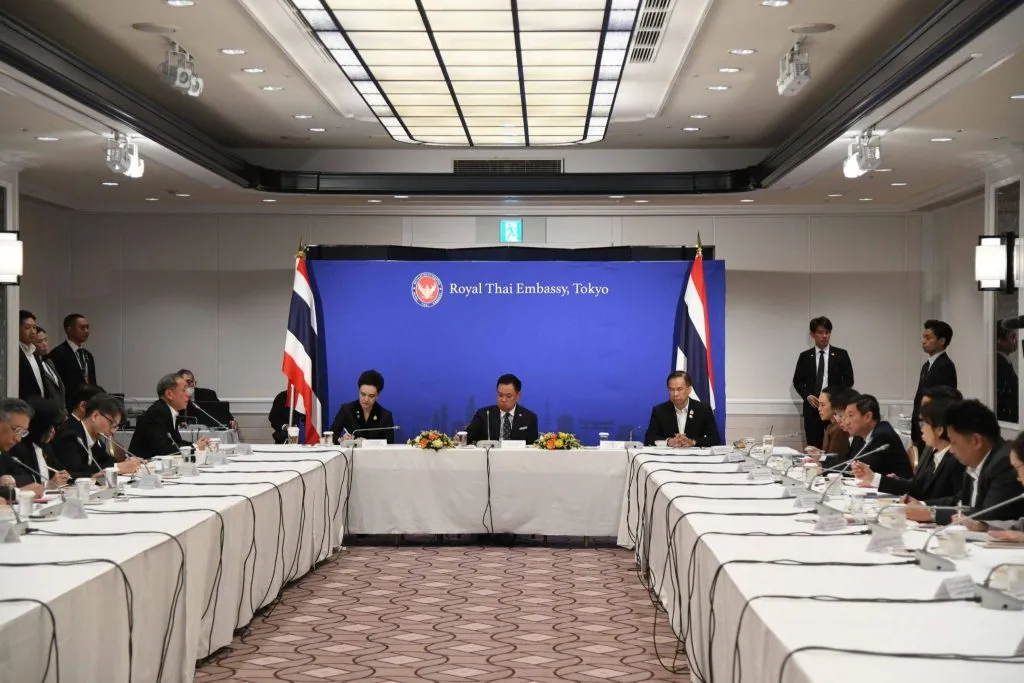
Anutin, who arrived in Tokyo on September 20th, chaired a September 21st meeting of “Team Thailand” in Japan, bringing together representatives from Thai government agencies, including the Board of Investment (BOI), along with the foreign affairs, commerce, industry, and finance ministries.
The meeting focused on moving Thailand-Japan relations from established manufacturing ties towards a more dynamic partnership centered on investment, technology, and future industries.
Key Takeaways
- Prime Minister Anutin Charnvirakul led a delegation to Tokyo on September 21, 2026, to expand bilateral economic ties into high-tech manufacturing following THB 184.7 billion in Japanese investment in 2025.
- Prime Minister Anutin Charnvirakul urged Japanese leaders to move from basic assembly toward joint production in electric vehicles, semiconductors, and digital technology.
- The Board of Investment of Thailand approved 248 Japanese investment applications worth THB 67.2 billion in 2025 across machinery, automotive, metals, and electronics.
- The Stock Exchange of Thailand strengthened market links with Japan through depositary receipts and the BOI-to-IPO initiative as foreign capital flows into Thai markets turned positive.
- Thailand plans to expand solar power, bioenergy, and lower-carbon infrastructure to attract private sector energy investments from Japanese firms.
Building on a decades-old partnership
Source: ThaiGov.go.th / Website
As Thailand’s third-largest trading partner, Japan remains deeply embedded in the Thai economy, with bilateral trade exceeding US$53.2 billion, while Japanese companies remain the Kingdom’s largest foreign investors on a cumulative basis.
Japanese investment in Thailand totaled 184.7 billion baht in 2025. The BOI also approved 248 investment-promotion applications from Japanese investors worth THB67.2 billion, with machinery and automotive, metals and materials, and electrical and electronics among the major sectors.
Anutin nevertheless argued that the relationship must evolve as the global economy continues to change.
“Technology, the environment, and geopolitics” are reshaping economic relations, he said, calling for Thailand and Japan to move from “producing for each other” towards “producing together” with shared supply chains.
That emphasis on moving beyond assembly also aligns with analysis by Dr. Nopparuj Chindasombatcharoen, a researcher at the Thailand Development Research Institute.
“Thailand has no way of escaping the middle-income trap and becoming a high-income country if it remains merely a place for final assembly or a place for foreigners to rent to establish production bases,” said Dr. Nopparuj.
In an August opinion piece, he recommended that Thailand identify strategic positions within global supply chains that build on existing capabilities, rather than trying to manufacture everything itself.
That transition is especially visible in automobiles. Decades of Japanese investment have developed a substantial domestic parts industry, but the shift from internal combustion engines (ICE) to electric vehicles (EVs) has brought new players into batteries, electronics, and semiconductors.
Anutin said future Japanese cooperation would likely need to take the form of direct investment that builds on Thailand’s existing manufacturing base, while expanding into digital technology, electronics, and other high-value industries.
A greener economy and what comes next
Source: ThaiGov.go.th / Website
Energy transition is another area where Thailand hopes to attract investment and technological cooperation.
Anutin highlighted plans to expand clean-energy sources, particularly solar and bioenergy, while developing infrastructure and financing frameworks capable of supporting a lower-carbon economy. He also pointed to opportunities for private sector participation in electricity generation, including rooftop solar systems connected to the national grid.
He sought to send a clear message to Japanese investors that Thailand wants to remain part of established Japanese supply chains while creating new ones around emerging industries.
The government is also seeking to translate renewed interest in Thailand’s capital markets into investment in the real economy. Paiboon Nalinthrangkurn, chairman of the Federation of Thai Capital Market Organizations (FETCO), said foreign capital flows into Thailand had turned positive for the first time in years, while the SET Index had risen nearly 30% this year.
The Stock Exchange of Thailand has meanwhile strengthened links with Japanese markets, including through depositary receipts and the BOI-to-IPO initiative, which gives foreign companies investing in Thailand avenues to raise capital domestically.
Amid ongoing efforts to preserve a decades-old economic partnership, Anutin’s Tokyo visit nevertheless also represents a bid to reposition that relationship around the innovations, investments, and supply chains that will shape Thailand’s next industrial chapter.