

Thailand recently showcased its ambitious vision for sustainable and high-value tourism at ITB Berlin 2025, the world’s largest travel trade show. The event, held from March 4th-6th, 2025 at the Berlin ExpoCenter City, marked the 50th year of Thailand’s participation.
The Tourism Authority of Thailand (TAT) brought 160 tourism operators to Berlin, the largest Thai delegation at the event to date. These businesses, representing hotels, destination management companies, and wellness providers, engaged in business-to-business networking sessions, exploring opportunities to expand in the European market.
“Sustainable Thailand Soft Power” sets ambitious goals
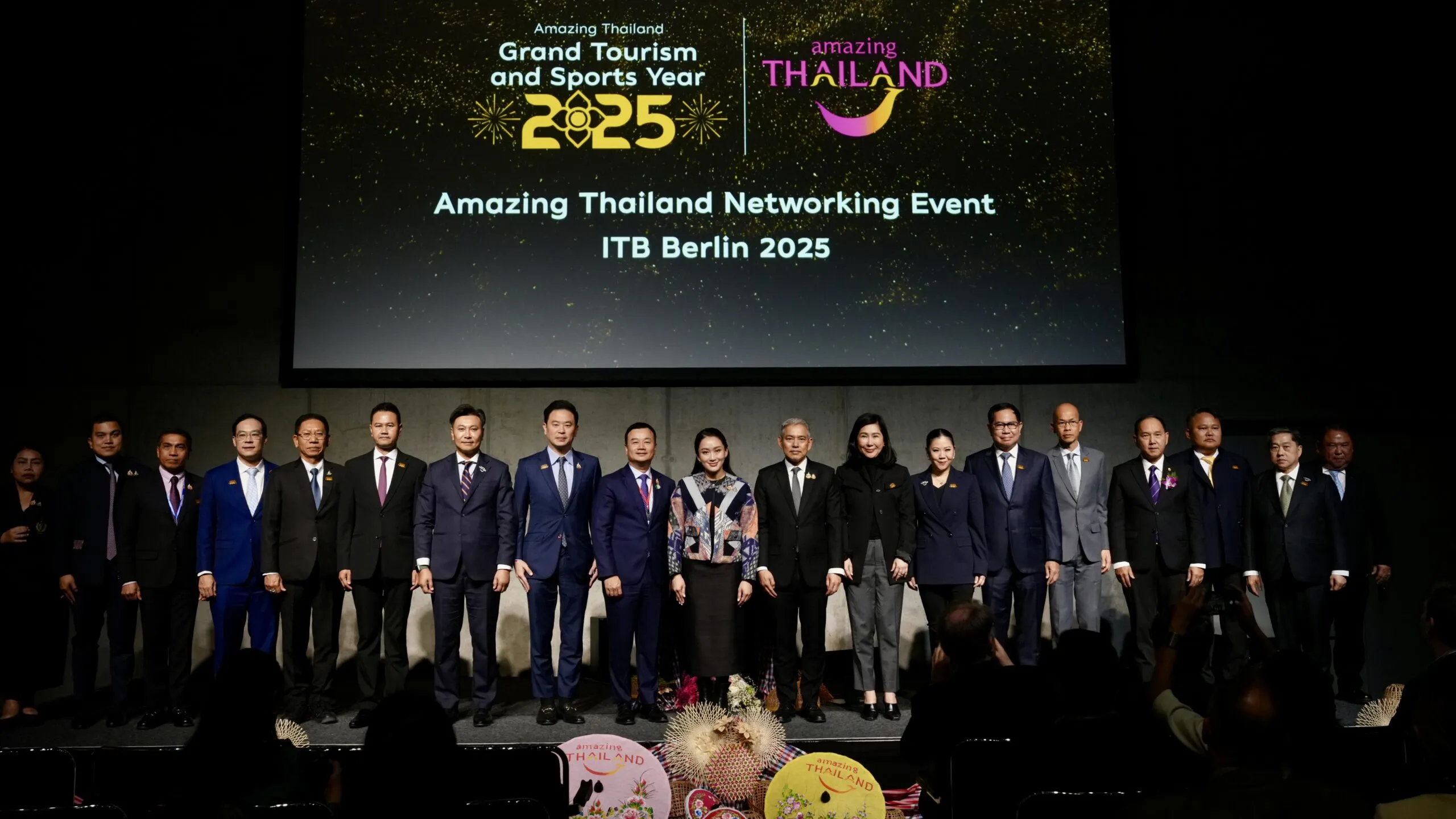
The Thailand Pavilion, with the theme “Sustainable Thailand Soft Power,” highlighted the nation’s cultural and creative tourism, sports-related attractions, and emerging “Hidden Gem Cities.” This centerpiece pavilion, expanded to 1,820 square metres, featured five distinct zones:
- Business Meeting and Provincial Areas to connect Thai sellers with international buyers
- Partner Organisation Areas to promote sustainable tourism
- The Saneh Thai (Soft Power) Area to highlight Thai culture
- The Tourist City Area to showcase “hidden gem” provinces
- The Sports Tourism Area to focus on Muay Thai and adventure tourism
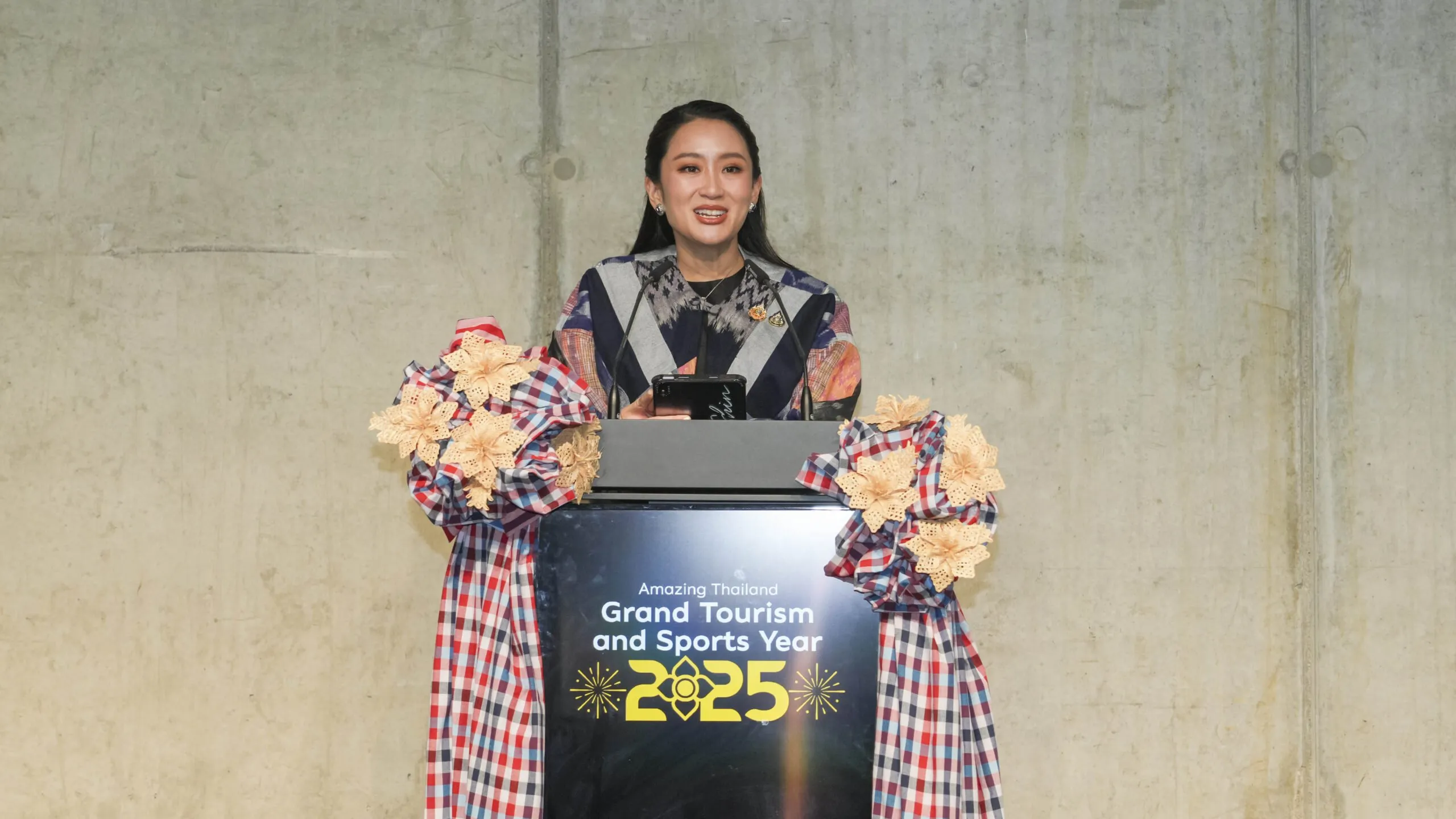
The Thailand Pavilion launched the “Amazing Thailand Grand Tourism and Sports Year 2025” to the European market. The Amazing Thailand Networking Event, held at the City Cube Berlin, reinforced Thailand’s commitment to sustainability, innovation, and inclusivity.
Thailand aims to attract 39 million international visitors in 2025, generating approximately €98 billion (THB3.5 trillion) in revenue. The government projects 10.6 million visitors from Europe alone, contributing around €24.2 billion, with Germany as a key market expected to contribute over one million tourists. From January 1st to February 23rd, 2025, Thailand welcomed 2.34 million international tourists, including 1.85 million from Europe, 310,000 from America, 152,000 from the Middle East, and 24,000 from Africa.
Partnering for truly sustainable tourism
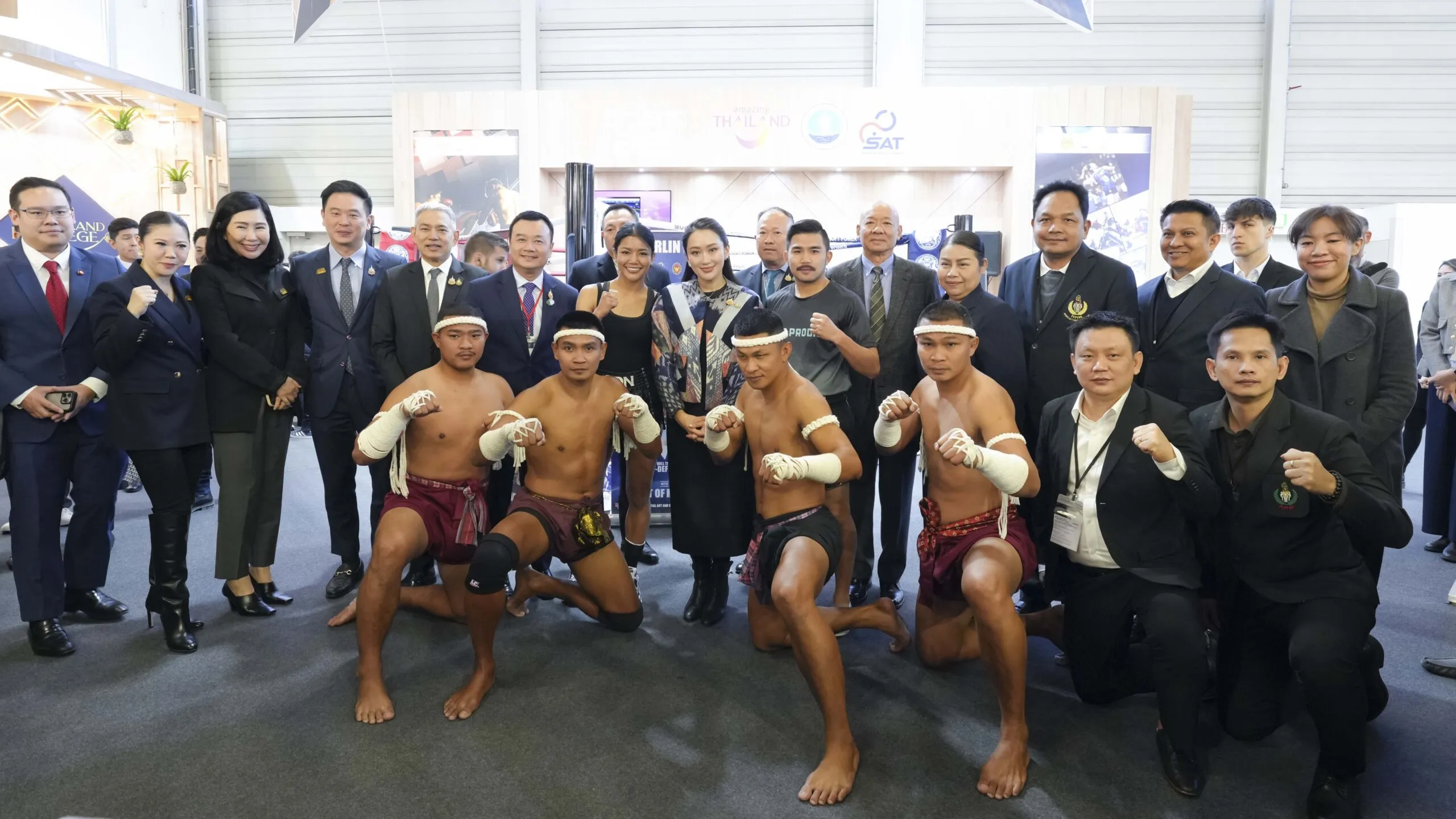
With sustainability front and center, the Thailand Pavilion promoted green initiatives such as the “Thailand Green Destinations Map” and the Krabi Sustainable Tourism Model. Meanwhile, the debut of TATAI, an AI-powered digital tourism hub developed with Google, showcased Thailand’s push for digital innovation. This 3D hologram system offers real-time travel assistance through the TAT website, enhancing visitor convenience and supporting Thailand’s “Ignite Tourism Thailand” policy.
Prominent figures such as Prof. Dr. Pungpond Rukumnuaykit, an expert in social sciences, emphasized the need for integrated collaboration across academic, government, and private sectors to develop a truly sustainable tourism industry. Research and innovation play pivotal roles in setting practical standards and guidelines, contributing to economic growth while reducing inequality and promoting inclusive opportunities.
Prof. Dr. Chakkaphan Sutthirat, Deputy Director of Thailand Science Research and Innovation (TSRI), meanwhile highlighted international partnerships, such as with the Adventure Travel and Trade Association (ATTA) for adventure tourism and Planeterra for community-based tourism, to advance carbon neutral tourism and net-zero tourism.
Leveraging air and rail transport infrastructure
To accommodate growing visitor numbers, Airports of Thailand (AOT) was on hand to highlight its infrastructure expansions, including the Suvarnabhumi Airport East Expansion project. This development is part of a broader plan to transform Thailand into a regional aviation hub capable of handling up to 250 million passengers annually.
AOT’s focus on sustainability aligns with the goal of the International Civil Aviation Organization (ICAO) of achieving net-zero emissions. Initiatives include solar power expansion, hydrogen energy exploration, and the potential export of sustainable aviation fuel (SAF).
Another highlight was the Rail Tourism initiative, promoting low-carbon travel and connecting heritage and natural sites across regions:
- Northern Route: Chiang Mai, Lamphun, Lampang, Phrae, Uttaradit, and Phitsanulok, linking cultural villages and historical sites.
- Northeastern Routes:
- Khon Kaen, Udon Thani, Nong Khai — focusing on Mekong River culture and local cuisine.
- Surin, Si Sa Ket, Ubon Ratchathani — emphasizing community life and cultural heritage.
- Southern Route: “Truly South” connecting the Gulf of Thailand to the Andaman Sea, offering viable alternatives to air travel.
Expanding Thailand’s global outreach
Beyond ITB Berlin, Thai researchers, led by Wasumon Netkitcharoen of the Thai Ecotourism and Adventure Travel Association (TEATA), will collaborate with Thai embassies abroad to expand the MICE (Meetings, Incentives, Conferences, and Exhibitions) market. The “Nation to Nation” strategy aims to integrate Thai tourism with global standards through research, science, and innovation as key development tools.
Thailand’s major outing at ITB Berlin underlines its strategic approach to tourism — combining sustainability, cultural appeal, and robust infrastructure — to attract high-value visitors as well as ensure long-term growth for the nation’s tourism sector.

 Teerin Julsawad