

Thailand is accelerating plans to transform Ranong Port into a strategic maritime gateway linking the Andaman coast with the South Asian region, as the Kingdom pushes to strengthen trade connectivity across the Bay of Bengal Initiative for Multi-Sectoral Technical and Economic Cooperation (BIMSTEC).
During an inspection visit to Ranong on June 12th, Deputy Transport Minister Sanphet Boonyamanee described the port as a key pillar of the government’s strategy to develop Thailand’s western seaboard into a logistics hub connecting domestic supply chains with BIMSTEC economies and wider Indian Ocean shipping routes.
Calling Ranong Port a “strategic asset,” Sanphet said it will help integrate Thailand’s logistics network with South Asia while supporting national economic growth, adding that expanding the port’s capacity and linking it with other transport systems would be essential to reducing logistics costs.
Building an Andaman logistics hub
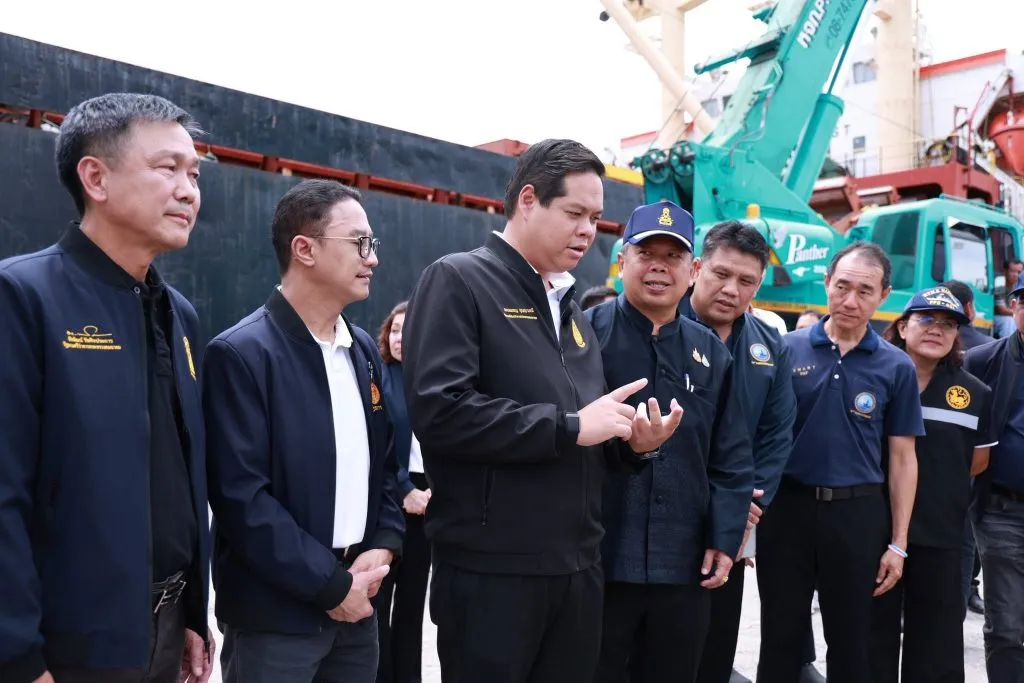
The latest push builds on efforts already underway to deepen cooperation with ports across Bangladesh, India, and Sri Lanka through memoranda of understanding aimed at opening new shipping routes and improving regional connectivity.
At the heart of the strategy is the proposed Ranong-Chittagong shipping route, which Thai officials have promoted as a way to significantly shorten transit times between Thailand and Bangladesh while strengthening BIMSTEC supply chains.
BIMSTEC, which comprises Bangladesh, Bhutan, India, Myanmar, Nepal, Sri Lanka, and Thailand, represents a market of roughly 1.5 billion people and a combined economy valued at more than US$3.5 trillion, making it an increasingly important focus for Thailand’s “Look West” policy.
Rutthakorn Khiewpaisal, Deputy Director-General for Financial Management and Corporate Strategy at the Port Authority of Thailand (PAT), noted that Ranong’s Andaman Sea location provides a natural advantage, allowing direct access to the Indian Ocean without relying on more congested maritime routes.
Cargo growth signals rising demand
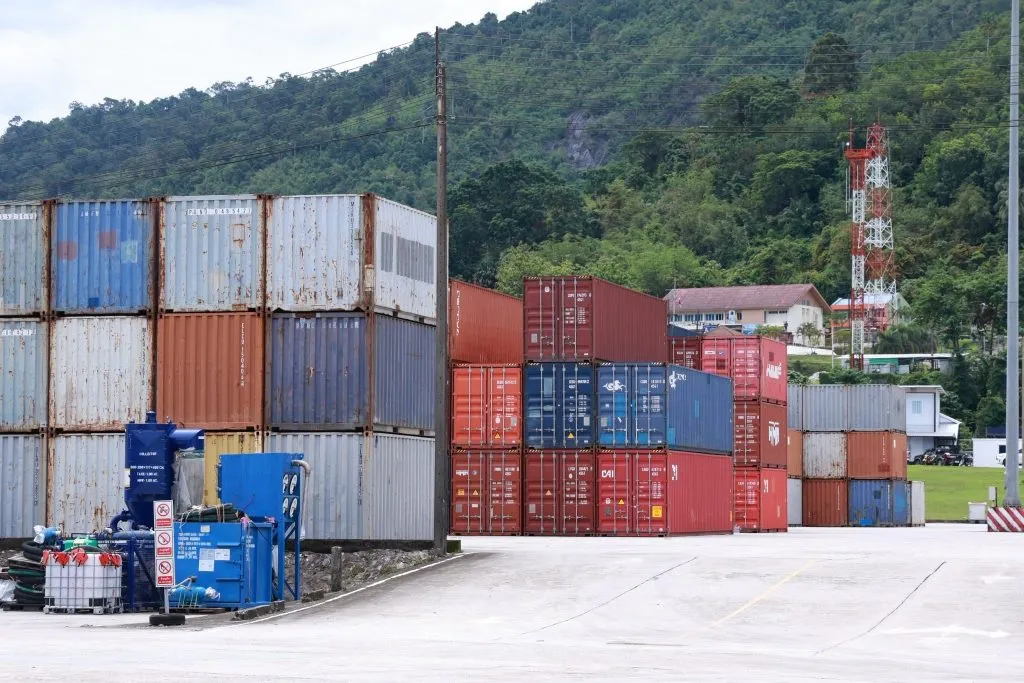
The government’s renewed emphasis comes as the port records stronger operational performance for the first seven months of fiscal year 2026, during which container throughput climbed 55.56% year-on-year to 7,000 twenty-foot equivalent units (TEUs).
Total cargo volumes meanwhile increased 7.07% to 106,000 tonnes, with vessel calls also ring 38.22% to 217, reflecting growing utilization of the facility.
PAT said continued investments in infrastructure, cargo-handling equipment, and service quality are intended to ensure the port can accommodate future growth while providing businesses with a more competitive logistics option.
Ranong currently operates a 150-meter container berth capable of handling vessels of up to 8,000 gross tons and a 134-meter multipurpose berth, supported by warehouses, container yards, and specialized cargo-handling equipment.
Wider port infrastructure ambitions
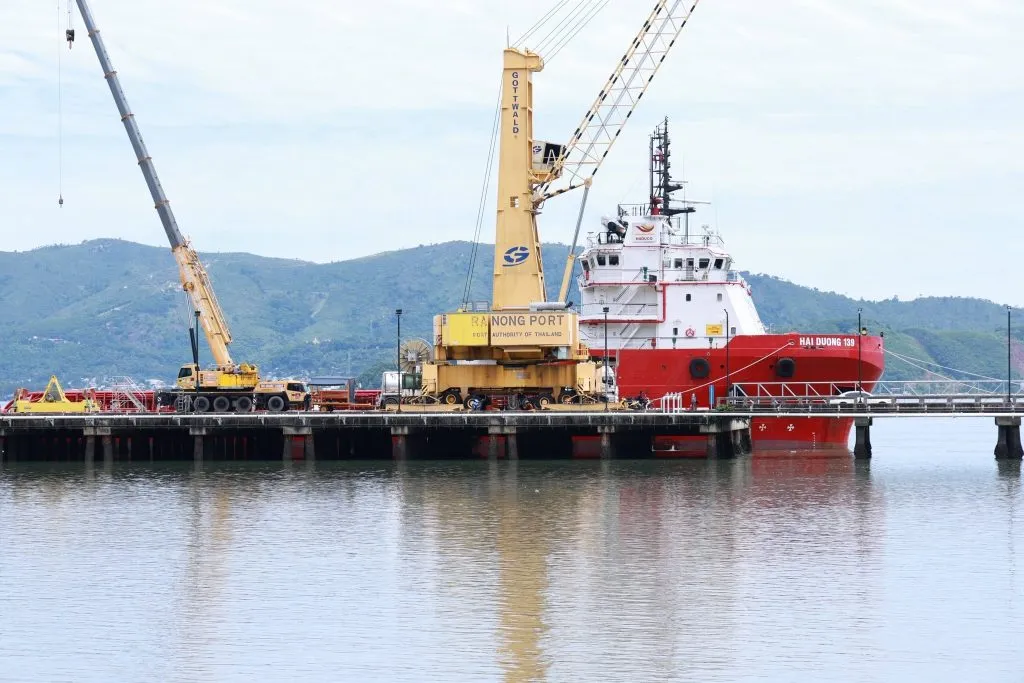
Besides the port itself, officials are examining broader transport upgrades to reinforce Ranong’s role as an international gateway.
Proposals under discussion include expanding major highways, improving rural road links, studying a rail connection between Ranong Port and Ratchakrud, creating additional container storage facilities, and developing an outer ring road to ease urban congestion.
By integrating maritime, road, and potentially rail infrastructure with stronger regional partnerships, the Thai government is hoping to position Ranong as a practical bridge between Southeast Asia and the rapidly expanding markets of BIMSTEC, strengthening its role in regional trade and logistics for years to come.

 Teerin Julsawad