

Thailand is quickly becoming one of Southeast Asia’s most enthusiastic adopters of artificial intelligence, even as the Kingdom’s early success may also reveal a global paradox about the future of work.
Recent regional research shows more than 90% of Thai students and over 80% of teachers now regularly use generative AI tools for writing, summarizing, designing, and research tasks. Across workplaces, AI has quietly embedded itself into daily routines, from translation and analytics to recruitment and customer service operations.
The result is what researchers describe as an emerging “AI-native” workforce, where digital assistance is less experimental and more the norm. Companies increasingly view AI literacy as a hiring advantage, positioning Thailand as a potential pace-setter for ASEAN’s race toward a projected US$1 trillion digital economy by 2030.
Yet beneath the optimism lies an unexpected shift: workers may become more productive and no less busy.
Productivity gains, heavier workloads
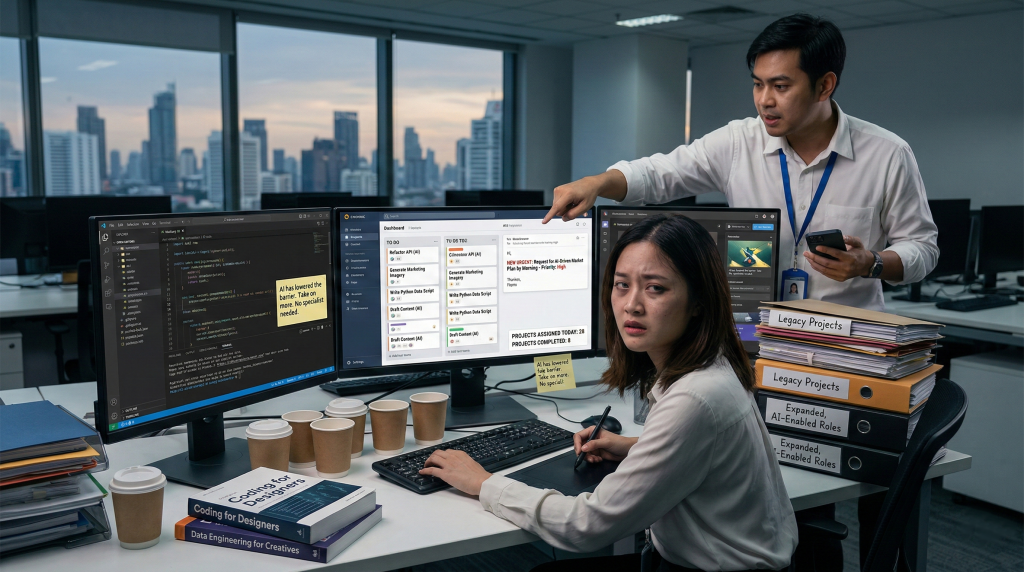
AI was widely expected to eliminate repetitive tasks and free employees for higher-value work. Instead, mounting research suggests the opposite may be unfolding.
Studies tracking employees using generative AI tools found workers moving faster, taking on broader responsibilities, and extending their working hours, often voluntarily. Because AI lowers the barrier to starting tasks, employees increasingly attempt work that was once handled by specialists or additional hires.
Designers experiment with coding, researchers step into engineering roles, and office workers juggle multiple AI-assisted projects simultaneously.
The technology creates what researchers call a “self-reinforcing cycle” in which faster output raises expectations, expanding workloads even further. Employees report feeling capable of accomplishing more, yet not feeling any less overwhelmed.
Globally, surveys show nearly one-third of workers say their workload increased after AI adoption, while many report growing performance pressure and signs of fatigue.
Eroding work-life balance
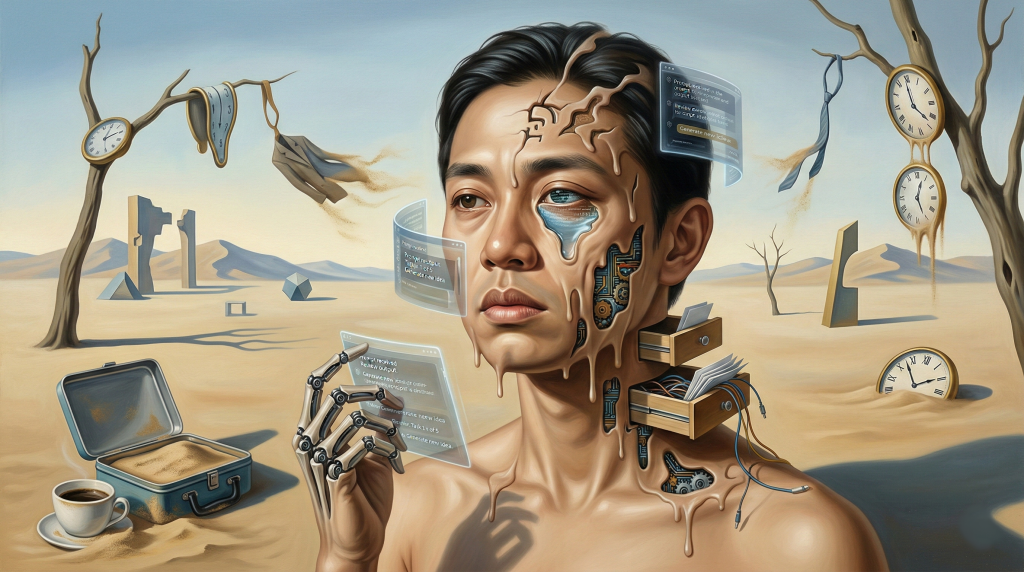
One of AI’s most profound impacts may also be cultural rather than technical.
Given that interacting with AI chatbots feels conversational, similar to chatting instead of working, employees increasingly slip tasks into moments once reserved for rest.
A quick prompt during lunch, a final request before leaving the desk, or checking AI-generated results after hours have gradually blurred the boundaries between professional and personal time.
Workers managing several AI processes simultaneously are constantly reviewing outputs, switching tasks, and verifying results, creating new cognitive demands even as automation accelerates workflows. According to Harvard Business Review, this rhythm of “continuous solo engagement” with work risks burnout and declining decision quality if left unmanaged.
Thailand’s readiness gap
Thailand’s rapid adoption also exposes a widening gap between AI usage and AI understanding.
Dr. Piti Srisangnam of the ASEAN Foundation has warned that the regional conversation must now shift from access to governance, while Marija Ralic of Google.org APAC has argued that widespread availability alone does not equal readiness without a deeper understanding of AI systems and their limitations.
At the same time, economic data suggests AI is boosting productivity and wages in AI-exposed industries, reinforcing pressure on workers to continuously adapt as skill requirements evolve faster than ever.
The new challenge of sustainable AI work

The question now facing organizations is no longer whether AI improves productivity, but rather how to prevent productivity from turning into excessive workloads.
Global workforce data from PwC’s 2025 Global AI Jobs Barometer shows AI is already boosting productivity, revenue growth, and wages in technology-exposed industries, including in Thailand. PwC Thailand consulting partner Dr. Pirata Phakdeesattayaphong nevertheless cautions that companies must treat AI as a tool to enhance human performance, and not simply a way to demand more output.
For Thailand, now standing at the forefront of mass AI adoption, the experiment unfolding across classrooms and offices may offer an early glimpse of the future of workflows worldwide, with productivity being faster, smarter, and potentially more demanding than ever before.

 Teerin Julsawad