

Songkran, as the traditional Thai new year, is one of the most important events and biggest festivals in the country’s calendar.
The word Songkran derives from the Sanskrit word, “Sankranti,” which means “movement.” Specifically, it refers to the movement from one zodiac to another (in this case, from Pisces to Aries).
Therefore, Songkran is traditionally observed from April 13th – 15th, but since its inscription as a UNESCO Intangible Heritage of Humanity, Maha Songkran (literally, “Grand Songkran”) has been observed from April 11th – 15th.
Modern celebrations

The traditional Thai New Year is an extended public holiday, allowing Thais, as well as foreign nationals from neighboring countries that observe similar national New Year celebrations, to return to their hometowns for family reunions. Consequently, there’s usually a major exodus from urban centers, especially Bangkok.
April is the hottest month of the year in Thailand, so inevitably, Thai people have found a light-hearted way to beat the heat. The two of the most common street parties in Bangkok are Silom Road in Bang Rak District and Khao San Road in Phra Nakhon District.
These water fights can be a refreshing escape from the heat. Though largely discouraged nowadays, revelers can be seen smearing din sor pong (limestone talc mixed with water) on each other.
Family and religious traditions of Songkran
Undeniably, the most famous aspect of Songkran Festival is the splashing of water and water fights. However, other cultural aspects of Thailand’s traditional new year are Song Nam Phra (ซงน้ำพระ) and Rod Nam Dam Hua (รดน้ำดำหัว).
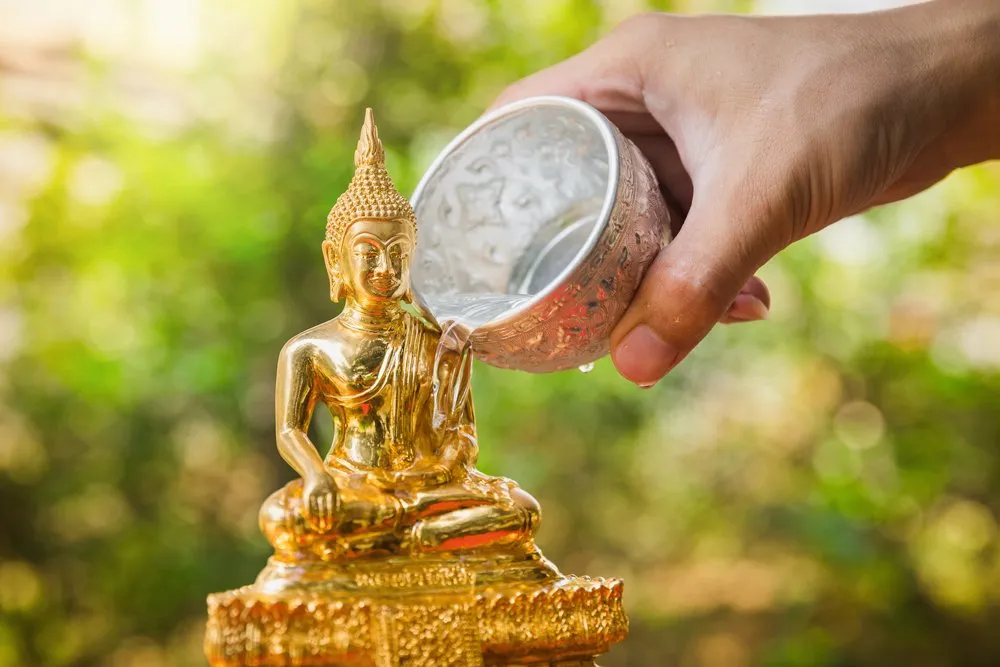
Song Nam Phra is a ritual of bathing the Buddha statue with scented water (traditionally scented with a Thai perfume called nam ob). This ritual is believed to be a way of paying respect to the Buddha statue and to bring good fortune to the person.
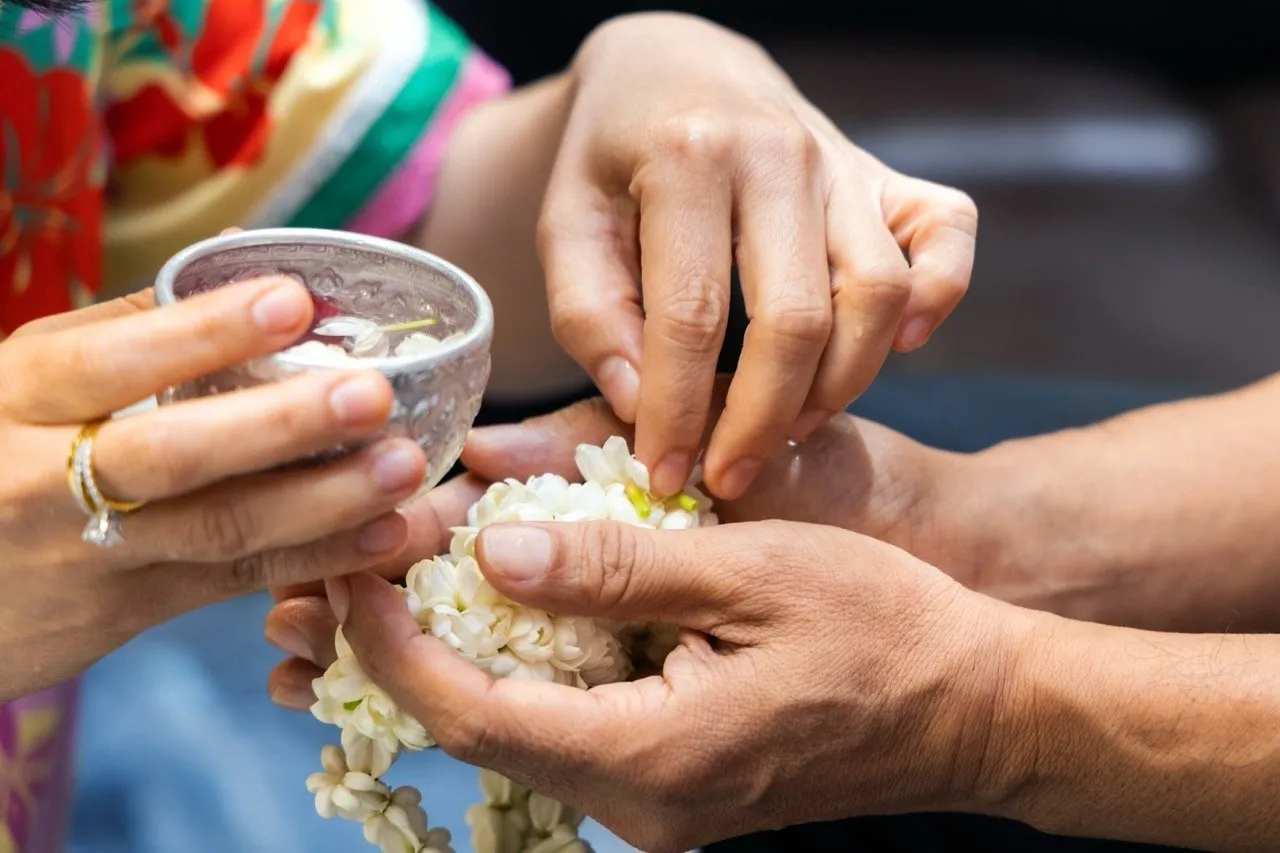
Rod Nam Dam Hua is somewhat similar to Song Nam Phra, but it is a ritual of pouring scented water on elderly family members’ palms to pay respect and receive their blessings.
Where to go this Songkran 2026
Since its recognition as a UNESCO Intangible Cultural Heritage, Thailand has been pulling out all the stops and this year is no different. Here are some Songkran festivals worth immersing yourself in:
Ayutthaya: Water, Faith, Heritage
13–15 April: The ancient capital lends a historical atmosphere to the traditional new year. Highlights include floral and community parades, Buddha bathing, a water tunnel, and traditional ceremonies honoring elders. Catch a 3.8-kilometer parade featuring 21 floats and interact with elephants at Wang Chang Ayutthaya Lae Phaniat.
Surin: The Way of the Elephant
10–12 April: Surin offers a cultural experience centered on the “Way of the Elephant” and the province’s diverse ethnic groups. At Chaloem Phrakiat Park, visitors are encouraged to wear traditional silk and interact with elephants. A light & sound show and a grand parade will celebrate the four ethnic groups that are based in Surin.
Phrae: Bringing Indigo Fashion
9–21 April: For those looking to indulge in slow travel, Phrae is taking its time to celebrate Songkran, with a litany of special activities. The festivities will have a special focus on Mo Hom (หม้อห้อม) or indigo-dyed fashion and feature sapoke (สะโป้ก), a traditional Lanna bamboo percussion device unique to Phrae’s festivities. The main parade will take place on April 17th.
Bangkok: The Capital of Fun
12–15 April: Bangkok remains the top choice for travelers who want a mix of high-energy parties and traditional merit-making. Khao San Road will host the ultimate international water battle, while Siam Square will provide an all-ages “Siam Songkran” with free concerts. Don’t miss “Water Street 2026” at Banthat Thong, which combines world-class street food with water play.
Chon Buri: Keep the Festivities Going
5-20 April: If you aren’t ready for the party to end on April 15th, head to eastern Thailand’s Chonburi for the Wan Lai or “spillover” festivals, where the celebration continues for another week. Bang Saen Wan Lai, famous for its intricate sand pagoda competitions along the beach, is being held from April 16th to 17th, while Pattaya Wan Lai — perhaps the biggest and wildest water fight in the country — will take place on April 19th.
Find the full list of Songkran festivals taking place nationwide here.


