

Prime Minister Paetongtarn Shinawatra led Thailand’s delegation at the 55th Annual World Economic Forum (WEF) in Davos, Switzerland, from January 20th to 24th, 2025. The forum’s theme is “Collaboration for the Intelligent Age.”
There, she reaffirmed Thailand’s commitment to sustainable growth, championed the country’s economic potential, and seized opportunities to invite investment and collaboration from private sector leaders. The WEF proved to be a valuable platform for Thailand to elevate its presence on the global stage and demonstrate leadership in the most pressing challenges of our times.
Thailand makes landmark gains in free trade
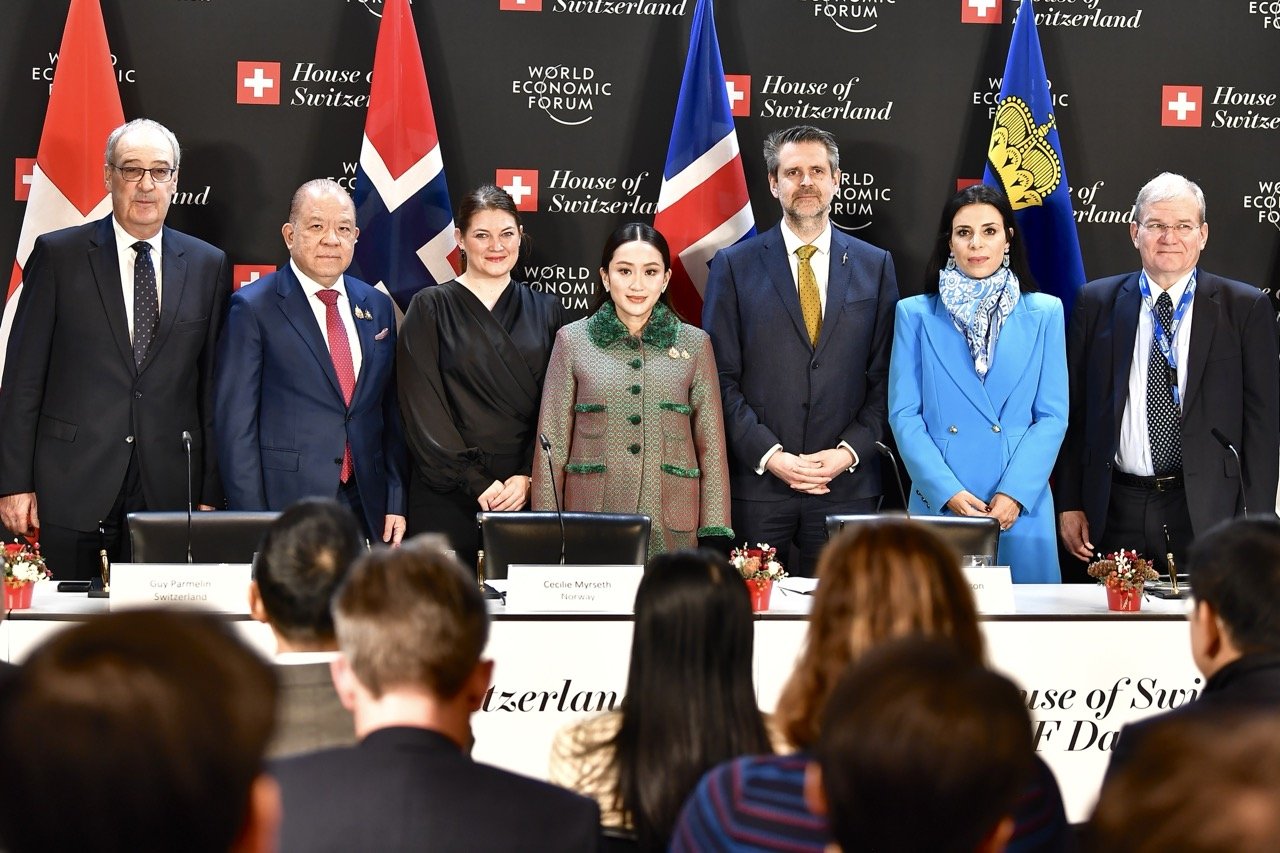
On January 23rd, 2025, Thailand signed a free trade agreement (FTA) with the European Free Trade Association (EFTA), which counts Switzerland, Norway, Iceland, and Liechtenstein as member nations. It was hailed as a major milestone for the Southeast Asian nation, marking its first trade pact with European nations.
In 2024, trade between Thailand and EFTA nations reached 11.8 billion US dollars, accounting for 1.94% of Thailand’s global trade volume. While the FTA will still need parliamentary approval, the deal is expected to boost bilateral trade in advanced technologies and data centers and could pave the way for further trade liberalization with European nations.
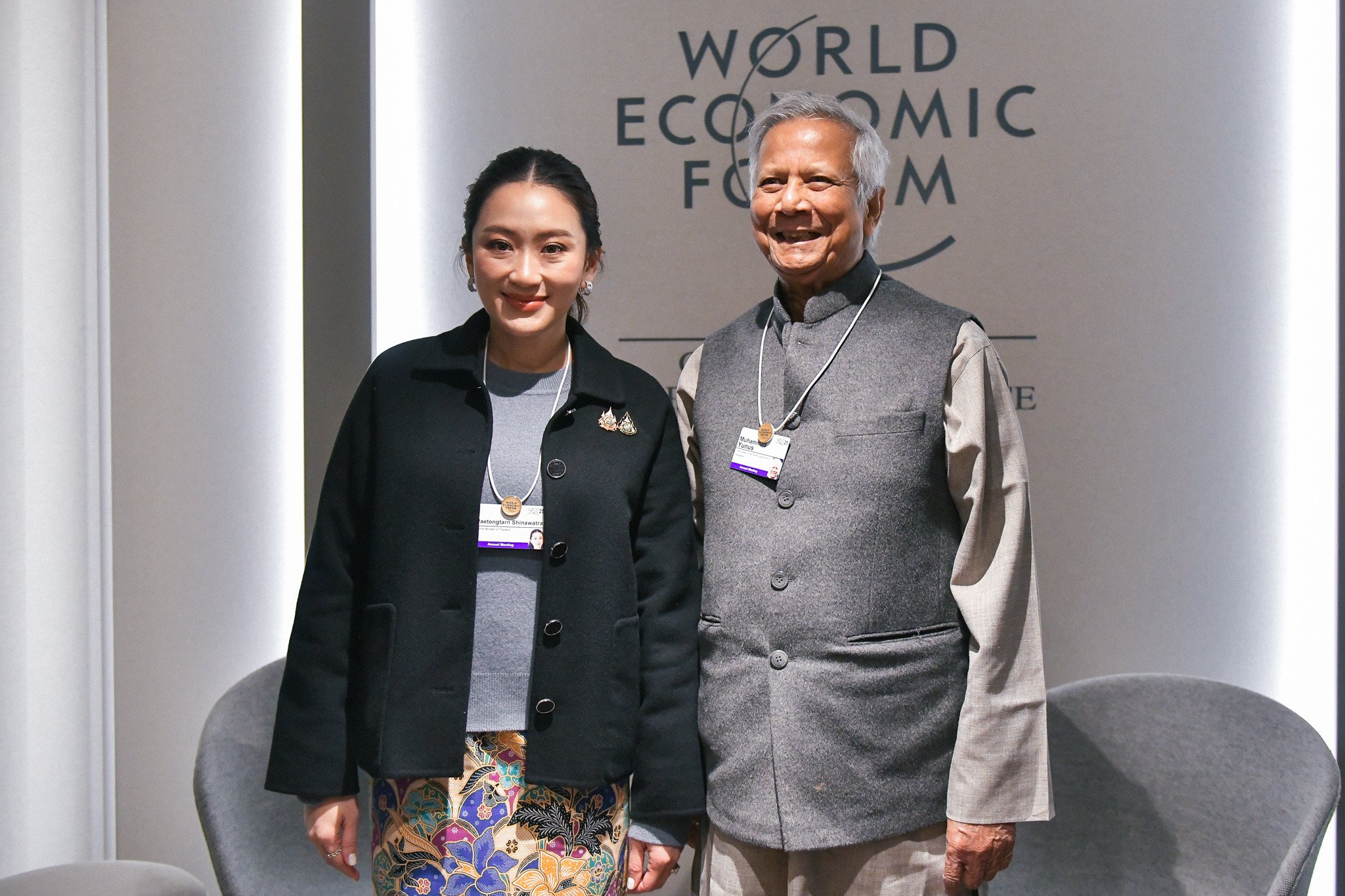
Meanwhile, Prime Minister Paetongtarn met with Bangladesh’s Prof. Muhammad Yunus, with both sides agreeing to accelerate FTA negotiations, aiming for US$2 billion in investments. Bangladesh is Thailand’s second-largest trading partner in South Asia.
Prime Minister Paetongtarn also invited Professor Yunus to deliver a keynote address at the Young Gen Forum during the sixth BIMSTEC Summit schedule on April 4th, 2025 in Bangkok.
Strengthening Thailand’s global presence
At the Country Strategy Dialogue (CSD) on Thailand, Prime Minister Paetongtarn outlined Thailand’s commitment to sustainable growth in three areas: high-tech agriculture and food production, creative economy and tourism, and sustainable industries, with an emphasis on bio-based industries, aiming for 50% renewable energy by 2040.
While inaugurating the Thailand Reception at the WEF, the Thai premier pointed to Thai dishes like Tomyum Goong — recognized by UNESCO as an Intangible Cultural Heritage of Humanity — as examples of the nation’s rich cultural heritage and focus on healthy ingredients.
During the summit, Paetongtarn also met with WEF Founder and Chairman Prof. Klaus Schwab to discuss enhancing Thailand’s global presence through collaboration in innovation, technology, and youth empowerment. Plans include Thailand hosting a WEF Special Meeting in 2026 and the Young Global Leaders’ Summit.
The Prime Minister also invited Prof. Schwab to speak at an ACD High-level Conference on Global Architecture in May 2025 in Phuket.

Harnessing soft power
The Prime Minister also spoke at the Betazone session, “Not Losing Sight of Soft Power,” moderated by Yana Peel, Chanel’s Global Head of Arts and Culture. There, she spoke about the need for Thailand to go beyond its “Land of Smiles” moniker to offer enriching and memorable experiences year-round and nationwide.
Paetongtarn shared her vision for leveraging Thai soft power, which she defined as the country’s ability to attract or influence others. Thailand, already renowned for its cuisine, martial arts, hospitality, and wellness industry, is moving to promote 14 distinct pillars of soft power, including fashion, music, design, gaming, and festivals, among others.

 Paul Rujopakarn
  Teerin Julsawad