Thailand is moving quickly to step up public health safety measures as officials in India scramble to contain a cluster of Nipah virus cases in West Bengal. The Thai Ministry of Public Health says the Kingdom remains free of confirmed infections, but a nationwide web of airport screenings, hospital preparedness, and animal-human surveillance is now on high alert.
The nation’s response is rooted both in lessons learned during the COVID-19 pandemic and in the reality that Nipah is a rare but potentially deadly zoonotic disease, capable of jumping from animals to humans and, in certain cases, transmitting between people.
Airports on the frontlines
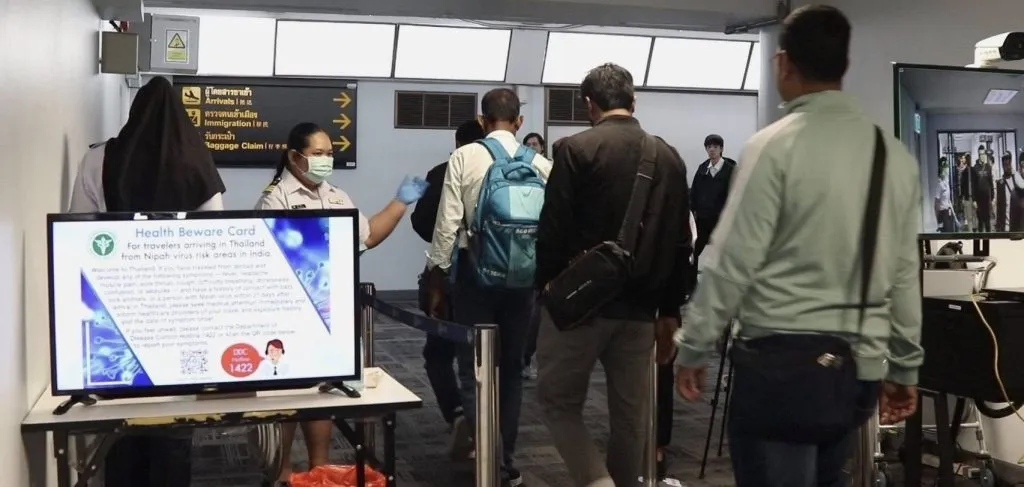
International gateways are Thailand’s first layer of protection. Enhanced health screening is underway at Suvarnabhumi, Don Mueang, and Phuket airports, with special focus on travelers arriving from West Bengal and other high-risk areas in India. Passengers are checked for fever and signs of illness, with those who raise concerns able to be transferred to designated quarantine and medical facilities for further evaluation.
Travelers from risk zones are also being issued “Health Beware Cards,” which list symptoms from fever and severe headache to breathing difficulty, confusion, and seizures, and advise seeking medical care immediately if they fall ill within 21 days before arrival. The Department of Disease Control (DDC) hotline, 1422, is also available daily for reporting symptoms or getting guidance.
In tourist hubs such as Phuket, authorities have stepped up cleaning cycles in airport terminals, especially on high-touch surfaces, while immigration, customs, and tourist police coordinate closely with disease control officers.
Hospitals prepare for the worst

Medical institutions have been instructed to ready specialist staff, isolation wards, and supplies in the event of a suspected Nipah case in the country. The Department of Medical Services has tasked major hospitals and national medical institutes with drawing up and sharing clinical guidelines so healthcare workers across Thailand know how to respond quickly and safely.
Prime Minister Anutin Charnvirakul has emphasized that while Nipah is not airborne and spreads mainly through bodily fluids, the lack of a vaccine or specific treatment means precautions must be enhanced accordingly. He nevertheless assured the public that people “can live their normal life as usual and adhere to their familiar hygienic routine,” adding that updates would be issued by the Ministry of Public Health.
Watching animals and people together

A key pillar of Thailand’s strategy has been the “One Health” approach, integrating both human and animal health policies with environmental monitoring. This matters because fruit bats, the natural hosts of the virus, are found nationwide, particularly around temples, orchards, and rural communities.
Virologists warn that contaminated fruit, fresh juices, or close contact with infected animals can lead to a spillover. Thailand’s large pig industry is also being monitored, as pigs can act as “amplifying hosts” if infected.
What the public can do
Health officials are also urging calm, emphasizing that simple habits such as washing hands frequently, eating freshly cooked meals, avoiding raw or unwashed fruit, and steering clear of animals that may carry the virus can make all the difference.