

Thailand has been pitching a sharper, faster, and more business-minded foreign policy as it navigates geopolitical shocks, border tensions, and intensifying competition among major powers.
Foreign Affairs Minister Sihasak Phuangketkeow this week formally outlined “Thai Diplomacy 2.0,” presenting it as a reset designed for a more fragmented world. At the event, “Thai Diplomacy in a Changing World: Where Are We Heading?,” the initiative was framed as a move to make diplomacy more strategic, coordinated, and relevant to everyday citizens.
He acknowledged that past instability at home had limited the Kingdom’s international agility, saying foreign policy had been “perhaps not as proactive as it should have been” because of leadership changes and domestic disruption.
Now, with a more stable government, Thailand sees an opportunity to change tack.
Four pillars, four priorities
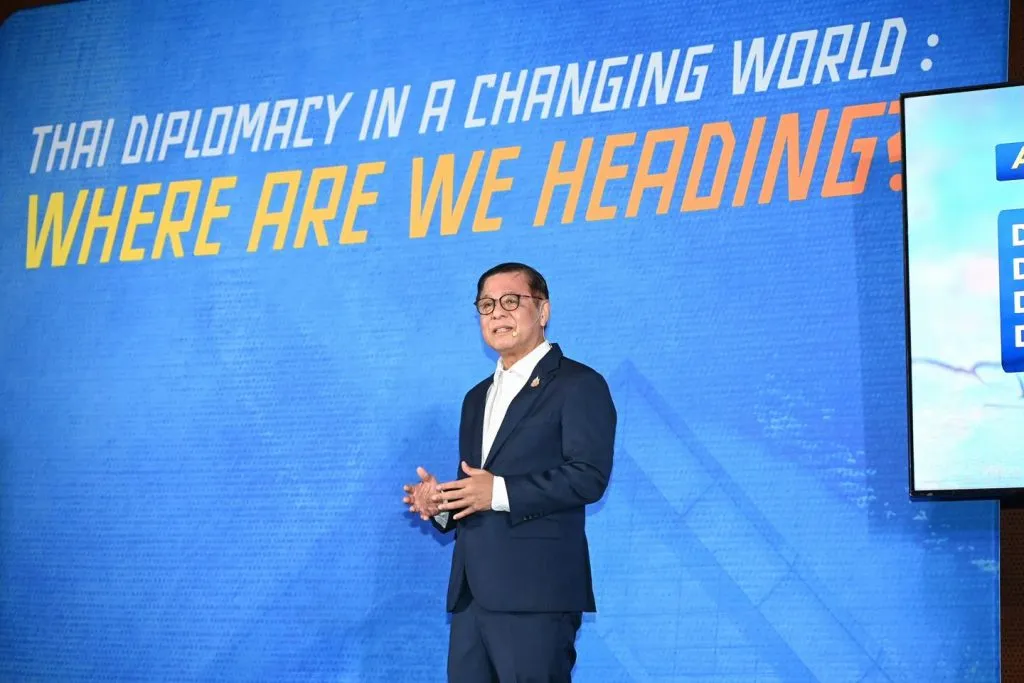
At the core of the strategy are four pillars comprising Strategy, Speed, Coherence, and Communication.
“We cannot manage problems day by day without a clear strategy about our direction or goals,” Sihasak said in reference to the first pillar, stressing the need for foreign policy to anticipate risks through long-term direction and planning rather than reactive policymaking.
Reflecting the principle of Speed, Thailand has established a 24-hour “war room” during the recent Middle East crisis to monitor threats around the clock and protect Thai nationals overseas and safeguard shipping routes.
The third pillar, Coherence, can be seen in its “Team Thailand” model, in which ministries, military agencies, and economic policymakers align behind common objectives. In a world where security, trade, and energy are increasingly intertwined, Bangkok wants to avoid siloed decision-making.
The fourth and final pillar, Communication, is an acknowledgment that modern diplomacy must be explained clearly to the public, especially when foreign policy decisions affect energy prices, jobs, travel, or national security.
“Foreign policy and diplomacy must be meaningful to the people. It must be tangible,” Sihasak said. “But we must go beyond that to create an impact on the world stage.”
Economic security through Gulf diplomacy
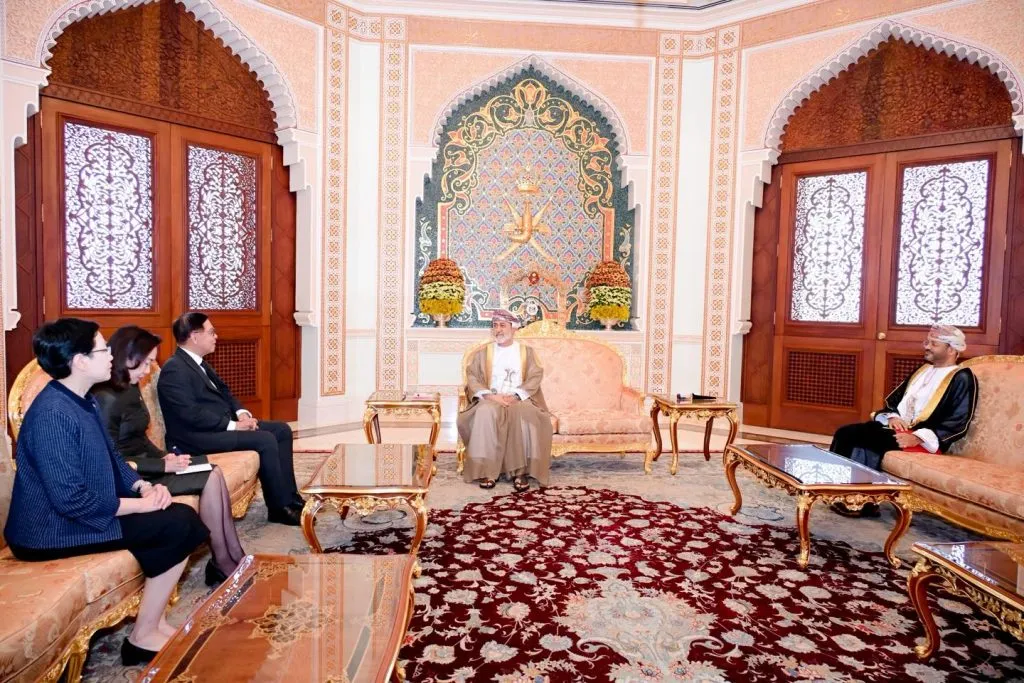
The clearest recent example of Diplomacy 2.0 has been Thailand’s push in the Gulf region, where maritime disruptions have threatened cargo flows and fuel markets.
During talks in Oman, Sihasak focused on safe passage for Thai vessels through the Strait of Hormuz while also discussing future crude supplies. “They are ready to sell it to us as they may have the oil surplus around June,” said the foreign minister.
Oman later confirmed it could provide surplus output if Thailand gives advance notice. The moves underline how diplomacy is now serving as an economic stabilizer. Thailand relies heavily on imported energy, and Thai officials at home are working to manage domestic fuel prices as global volatility hits household costs.
Thailand is also reaffirming a non-aligned posture, as rivalry between major powers deepens.
“We must not choose sides but maintain our stance,” Sihasak said, adding that Bangkok should instead help “bring different blocs together to promote peace.”
That position fits Thailand’s longer-term goal of strengthening ASEAN centrality while preserving room to maneuver between Washington, Beijing, and other competing poles.
People-first approach in foreign policy
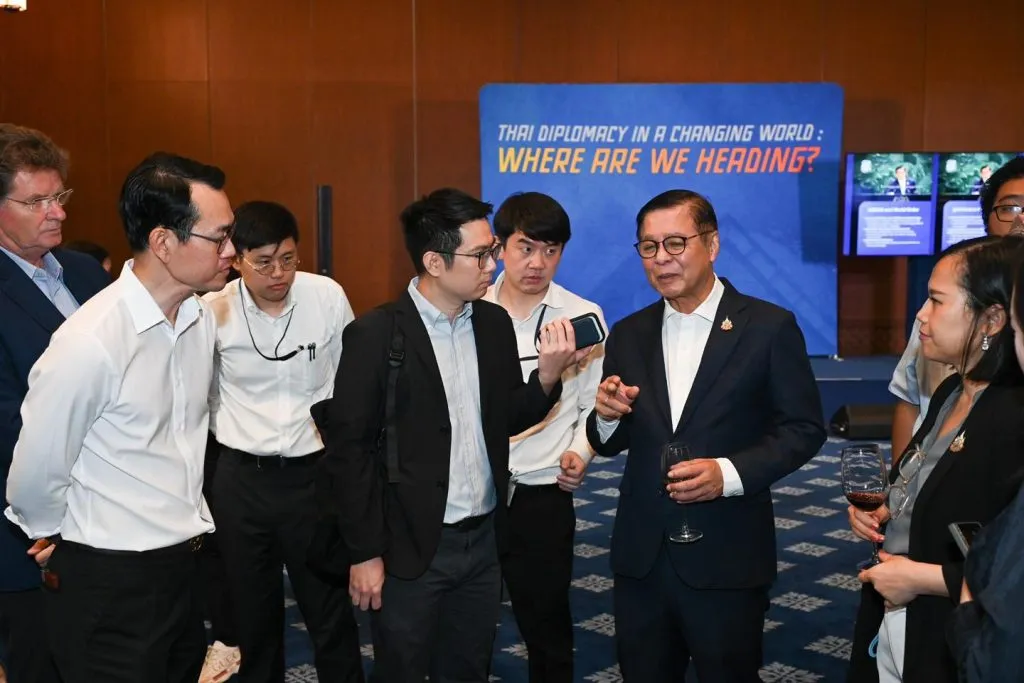
Perhaps the most notable shift is Thailand’s efforts to frame diplomacy more as a tool for citizens than elite statecraft, with the Sihasak insisting that economic diplomacy, human security, and transnational threats such as scams, trafficking, and pandemics must sit alongside traditional geopolitical concerns.
“All of this is Diplomacy 2.0,” he said, describing a model that spans “politics, security, economy, society, and civil society.”
If successful, the strategy could mark Thailand’s most assertive foreign-policy reset in years, one rooted in pragmatism abroad, political stability at home, and the ambition to matter more in an increasingly divided world.

 Teerin Julsawad