

Thailand isn’t exactly known as a climate tech superpower. But behind the beach selfies and temple tours, a quiet wave of innovation is pushing the country toward real sustainability… if it can survive the red tape.
In 2024, Thailand pulled in US$355 million in private green investments, according to Bain & Co. That’s not nothing. Southeast Asia as a whole could unlock $38 billion in green economic gains by 2030, and Thailand is trying to claim its piece of the pie. The government’s put big goals on the board: carbon neutrality by 2050 and net-zero emissions by 2065. And there’s a rising ecosystem of startups trying to build the tech to get us there.
“Startups and investors play a crucial role in supporting Thailand’s transition to a green economy,” said Kittisak Prukkanone, Director of the Division of Strategy and International Cooperation at the Department of Climate Change and Environment. “Thailand has set clear but challenging greenhouse gas emission reduction goals. Achieving them requires not only strong policy support, but also a robust innovation drive.”
So what’s the hold-up?
Still, it’s not smooth sailing despite the excitement. Climate tech in Thailand is still swimming upstream. Most of these startups are running into three things: slow-moving regulations, a lack of patient funding, and a lack of scalable support continue to hold back progress. And that’s before you get into grant structures that ask founders to spend money before getting reimbursed — not ideal when a startup can barely pay the electric bill.
So the ideas aren’t the problem. The problem is scale. Santikorn Pakdeesettakul, senior green investment officer at the Global Green Growth Institute, notes that most early-stage funding still comes in tiny grants, like THB1 million, when most startups need five times that to reach commercial viability. Many in the industry are now calling for that support to be raised to THB5 million.
Thai investors are also still getting used to the risk profiles of green tech. Corporate players prefer solutions they can deploy now — not in three years — so promising ideas stall out in the R&D phase.
There are big ideas on the table
Even with those roadblocks, there’s no shortage of creativity. Here are some Thai (and regional) climate tech startups that are turning heads:
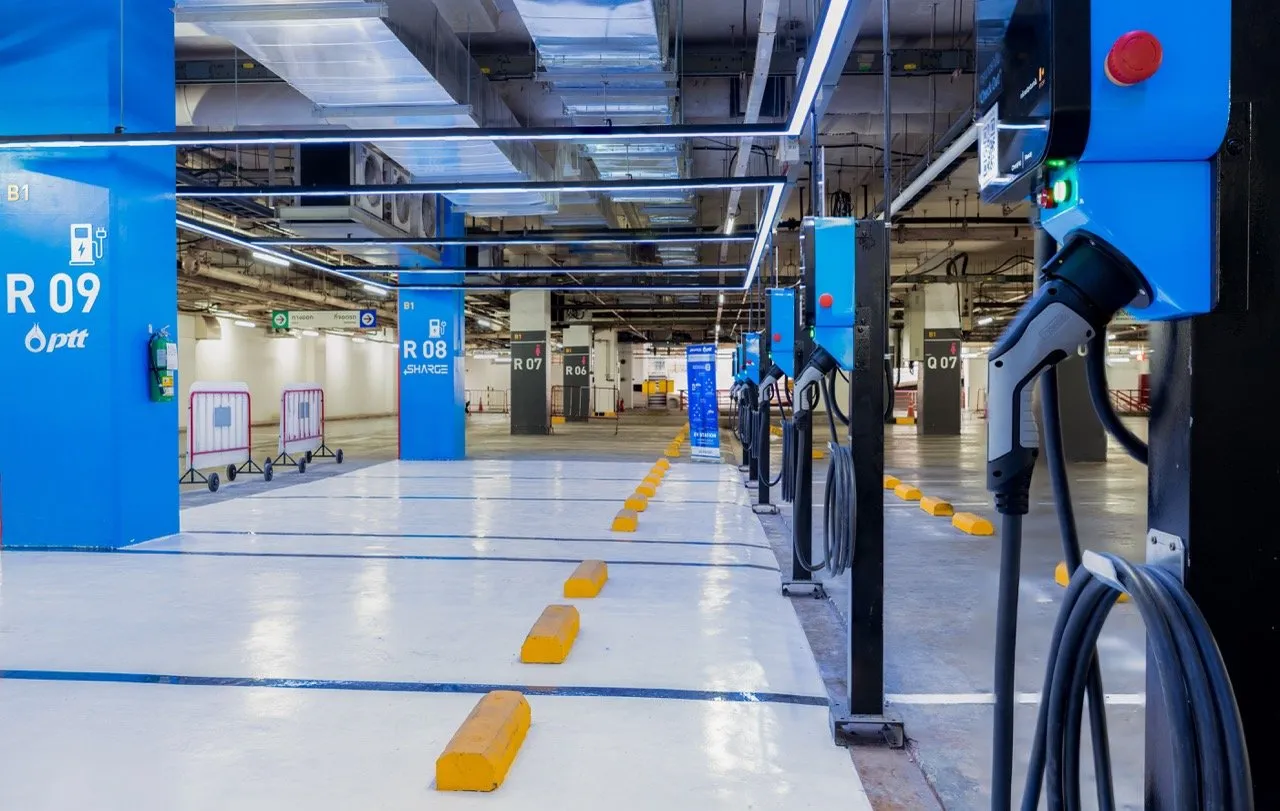
- CHOSEN: A Thai energy management startup building systems to prevent EV charging stations from crashing the grid. Their tech helps cut electricity costs by up to 70% and could support cross-border EV travel in ASEAN.
- Continewm: Developed a patented ceramic mesh sheet that clips onto A/C units to make them cool faster and use less power. Already in use in hotels, embassies, and supermarkets (and expanding globally).
- LOCOL: Making methane-reducing cattle feed from discarded cacao husks. Their feed can cut methane emissions from cows by up to 44.52% — a win for livestock and climate.
- VEKIN: Built an AI and blockchain platform to help businesses measure and manage carbon emissions more easily. They’ve launched tools like CERO Carbon Wallet and Carbon Receipt, and even allow real-time carbon offsetting at events via QR codes.
- Helical Fusion: Japan-based, but expanding into Southeast Asia, Helical Fusion is developing nuclear fusion reactors (basically an “artificial sun” on Earth) to generate clean, steady-state energy without carbon emissions.
What’s next?
What’s encouraging is the momentum. Government agencies like the Digital Economy Promotion Agency (DEPA) and accelerator programs like Space-F and PTT’s ExpresSo are trying to close that gap. And the public sector is finally pushing a draft climate change bill, which could help smooth out the regulatory kinks and give startups more room to breathe.
So, while Thailand may not yet be the Silicon Valley of climate tech, it’s building something real. The talent is here. The ideas are legit. And if the system can evolve to support them, this could be one of Southeast Asia’s most interesting green tech hubs.

 Paul Rujopakarn