The Bangkok Children’s Discovery Museum is inviting families to dive beneath the waves, all without having to leave the big city. Its new interactive exhibition is transforming how children and communities experience marine science.
The exhibit is part of UNESCO’s Sustaining Our Oceans: Building Healthy Relationships with Oceans in South-East Asia through Education for Sustainable Development (ESD) project, supported by Fast Retailing Co., Ltd. parent company of UNIQLO . Launched in late 2025 and set to open on January 8th, 2026, the exhibition uses augmented reality (AR) and virtual reality (VR) to immerse visitors in coral reefs, mangroves, and coastal ecosystems.
The aim is to turn curiosity into care at a time when Southeast Asia’s oceans face mounting pressure from pollution, habitat loss, and climate change.
Edutainment powered by interactive technology
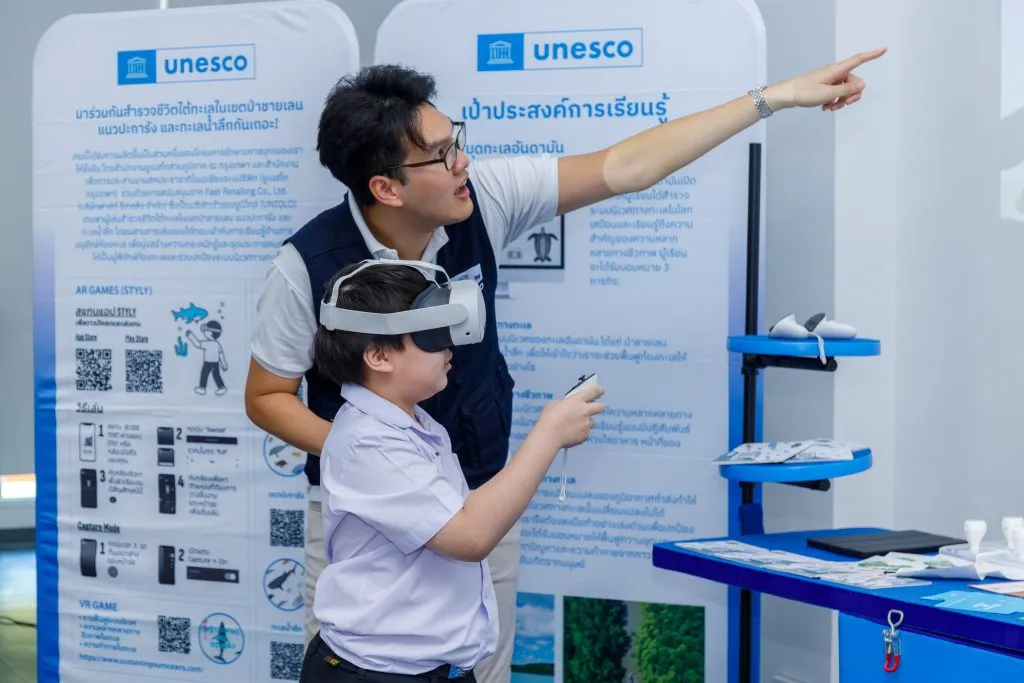
Where traditional museum exhibitions tend to rely on static displays, the Sustaining Our Oceans Interactive Exhibition is designed as a hands-on learning space.
Visitors can explore an “Andaman Sea Diving Library,” interact with digital projections, and don VR headsets to experience underwater environments up close. The compact, modular setup developed by UNESCO Bangkok was deliberately engineered to be portable, durable, and accessible, allowing it to function in both urban museums and remote coastal settings.
The Bangkok installation is one of three produced under the project, alongside exhibitions at the UNESCO Man and the Biosphere (MAB) Reserve in Ranong and UNESCO’s regional office in Bangkok. Together, they form a network of learning hubs that link classroom concepts with lived, sensory experiences, which UNESCO sees as key to fostering long-term environmental responsibility.
From museum floors to living laboratories
The exhibition reflects a broader philosophy behind the Sustaining Our Oceans initiative. Across Thailand, Indonesia, Vietnam, and beyond, the project connects young people with UNESCO-designated Biosphere Reserves, which are real-world “living laboratories” where marine ecosystems are studied, protected and sustained.
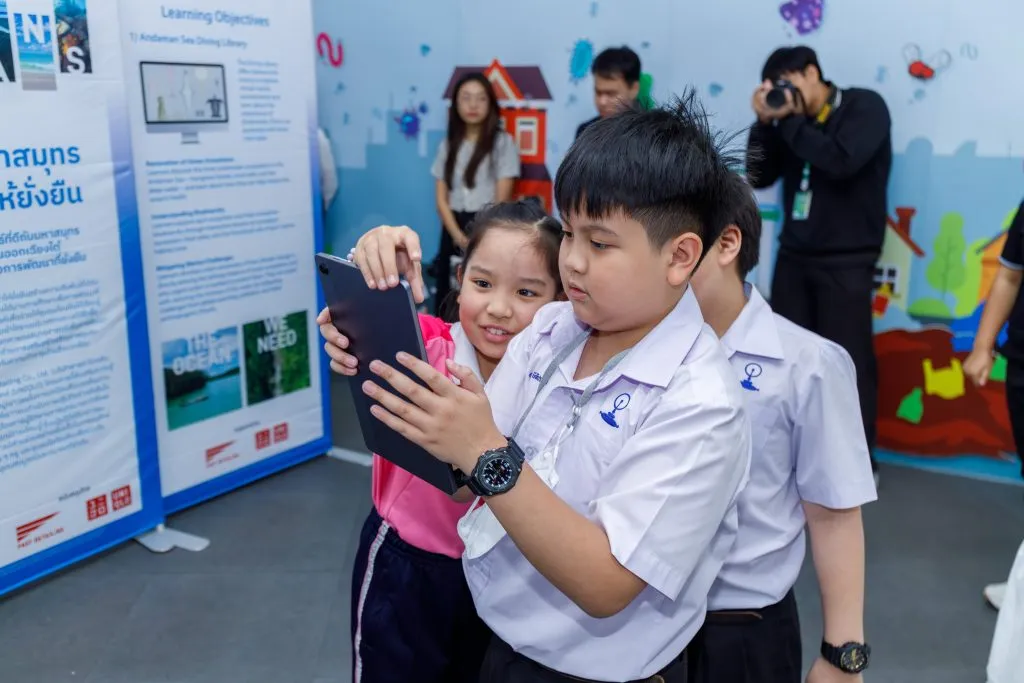
Students involved in the program take part in ocean-literacy workshops, project-based research, field trips, and waste-reduction campaigns. By pairing these activities with digital storytelling and immersive technology, UNESCO aims to equip the next generation with knowledge as well as with confidence to act, be it through community clean-ups, sustainable consumption, or future careers in conservation.
Support for the project comes from Fast Retailing Co., Ltd., the parent company of UNIQLO, through its JOIN: The Power of Clothing campaign. The partnership underscores a growing recognition that sustainability education extends beyond schools and governments to the private sector, and that shaping values early can have ripple effects far beyond the classroom.
Part of a bigger cultural shift
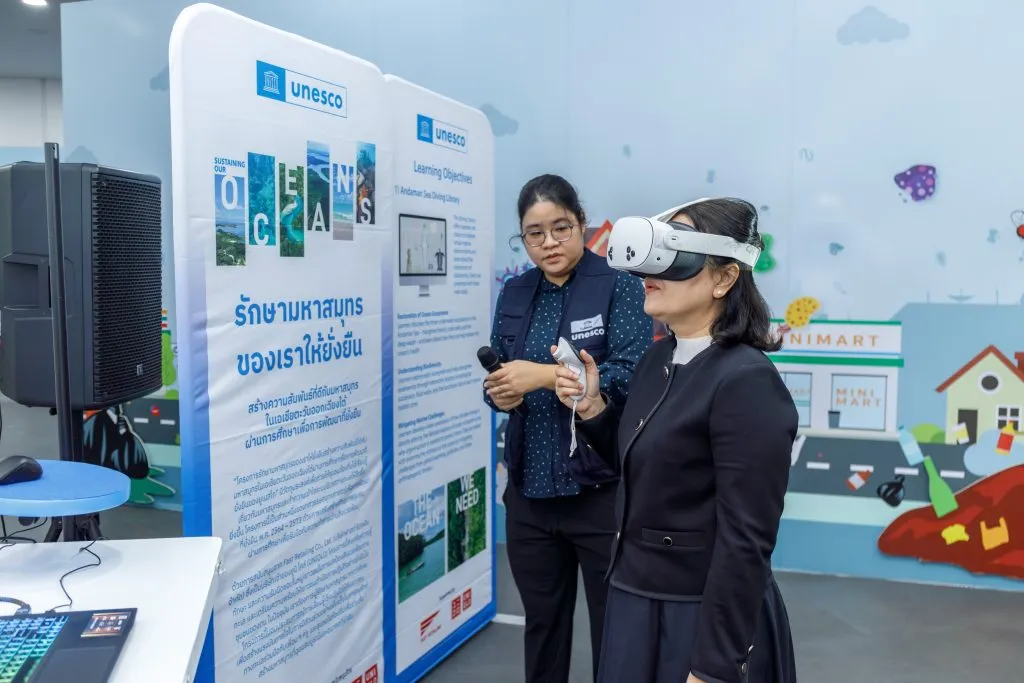
The ocean exhibition also fits into a wider pattern of UNESCO-linked initiatives in Thailand, from cultural-heritage conservation to the inclusion of three Thai cities in its Global Network of Learning Cities (GNLC). Together, these efforts point to a shared concept of developing learning spaces to help communities rethink their relationship with culture, environment, and place.
For visitors at the Children’s Discovery Museum, the lesson begins by simply showing today’s youth that the ocean is something they can step into, explore, and even help protect and preserve for future generations. Check out the Bangkok Children’s Discovery Museum’s website or official Facebook page for more information.