

A Thai scientist has received one of UNESCO’s highest honors in microbiology for research that has helped change how hospitals and governments respond to infectious diseases.
Dr. Direk Limmathurotsakul of Mahidol University was awarded the 2026 UNESCO–Carlos J. Finlay Prize for Microbiology in recognition of his work on melioidosis and antimicrobial resistance.
According to UNESCO, his research has transformed understanding of these public health challenges while helping turn microbiological evidence into practical policies that save lives.
The award highlights work that has improved disease surveillance, diagnosis, treatment, prevention, and the use of hospital data to support better public health decisions.
Shedding light on an overlooked disease
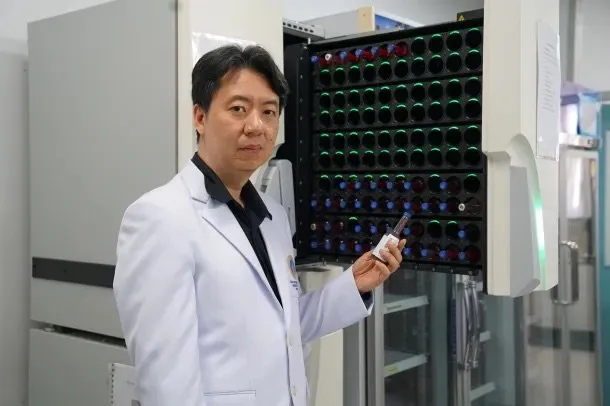
Much of Dr. Direk’s work has focused on melioidosis, a frequently fatal infectious disease caused by the bacterium Burkholderia pseudomallei, which lives naturally in soil and water across many tropical regions. Despite causing tens of thousands of deaths worldwide each year, the disease remains largely overlooked and is not included on the World Health Organization’s list of neglected tropical diseases.
By analyzing microbiological and hospital admission data from 110 public hospitals across Thailand, Dr. Direk demonstrated that melioidosis causes more than 4,400 illnesses and over 1,200 deaths annually in the country. His later global study estimated that the disease affects approximately 165,000 people and causes around 89,000 deaths each year worldwide. The research also identified the disease in dozens of countries where it had not previously been reported.
His studies also showed that working in rice fields without protective gear and drinking contaminated water are important routes of infection for farmers in tropical developing countries.
To help researchers and policymakers act on these findings, he developed an open-access interactive global map that is now widely used by scientists, clinicians, and public health authorities working on melioidosis.
Fighting AMR with hospital data
Dr. Direk has also made significant contributions to tackling antimicrobial resistance (AMR), which UNESCO describes as one of the greatest threats to global health.
His work is guided by the principle of “local data for local action.” To support that goal, he developed AMASS, a free software platform that allows hospitals to analyze their own microbiology and hospital admission data and generate antimicrobial resistance surveillance reports without requiring specialist training or transferring sensitive patient information.
The software helps hospitals understand the burden of antimicrobial-resistant infections within their own facilities while giving health authorities better information to strengthen surveillance systems and target public health interventions.
Today, AMASS and the methods developed by Dr. Direk are being adopted by hospitals in Thailand as well as Cambodia, India, and Indonesia.
From research to public policy

One reason UNESCO recognized Dr. Direk’s work is its impact beyond the laboratory.
Working with Thailand’s Ministry of Public Health and more than 100 hospitals, he has helped translate scientific evidence into changes in national policy on both melioidosis and antimicrobial resistance. His recommendations extend beyond laboratory testing to include improvements in clinical practice, regulatory incentives, and long-term support for hospitals through sustainable financing mechanisms.
Speaking at the award ceremony at UNESCO Headquarters in Paris, Dr. Direk summarized the philosophy behind his work, stating, “Science can reveal the truth, but only service can act on it. We need both.”
A recognition for research with real-world impact
Established by UNESCO and the Government of Cuba, the UNESCO–Carlos J. Finlay Prize for Microbiology recognizes individuals and organizations that have made outstanding contributions to microbiology and its applications. The prize includes a certificate and a financial award of US$10,000.
For Thailand, Dr. Direk’s recognition highlights how research carried out within the country’s hospitals and universities can contribute to global public health. By helping make neglected diseases more visible and enabling hospitals to use their own data more effectively, his work demonstrates how scientific research can improve healthcare both in Thailand and far beyond its borders.

 Paul Rujopakarn