

Bangkok has always been hot, but what’s changed is how that heat is shaping daily life. It’s no longer just about discomfort, but about decisions: when to leave the house, whether to walk or take the BTS, how long to stay outside before ducking into the nearest 7-Eleven, and increasingly, who can afford to escape it.
According to the World Bank’s report, “Shaping a Cooler Bangkok: Tackling Urban Heat for a More Livable City,” extreme urban heat is no longer just a seasonal inconvenience. It’s becoming a public health issue, an economic drag, and a structural challenge for the city itself.
The numbers are blunt. Between 1960 and 2000, Bangkok saw around 60 to 100 days per year above 35°C. By 2100, that number is projected to increase by another 153 days annually.
In some parts of the city, it already feels worse than that suggests.
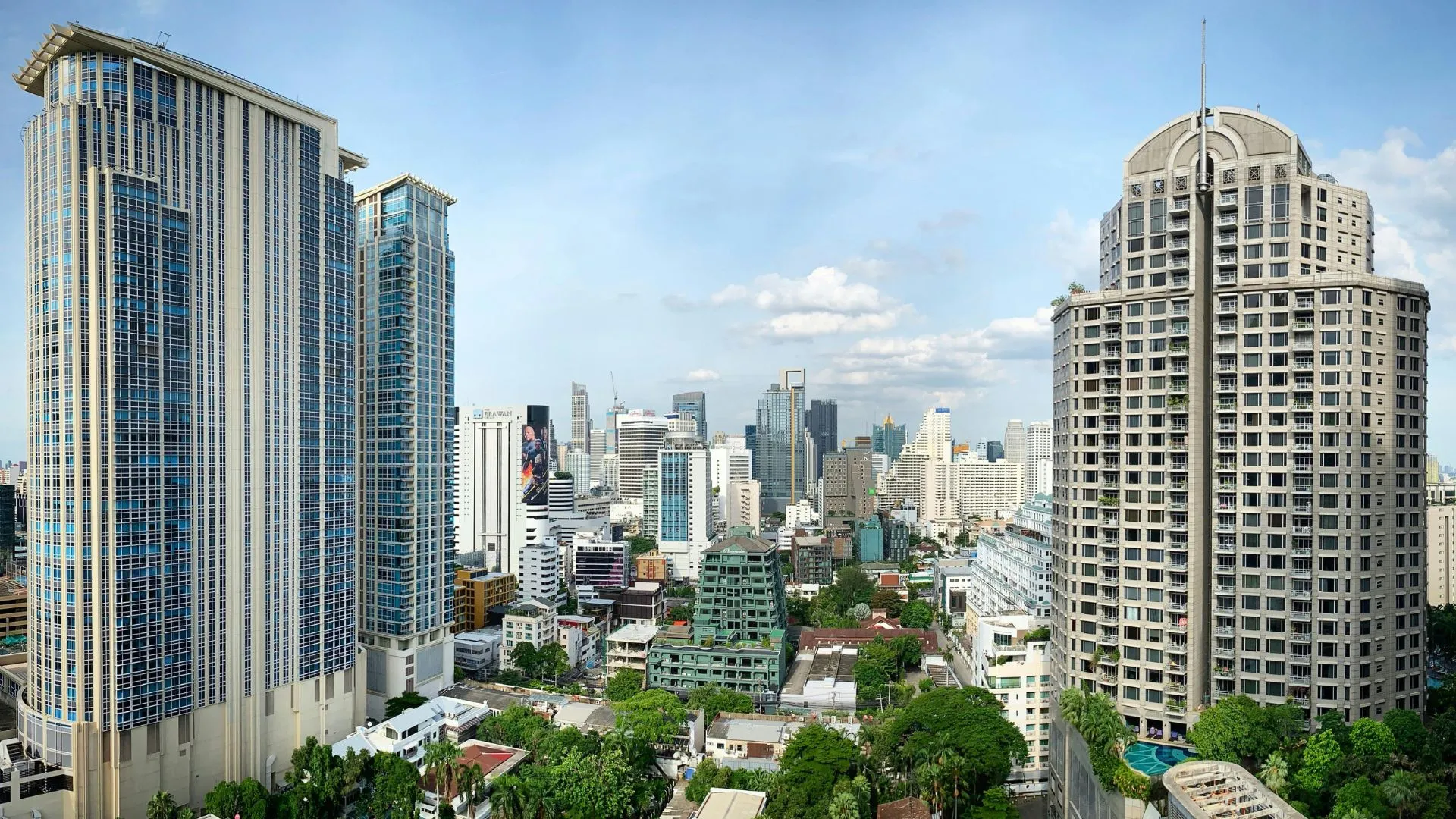
Central districts like Pathum Wan, Bang Rak, Ratchathewi, and Phaya Thai are on average 2.8°C hotter than surrounding rural areas. At night, the gap can stretch to 6.4°C, meaning the city never really cools down. The body doesn’t reset. The heat lingers.
This is what’s known as the Urban Heat Island effect. Dense buildings restrict airflow, while concrete and asphalt absorb heat throughout the day and release it slowly at night. With less vegetation to provide natural cooling, the city retains heat long after the sun goes down.
Some areas are worse than others. Pathum Wan, packed with high-rises, has a low “sky view factor,” meaning heat has nowhere to escape. Bang Rak, with its narrow streets and dense materials, stores and radiates heat back into the environment.
This is where the issue stops being abstract. For every 1°C increase in temperature, heat-related deaths in Bangkok are projected to rise by more than 2,300 per year. At 2°C, that number climbs to nearly 3,800, approaching the city’s annual road fatalities.
Around 1.8 million people are considered high-risk, including children, the elderly, and those living in poorly insulated housing. In areas like Klong Toey, indoor heat exposure can become unbearable, especially when fans are the only line of defense.
Then there’s the economic side. About 1.3 million workers in Bangkok spend time working outdoors each week. For them, a 1°C increase in temperature can lead to a 3.4% drop in productivity, translating to roughly 44 billion baht in lost wages annually.
Electricity demand rises alongside it. A 1°C increase can push power consumption up by 7%, adding around 400 to 450 baht to monthly household bills. On a city scale, that’s an additional 17 billion baht in infrastructure and energy costs each year.
The question, then, is no longer whether Bangkok is getting hotter, but how the city is responding.
What a “cooler Bangkok” actually looks like
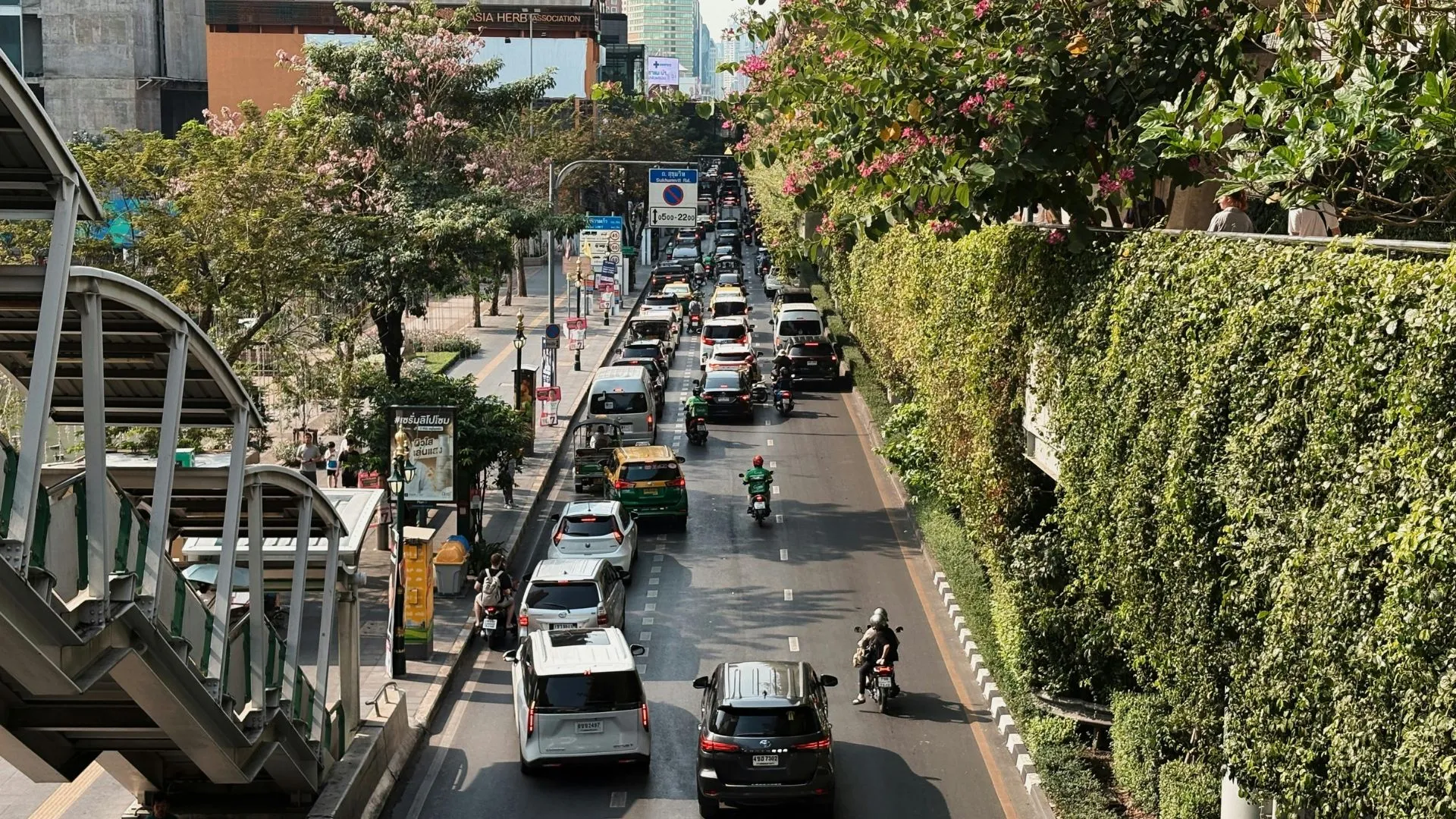
Over the past year, Bangkok has started to shift from awareness to action. In collaboration with the World Bank and the Department of Disease Control, the Bangkok Metropolitan Administration (BMA) has begun rolling out a more structured heat management strategy.
One of the most visible changes is the introduction of a four-tier Heat Index warning system, ranging from Green to Red. Unlike standard temperature readings, the heat index measures how hot it actually feels, factoring in humidity and wind.
At the highest level, Red (52°C and above), the guidance is simple: get indoors, preferably somewhere air-conditioned.
That’s where the next layer comes in.
The city has established hundreds of Cooling Centers and Cooling Spots across Bangkok. These include public health centers, schools, libraries, and district offices, all designated as temporary “heat escape” spaces.
Many are stocked with basic first aid supplies, electrolytes, and resting areas. For people without reliable air conditioning at home, or for outdoor workers, these spaces are beyond just a convenience. They’re quite necessary.
At the same time, the BMA is expanding its network of 15-minute parks, aiming to ensure that every resident has access to green space within walking distance. These aren’t large, landmark parks. They’re smaller, distributed spaces designed to break up heat retention at a neighborhood level.
As of early 2026, more than 390 are already open or in development, with a target of 500 by the end of the year.
Then there’s the less visible work.
The city is beginning to map urban heat in detail, identifying hotspots and understanding why they behave the way they do. The goal is to move away from blanket solutions and toward targeted interventions, deciding where to plant trees, where to create shaded walkways, and where to introduce cooling infrastructure first.
There are also experiments with cooling paint, a reflective coating that can bounce back up to 97% of infrared radiation. Applied to rooftops and walls, it can reduce indoor temperatures and cut air-conditioning use by 10 to 25%.
The bigger shift
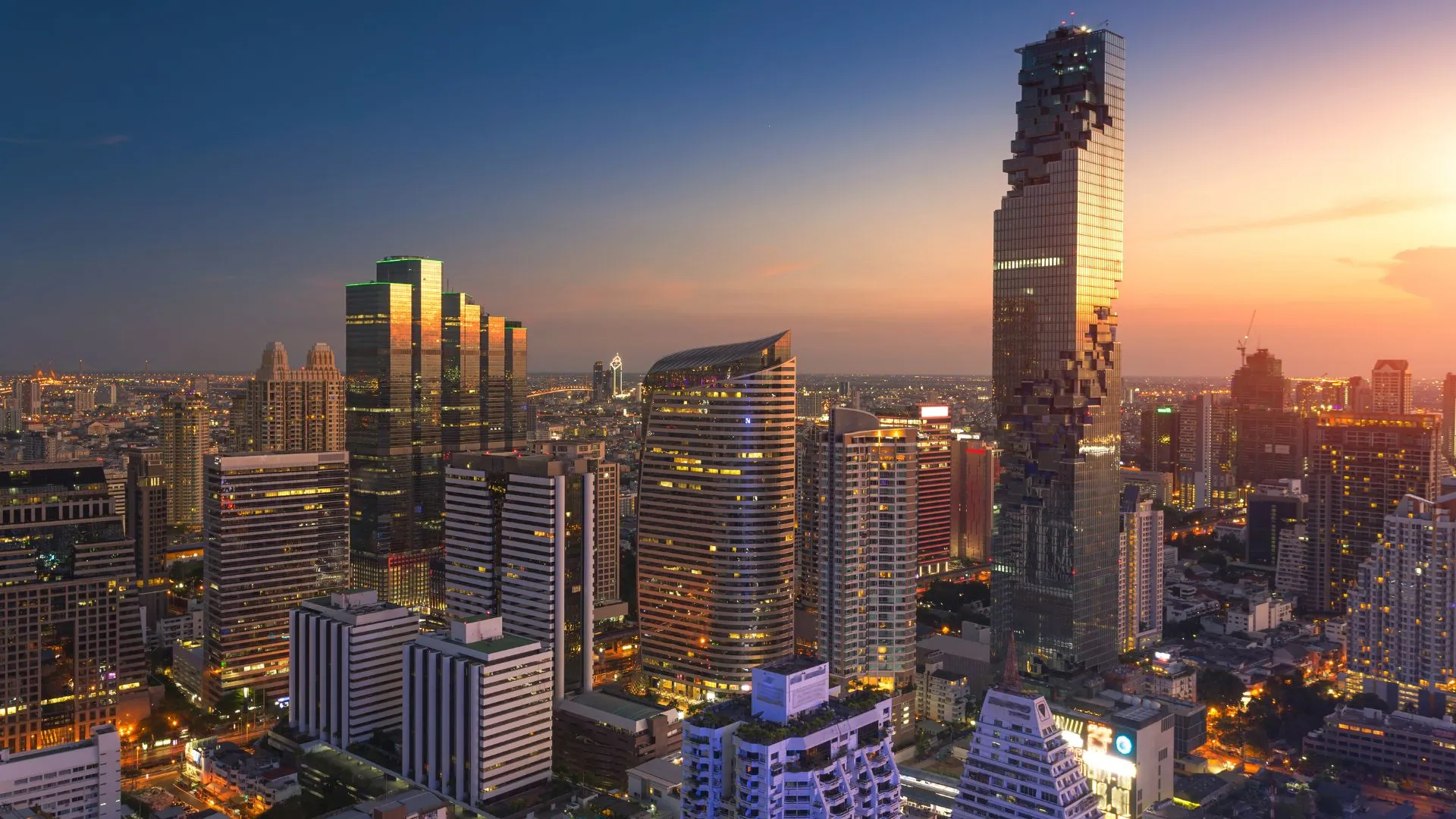
What’s happening in Bangkok is about how cities adapt when a background condition becomes a real constraint. Heat was once something residents worked around; now it is something the city must actively design for.
The impact isn’t evenly distributed. People with access to air-conditioned spaces, flexible schedules, and private transport experience the city differently from those working outside, commuting long distances, or living in heat-retaining housing.
That gap is where most of the policy effort is now focused.

 Paul Rujopakarn