

Thailand drinks a lot more coffee than it used to. But the more interesting change may be what people are willing to pay for it.
According to the Specialty Coffee Association of Thailand (SCATH), specialty coffee accounts for just 16% of Thailand’s coffee consumption by volume but generates 48% of the market’s value. The association estimates the segment is worth around THB28 billion to THB30 billion (approx. US$838 million to US$898 million) and is growing by an average of 15% a year.
Source: SCATH Specialty Coffee Association of Thailand Official Facebook Page
Nattiti Ampaiwan, President of SCATH, says Thais have consumed an average of 1.7 cups of coffee per person per day since 2024, nearly double the level seen previously.
For specialty coffee, though, growth is not only coming from people drinking more of it. Consumers are paying greater attention to where their coffee comes from, the quality of the beans, how they are processed, and the people who grow them.
And increasingly, some of those beans are grown in Thailand.
Thai coffee is getting better
One measure of that progress came at the Thai Specialty Coffee Awards 2026. Of 296 entries, 48 were selected among the year’s best coffees, with eight scoring above 90 in the competition’s cupping assessment.
Ampaiwan attributes the improvement partly to a new generation of farmers applying scientific knowledge, fermentation and other processing techniques, and genetics to coffee production. He also points to greater diversity in higher-value varieties, including Gesha, Java, Typica, and Bourbon.
Growth in the wider beverage business is visible in new registrations as well. According to the Department of Business Development figures, 310 new beverage businesses were registered during the first eight months of 2026, up 3.33% from the same period a year earlier. Most were small businesses with registered capital of around THB1 million to THB3 million.

Source: Changnoi Kunjara Na Ayudhya
Changnoi Kunjara Na Ayudhya, Managing Director of Cloud and Ground Co., Ltd., says the development is happening across Thailand’s coffee supply chain, from farmers improving their crops to businesses investing in products and baristas, and consumers becoming more interested in the value of Thai specialty coffee.
Farmers are producing better beans, businesses are paying more attention to their products and baristas, and consumers have become more aware of the value of Thai coffee. Between them are processors, roasters, cafe owners, and others who determine what eventually ends up in the cup.

Source: Changnoi Kunjara Na Ayudhya
The “boom and doom” paradox
While the “premiumization” of Thai coffee and coffee as a whole has driven market growth, it comes at a time of unique challenges that could threaten to smother that growth.
The nonprofit, Climate Central, has released a report showing that the number of excessively hot days has increased among 25 coffee-growing nations, which collectively represent 97% of global coffee production. Among them, Thailand saw the third-largest increase in “coffee-harming days” at 75, with Nicaragua at 77 and El Salvador at 99.
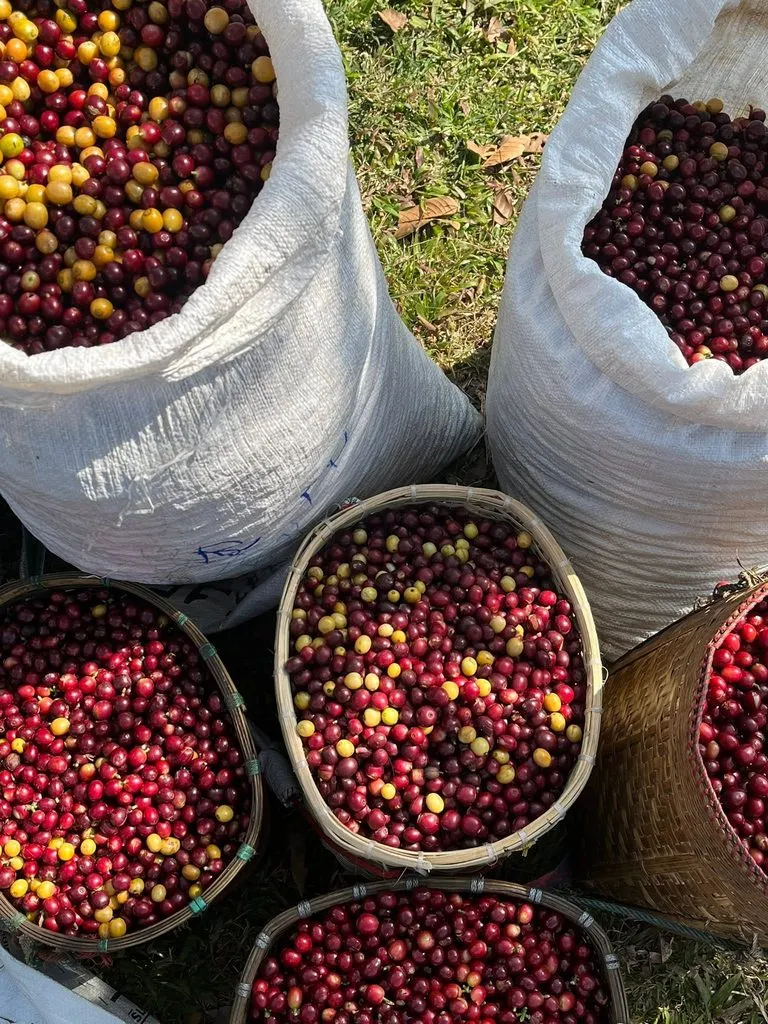
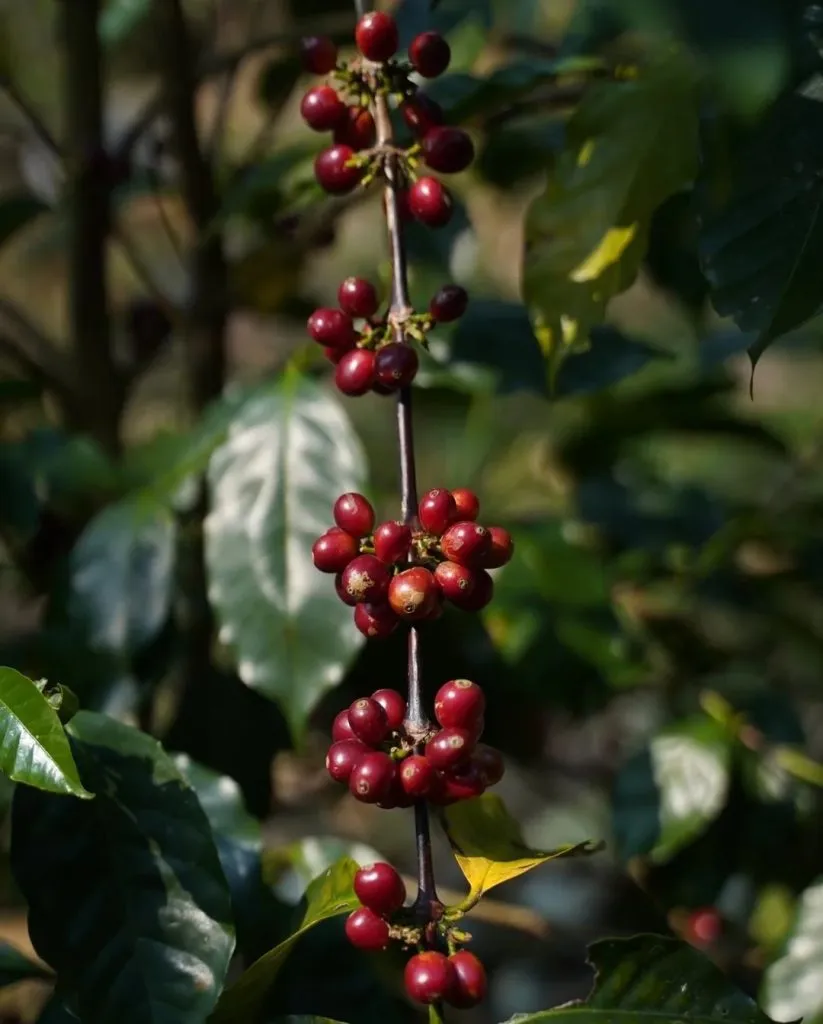
Source: Akha Ama Coffee Official Facebook Page
In response, Thai coffee growers are adapting. A-Ngo, an Akha farmer that works with the social enterprise Akha Ama, has long employed intercropping to grow Arabica coffee alongside commercial fruits & vegetables, which is more sustainable for the land and allows for year-round cultivation.
In fact, many ethnic minority communities, which have long served as environmental stewards of their local ecosystems, practice a kind of agroforestry that involves growing commercial crops in forestland. Under the forest canopy, crops like coffee are better protected from extreme temperature volatility and periods of drought. This way, smallholder farmers are also incentivized to refrain from the agricultural burning that has long plagued Southeast Asia with seasonal haze.
Saving our morning caffeine fix may ultimately depend on learning to work with nature rather than competing against it.

 Paul Rujopakarn