

Thailand has called for a more united, resilient, and strategically autonomous ASEAN as Southeast Asia navigates an increasingly uncertain world, with Deputy Prime Minister and Foreign Minister Sihasak Phuangketkeow arguing that the regional bloc must help shape the future of Asia.
Speaking at the Asia Society in New York on September 24th during the high-level week of the 81st United Nations General Assembly (UNGA81), Sihasak laid out Thailand’s vision for ASEAN in a keynote address titled “ASEAN – Shaping the Course of an Asian Century.”
ASEAN, he said, helped create the peace and economic connectivity that enabled Asia’s rise, transforming a Southeast Asia divided by Cold War conflict into a region increasingly defined by cooperation, trade, and interdependence, even as the conditions supporting that success are changing.
Key Takeaways
- Thailand’s Deputy Prime Minister and Foreign Minister Sihasak Phuangketkeow called for a more united and strategically autonomous ASEAN in a September 24 keynote at the Asia Society in New York during UNGA81.
- He argued that ASEAN should not take sides between the United States and China but must still take clear positions to preserve its own agenda.
- His “3R” vision calls for deeper Regionalism, greater Resilience in crisis response, and continued Relevance through practical cooperation on energy security and supply chains.
- He proposed more flexible crisis mechanisms, including a Troika arrangement, and a calibrated interpretation of non-interference, citing Myanmar and Thailand-Cambodia relations as key tests.
- He urged ASEAN to broaden partnerships with Australia, Britain, the EU, and emerging powers to strengthen an open regional order in a multipolar Asia.
Caught between major powers
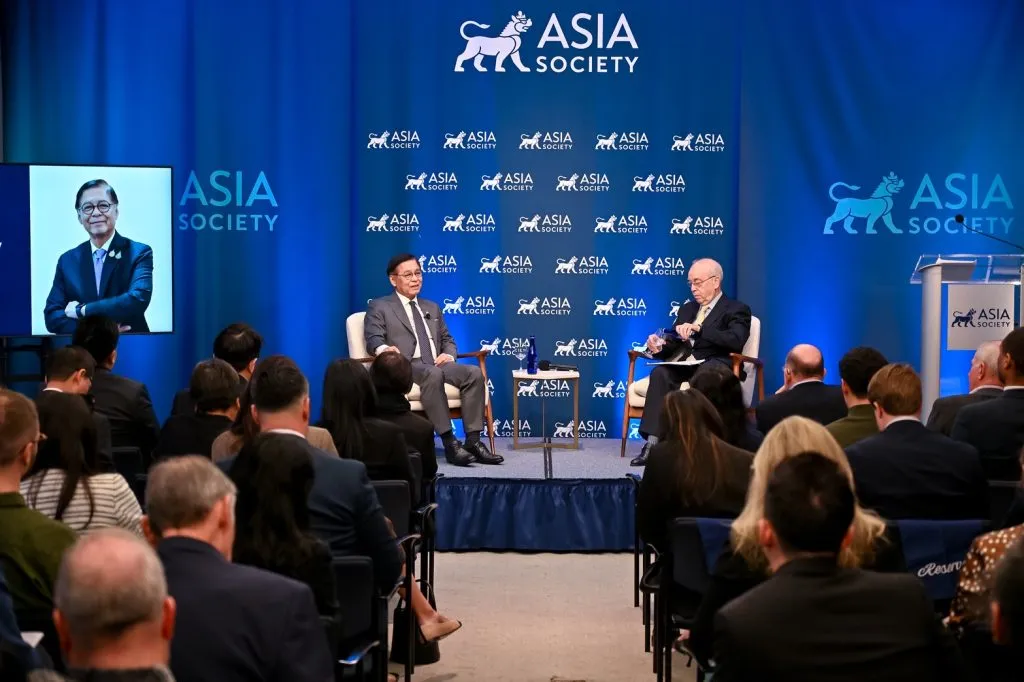
Deputy Prime Minister and Foreign Minister Sihasak Phuangketkeow takes part in a discussion on ASEAN and Asia’s future at Asia Society in New York.
Source: MFA Thailand / Website
Sihasak warned that strategic competition is increasingly influencing economic decisions, putting pressure on ASEAN’s ability to maintain both its economic relationships and collective voice.
Rather than choosing sides between the United States and China, he argued that ASEAN should strengthen its strategic autonomy and preserve its ability to set its own agenda.
“We don’t want to take sides, but that doesn’t mean we don’t take positions,” Sihasak said during his discussion with the Honorable Daniel Russel, Distinguished Fellow of the Asia Society Policy Institute
He framed that challenge through a “3R” vision comprising Regionalism, Resilience, and Relevance.
Regionalism means placing greater weight on shared interests and deeper integration.
Resilience requires ASEAN to become more nimble and effective when responding to crises.
Relevance means maintaining ASEAN’s central role while delivering practical cooperation on issues ranging from energy security and supply chains to transnational crime.
Rethinking how ASEAN responds to crises
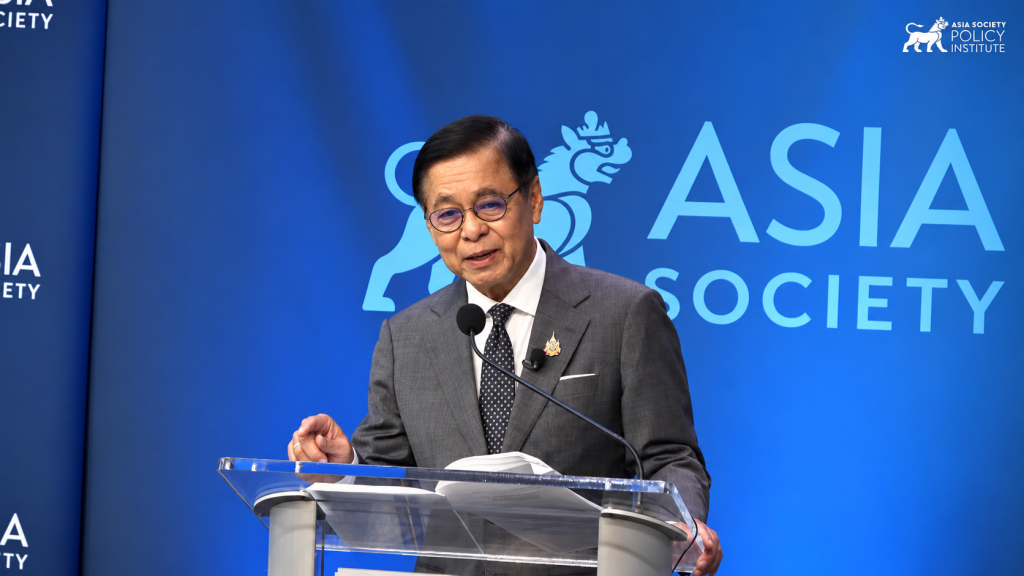
Deputy Prime Minister Sihasak delivers the keynote address at Asia Society in New York.
Source: MFA Thailand / Website
The deputy premier also argued that ASEAN’s traditional mechanisms may need to evolve alongside the region itself.
The bloc’s consensus-based system, he said, can delay action when crises demand speed. He therefore suggested considering more flexible arrangements, including a “Troika” mechanism that could maintain continuity as the ASEAN chairmanship changes.
“We have to develop the ability to act,” Sihasak said.
He has called for a more calibrated interpretation of non-interference, arguing that domestic crises can produce regional consequences through displacement, cross-border crime, and economic disruption.
Myanmar and Thailand-Cambodia relations, he said, provide important tests of ASEAN’s ability to translate principles into practical crisis management.
Maintaining bloc centrality and autonomy
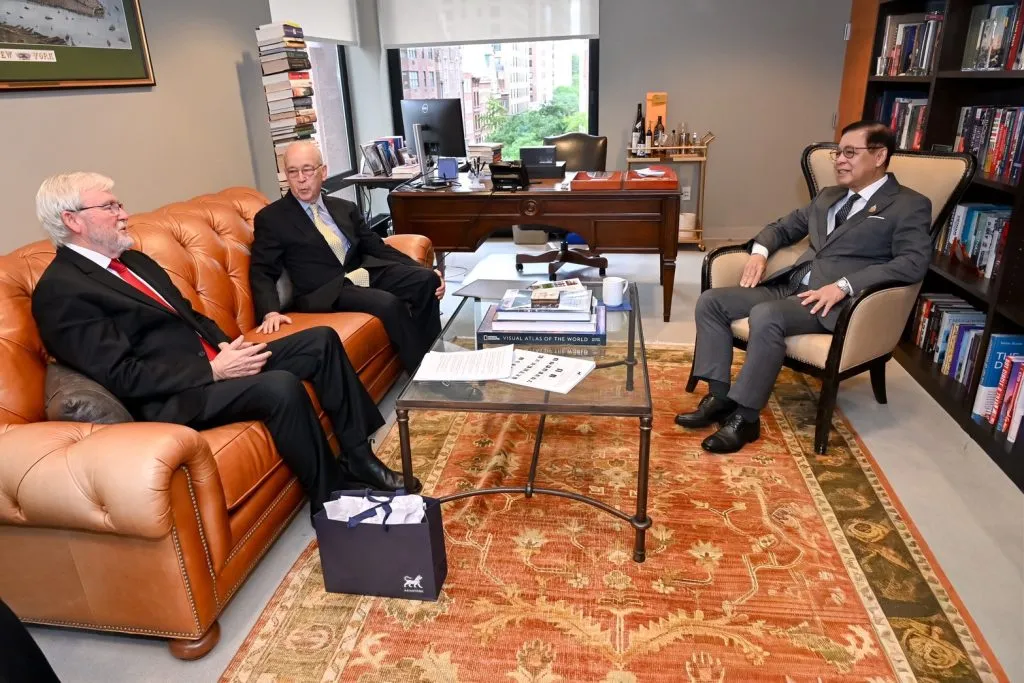
Deputy Prime Minister and Foreign Minister Sihasak Phuangketkeow meets with Asia Society representatives in New York.
Source: MFA Thailand / Website
Sihasak further noted that greater regional unity should ultimately translate into greater influence.
He urged ASEAN to work with a broader group of partners, including Australia, New Zealand, Canada, Britain, and the European Union, alongside emerging powers such as Brazil and Türkiye.
The objective, he said, is to expand ASEAN’s options and strengthen an open regional order, rather than align with one power bloc.
“ASEAN was born when Southeast Asia’s future risked being decided by outside powers,” Sihasak said. “Its founders chose to pull our strength together so that we could shape our own future.”
In an increasingly multipolar Asia, he argued, that same determination remains necessary.

 Teerin Julsawad