

Before Thailand had nationwide healthcare coverage, electronic records, or reliable access outside major cities, medical care depended heavily on geography. Urban residents could reach hospitals. Rural communities often could not. In many provinces, distance, cost, and shortages of doctors meant illnesses went untreated until they became emergencies.
This was the landscape Her Majesty Queen Sirikit, the Queen Mother, encountered during royal visits across the country. Time and again, she met people who were visibly sick, injured, or living with chronic conditions without access to treatment. These encounters were personal and immediate, and simply impossible to ignore.
Her response did not begin with policy or long-term reform. It began with care. If someone needed treatment, they received it. If local facilities were inadequate, arrangements were made elsewhere. For her, public health started with showing up and dealing with what she saw. That approach shaped how healthcare support developed long before formal systems existed.
Care in the Royal Presence
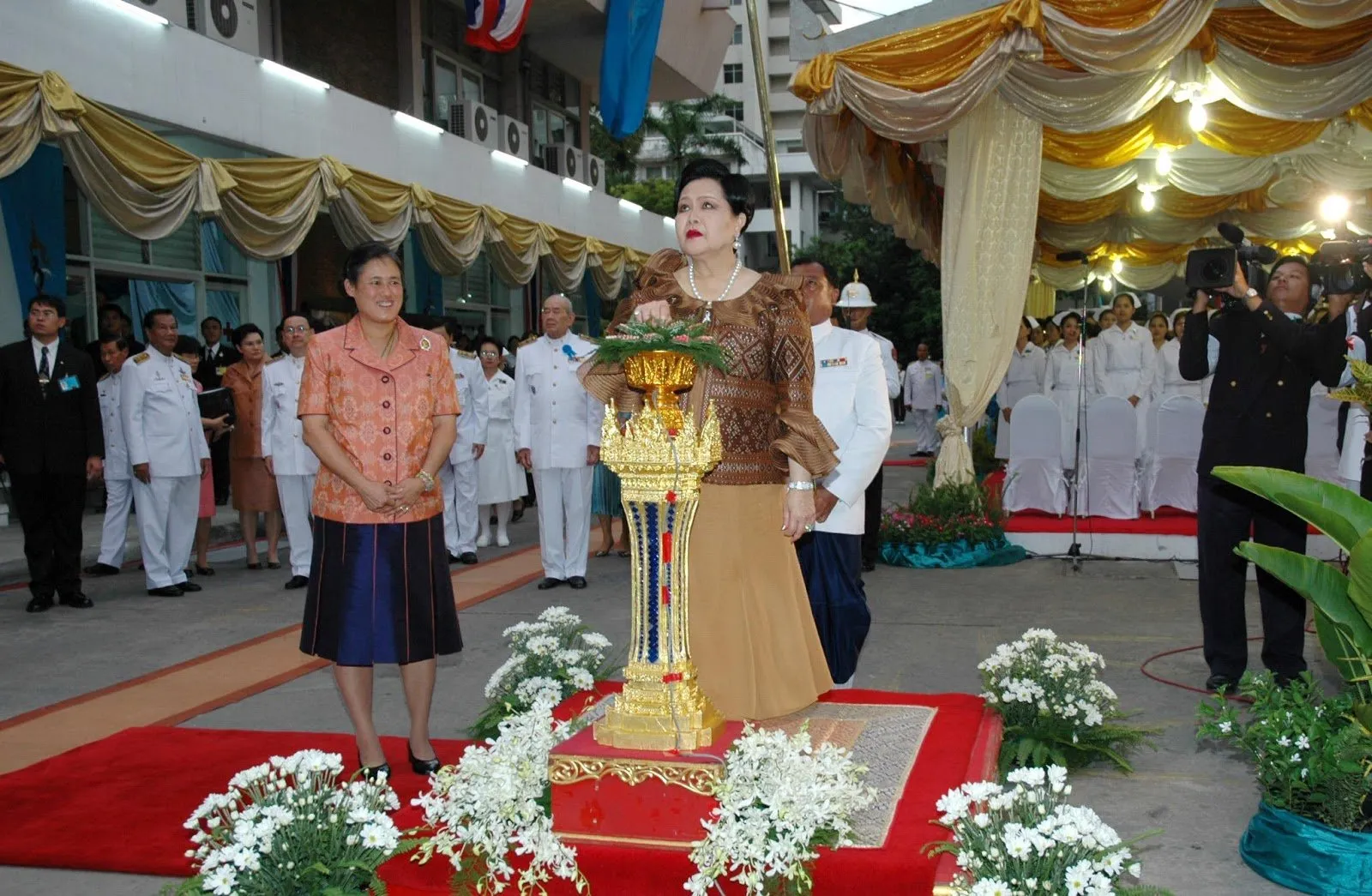
During royal visits, medical teams traveled alongside The Queen Mother, prepared to assess and treat people on the spot. When residents presented with illness or injury, royal physicians examined them immediately. If treatment exceeded what could be handled locally, patients were transferred to provincial hospitals or brought to Bangkok for specialized care.
For many families, this was the first time they had ever seen a doctor. For others, it was the first time treatment did not require choosing between health and financial survival. Queen Sirikit followed up on cases, asking for updates and ensuring patients did not back into invisibility once the visit ended.
Still, immediate treatment solved urgent problems, but it didn’t fix the larger gap. Many communities the Queen visited were days away from hospitals. Some had no permanent doctors at all. Relying on referrals alone meant people would keep falling through the cracks.
Mobile healthcare grew out of that gap. Royal Medical Units, led by Dr. Danai Snidvongs, were deployed to follow royal visits and then return regularly, bringing doctors, nurses, medicines, and diagnostic tools directly into remote areas. They handled infections, maternal health, chronic illness, and post-surgical follow-ups. Villagers didn’t always have to travel. Care also came to them.
What began as emergency response slowly became a framework for early rural medicine in Thailand — enough to prove that healthcare could function outside city centers. The key shift here was mindset. Rural healthcare was treated as something that deserved investment and planning. Mobility became a tool of equity. If people couldn’t reach hospitals, hospitals would move closer to people.
As these efforts scaled, they fed into broader structures. Insights from royal medical missions highlighted where shortages were most severe, which conditions were most common, and how distance affected outcomes. That information informed later decisions about how public health resources were distributed. By addressing these gaps in medical coverage directly, The Queen Mother accelerated the case for system-wide solutions.
The key pattern is continuity. Care moved from individual intervention to mobile services to institutional adoption. The thread connecting them was simple: health access should not depend on proximity to Bangkok, income level, or visibility. Today, that sounds obvious. At the time, though, it wasn’t.
Hospitals and Long-Term Medical Infrastructure
Several major hospitals and medical centers now carry Queen Sirikit’s name, reflecting her public health & humanitarian legacy. These institutions address gaps that were historically under-served: women’s health, children’s health, and specialized care outside Bangkok.
The Queen Sirikit Centre for Breast Cancer became a national reference point for screening, diagnosis, treatment, and research at a time when breast cancer was still under-discussed and unevenly treated. Similarly, the Queen Sirikit National Institute of Child Health strengthened pediatric care by concentrating expertise, training, and long-term follow-up in one institution.
Outside the capital, facilities such as Somdech Phra Nangchao Sirikit Hospital and the Queen Sirikit Heart Center of the Northeast helped decentralize specialized medicine. Patients no longer had to travel to Bangkok for advanced treatment. Regional healthcare became viable.
These hospitals formed part of a larger shift toward durable infrastructure. Emergency care evolved into systems that could train doctors, retain specialists, and serve communities over generations. The Queen’s role was consistent: identify gaps, support institutions that addressed them, and allow professionals to build capacity over time.

A Way of Thinking About Care
Queen Sirikit’s public health legacy is easy to misunderstand if you look for a single institution or policy attached to her name because it wasn’t one hospital, one program, or one reform. Rather, it was a way of approaching care that came before systems, and shaped how those systems eventually formed.
The pattern is consistent across decades. Care began with presence, with seeing people where they lived, and with timely response and follow-through. Only after her interventions could the infrastructure take shape: mobile units, referral networks, rural hospitals, and national institutions. Nothing about the approach was abstract, and everything was anchored in real conditions and real gaps.
That approach mattered because it reframed health as dignity rather than exception. People were treated because they needed care, not because they fit a category or lived close enough to a city.
Today, Thailand’s healthcare system looks modern and institutional, with universal and systematic coverage. However, it’s important to note that these systems didn’t arrive fully formed. They grew out of earlier practices that proved access was possible, necessary, and worth sustaining.
Queen Sirikit’s legacy, then, is not only historical, but alive in the everyday expectations and assumptions that healthcare should reach people wherever they are, a way of thinking still shapes how care is delivered today.

 Paul Rujopakarn