

Thailand has used this week’s 25th ASEAN-EU Ministerial Meeting (AEMM) in Bandar Seri Begawan, Brunei Darussalam, to reinforce ties with Europe, as well as quietly signal its ambitions ahead of assuming the ASEAN chairmanship in 2028.
Representing Bangkok at the gathering was Deputy Prime Minister and Foreign Affairs Minister Sihasak Phuangketkeow, who framed the moment as one of mounting global instability, requiring middle powers such as ASEAN and EU members to work more closely together.
Held against a backdrop of conflict in the Middle East, trade frictions, and uncertainty over the future of the rules-based order, the ministerial meeting brought together foreign ministers from Southeast Asia and Europe to map out deeper cooperation across security, trade, energy, and digital governance.
Thailand also emphasized the need for ASEAN to become stronger from within.
Thailand pushes resilient ASEAN vision
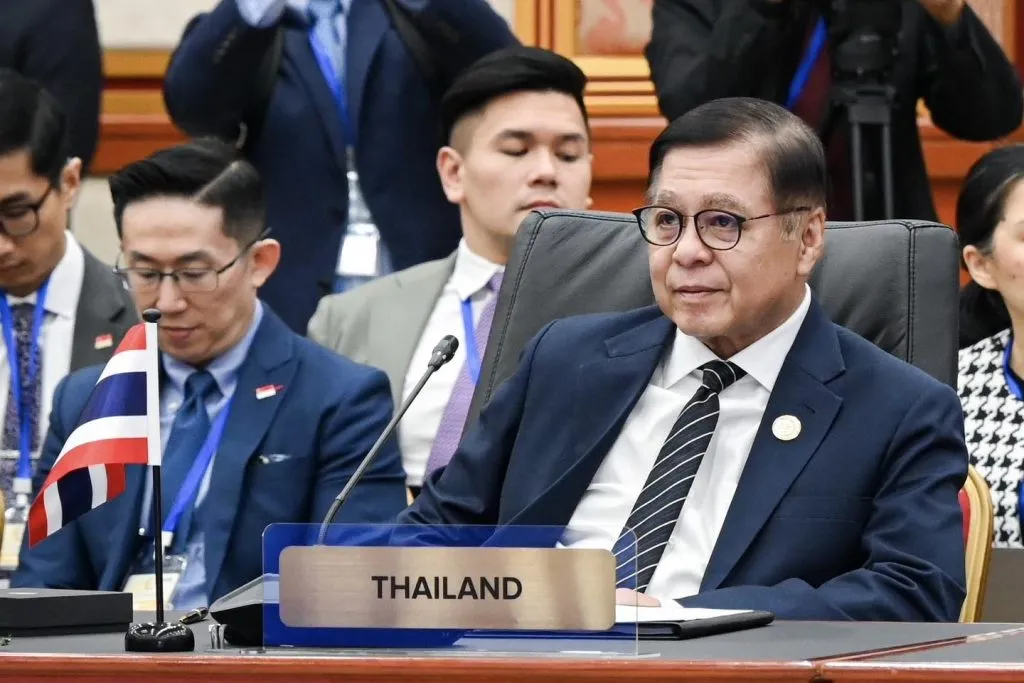
Speaking on the sidelines of the summit, Sihasak said the erosion of international norms and growing geopolitical rivalry meant ASEAN could no longer rely solely on external stability. Instead, he argued, the bloc should leverage its own economic weight and political cohesion.
With more than 700 million people across its member states, ASEAN remains one of the world’s fastest-growing markets. Thailand’s pitch is that greater intra-regional trade, lower economic barriers and stronger collective security would make Southeast Asia even more attractive to investors.
Thailand is also placing future-facing sectors at the center of that vision, highlighting digital transformation, innovation-led investment, and the green economy as areas Thailand intends to champion when it takes over the rotating ASEAN chairmanship in 2028.
That emphasis is particularly timely in an era of supply-chain diversification and competition for clean-tech capital, with Southeast Asia increasingly seen as a strategic growth hub.
Europe ties deepen as security concerns rise
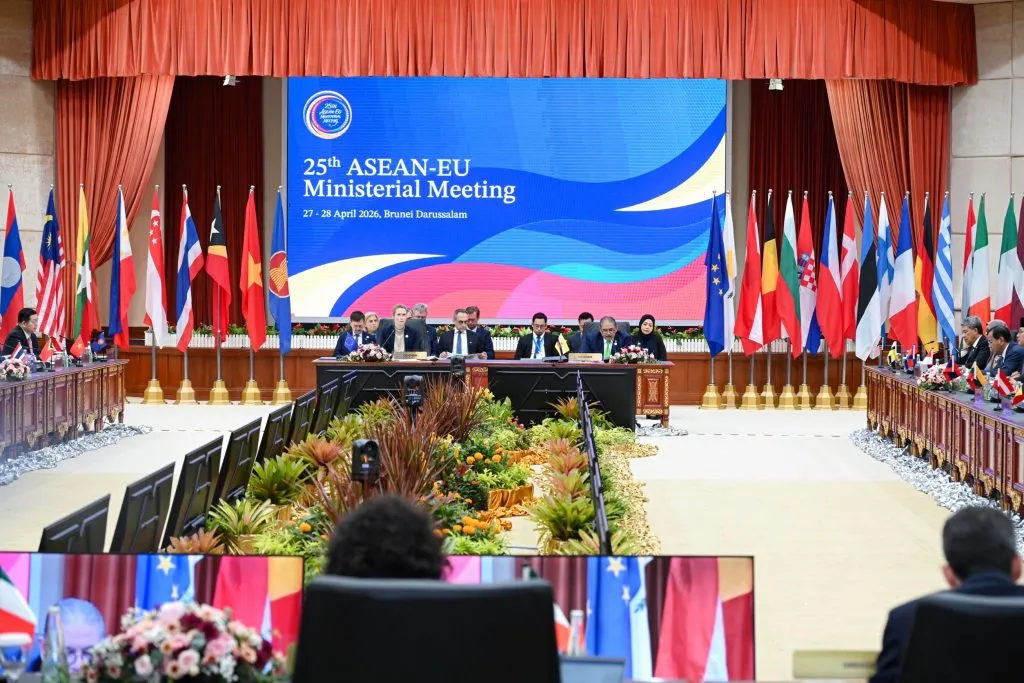
As part of efforts to reinforce bilateral links with the EU, Sihasak held talks with the EU’s top diplomat, Kaja Kallas, where both sides discussed protecting the multilateral free-trade system, strengthening energy security, and combating transnational threats such as online scam networks.
Those priorities were echoed in the joint ministerial statement, where ASEAN and the EU committed to stronger cooperation on cybercrime, maritime security, digital trade, and supply-chain resilience.
The statement also reaffirmed support for freedom of navigation under international law, concern over escalating crises from Myanmar to the Middle East, and a shared push for sustainable growth and climate cooperation.
Quiet diplomacy, louder ambitions
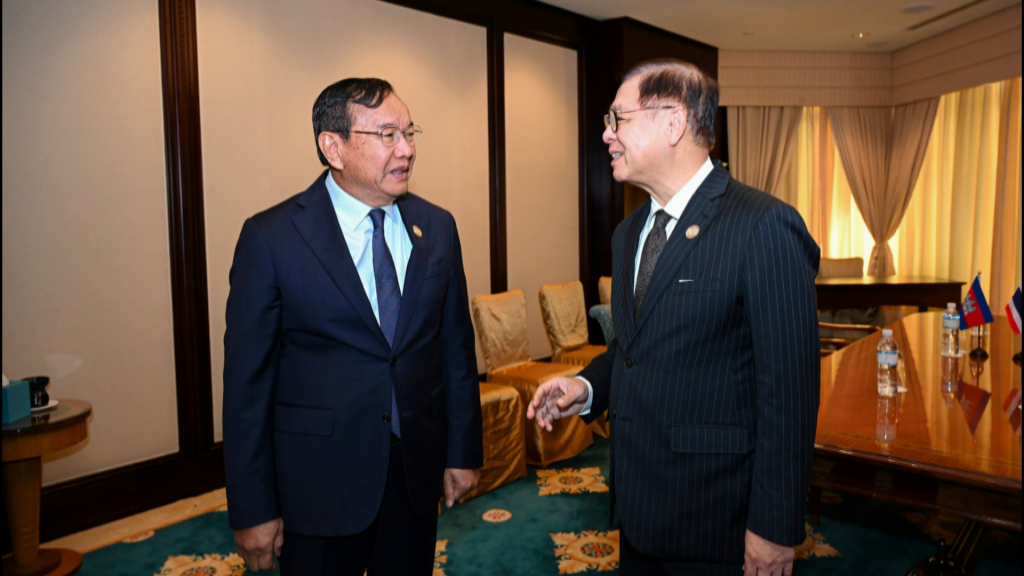
Additionally, Thailand’s delegation held discussions with Cambodia on border tensions, with the Thai side calling for a sustainable ceasefire and more constructive rhetoric.
Still, the larger takeaway from Brunei may be Thailand’s increasingly visible regional posture. As ASEAN prepares for its 50th anniversary of dialogue relations with the EU in 2027, Bangkok appears intent on entering its 2028 chairmanship as a shaper of the bloc’s next phase.
Thailand’s participation at the summit in Brunei can be viewed as an early campaign launch, as the Kingdom eyes translating regional uncertainty into strategic momentum.

 Teerin Julsawad
  Thailand NOW