

At first glance, Thailand’s participation at the 2026 BRICS Foreign Ministers’ Meeting in New Delhi appeared routine: a series of bilateral meetings, reaffirmations of cooperation, and carefully worded statements about multilateralism.
Viewed in its entirety, however, the meetings point to a broader, more pro-active diplomacy, one in which Thailand positions itself as a nexus between regions, trade corridors, and multilateral frameworks.
In a multipolar world, Thai diplomats are more cognizant than ever of the role that regional powers play in the new norm. After decades of “hedging” between superpowers, Southeast Asian nations like Thailand are building relationships across multiple geopolitical and economic networks simultaneously.
Speaking at the BRICS Foreign Ministers’ Meeting under the theme “BRICS@20: Building for Resilience, Innovation, Cooperation, and Sustainability,” Thai Deputy Prime Minister and Foreign Minister Sihasak Phuangketkeow emphasized the role of BRICS in amplifying the voice of developing countries and the Global South. He further highlighted Thailand’s readiness to serve as a bridge between ASEAN and BRICS ahead of its ASEAN chairmanship in 2028.
Chokepoints vs. connectivity
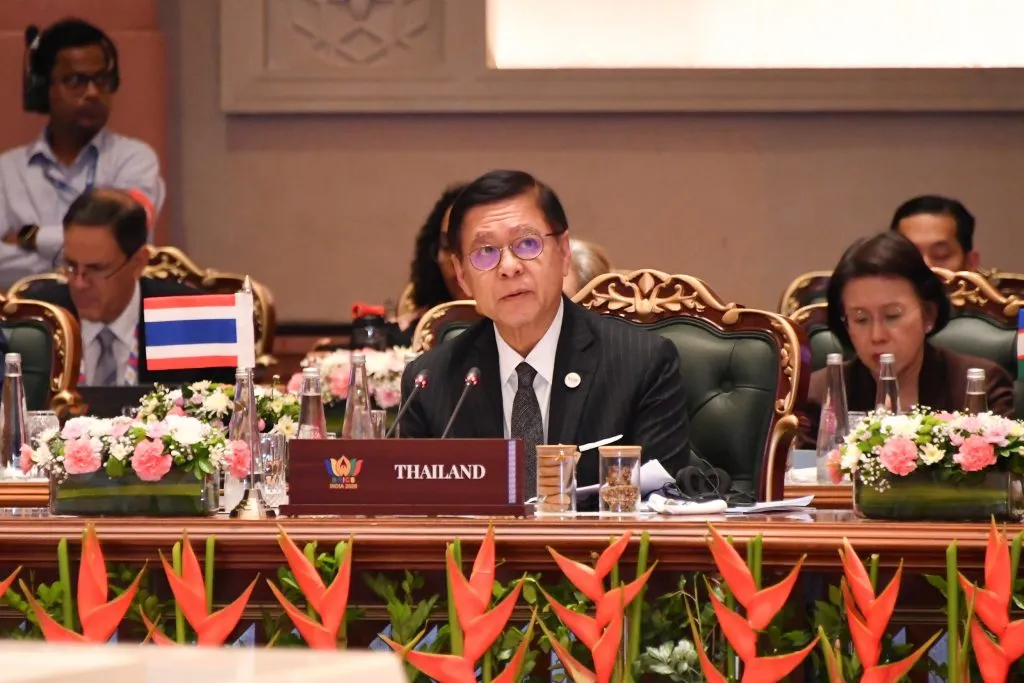
Behind the diplomatic language, many of Thailand’s bilateral discussions centered on trade connectivity and regional stability.
In talks with Iran, Thailand expressed appreciation for Tehran’s support in facilitating the safe transit of three Thai commercial vessels through the Strait of Hormuz while also signaling its readiness to provide humanitarian assistance through the Red Cross.
With India, discussions focused on the highly anticipated Land Bridge canal project, infrastructure development in the Indian Ocean, maritime security, and broader regional connectivity.
Taken together, the meetings suggest Thailand is placing growing importance on maintaining relationships across key trade and shipping corridors.
As instability in the Middle East and disruptions to global supply chains continue to affect international trade, middle powers like Thailand are laser-focused on securing economic resilience through connectivity and diplomatic engagement.
The Global South comes together
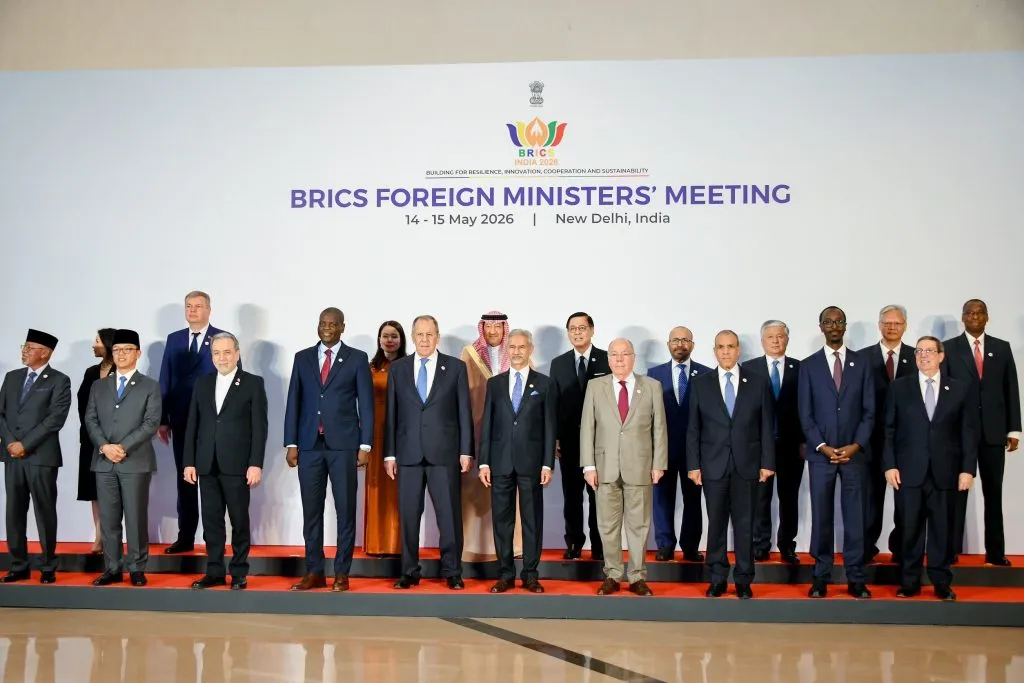
Thailand’s outreach at BRICS also reflected a broader push toward South-South integration between developing economies across Asia and Africa.
A key vehicle for this strategy is the recently relaunched Thailand–Africa Initiative (TAI), which Bangkok recalibrated in late 2025 as a platform for practical cooperation between developing economies, focusing on trade, food security, technology, tourism, and strategic connectivity.
Within this context, Thailand’s discussions with Egypt at the BRICS meeting carried added significance. Both sides explicitly described their countries as reciprocal gateways, with Egypt positioned as a gateway to Africa and Thailand presenting itself as a gateway to ASEAN.
Thailand also repeatedly linked its BRICS engagement to its upcoming ASEAN chairmanship in 2028, signaling an ambition to play a larger coordinating role between regional frameworks and emerging trade corridors.
The approach reflects a broader trend across the Global South, where middle powers are increasingly building direct links through trade, infrastructure, tourism, and regional institutions.

 Teerin Julsawad
  Thailand NOW