

Thailand has overhauled its visa-free scheme, reverting the 60-day entry period back to 30 days. The move comes as the country seeks to tighten security and crack down on visa abuse.
The Cabinet of the Royal Thai Government had approved the changes on Tuesday, May 19th, 2026, following a review led by the Ministry of Foreign Affairs and the Ministry of Tourism and Sports.
The impact of new visa rules in Thailand
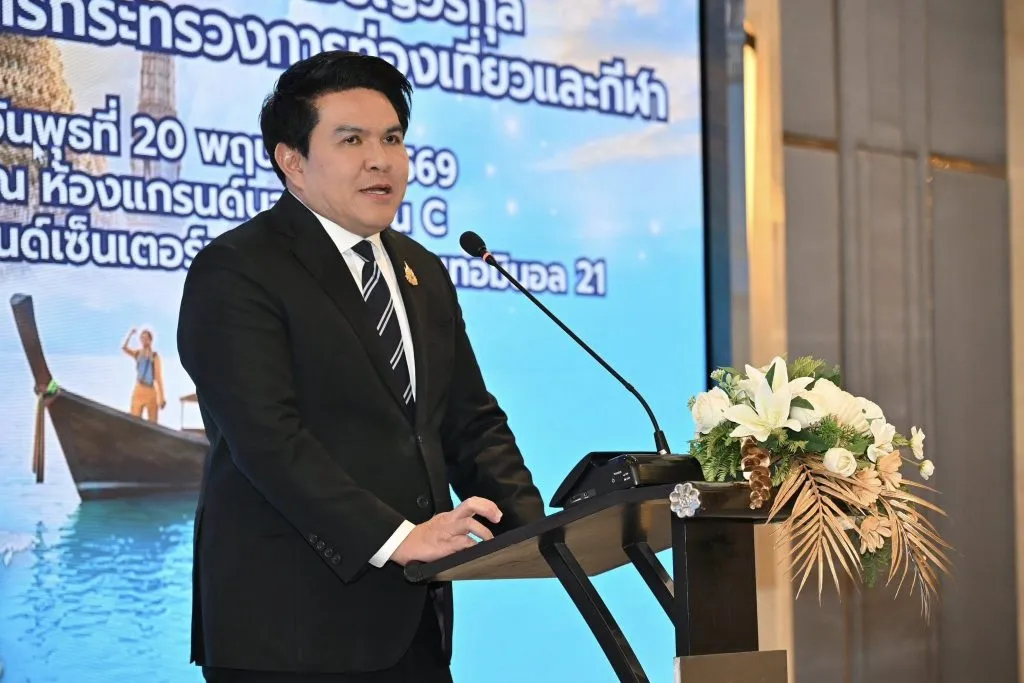
According to Tourism and Sports Minister Surasak Phancharoenworakul, this measure is expected to affect travelers from 93 countries and territories that had been included in the 60-day visa exemptions. Nonetheless, authorities argue that the impact on tourism would likely be limited. Government data shows most foreign visitors stay in Thailand for an average of around nine days, well below even the original 30-day period.
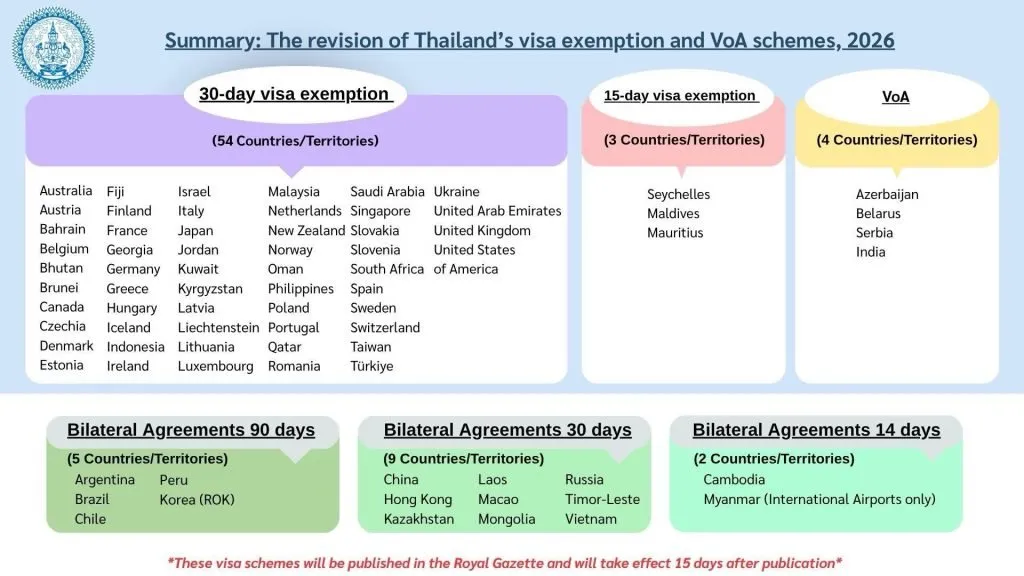
Under this new system, Thailand will maintain a 30-day visa-free program for nationals of 54 countries and territories, down from 57. This exemption will apply only to tourism purposes and can be extended once for another 30 days. However, travelers can only make use of the visa-free scheme twice per calendar year. There are notable exemptions, including for the nationals of Malaysia, Brunei, Indonesia, and Singapore.
Thailand will also introduce a new 15-day visa-free category for travelers from Seychelles, Maldives and Mauritius. Additionally, the Thai government plans to sharply reduce eligibility for Visa on Arrival programs from 31 countries to just four: Belarus, Serbia, India, and Azerbaijan.
The rationale behind new Thai visa rules
Mungkorn Pratoomkaew, Director-General of the Department of Consular Affairs, Ministry of Foreign Affairs, said the overhaul follows a new principle of “one country, one visa privilege” to simplify the system and reduce confusion.
The changes are also intended to address growing concerns over foreigners allegedly using tourist exemptions to operate illegal businesses, work without permits, and engage in transnational crime, including call-center scam operations.
Thailand originally introduced the 60-day visa exemption in 2024 to revive tourism after the pandemic. The government said this review of its visa schemes took into consideration national security, tourism revenue, diplomatic reciprocity, and the successful expansion of Thailand’s e-visa system.
Officials also stressed that the country would pivot from mass tourism to quality tourism, rather than simply increasing visitor numbers, which could exert overtourism pressures on major destinations.
The new rules, which are subject to further revision, will take effect 15 days after publication in the Royal Gazette. Authorities said foreigners already in Thailand under existing visa exemptions would be allowed to remain until their approved stay expires.

 Teerin Julsawad
  Paul Rujopakarn