

Thailand and Myanmar have pledged to deepen cooperation across trade, border security, and regional connectivity as Myanmar President Min Aung Hlaing paid an official visit to Bangkok. The visit highlighted Thailand’s increasingly prominent role in reconnecting its neighbor with ASEAN, even as Myanmar’s political transition continues to face international scrutiny.
Key Takeaways
- Prime Minister Anutin Charnvirakul hosted Myanmar President Min Aung Hlaing in Bangkok on August 6, 2026, for high-level bilateral talks and the Thailand–Myanmar Business Forum 2026.
- Both leaders agreed to accelerate economic cooperation to increase bilateral trade from US$7.4 billion to a target of US$12 billion.
- The two governments signed three bilateral agreements covering labor cooperation, water quality management along shared rivers, and Earth observation space technology.
- Authorities celebrated the reopening of the Second Thailand–Myanmar Friendship Bridge linking Mae Sot and Myawaddy to boost legitimate cross-border supply chains.
- Thailand and Myanmar committed to closer intelligence sharing to combat narcotics trafficking and dismantle border online scam networks.
A new chapter packed with symbolism
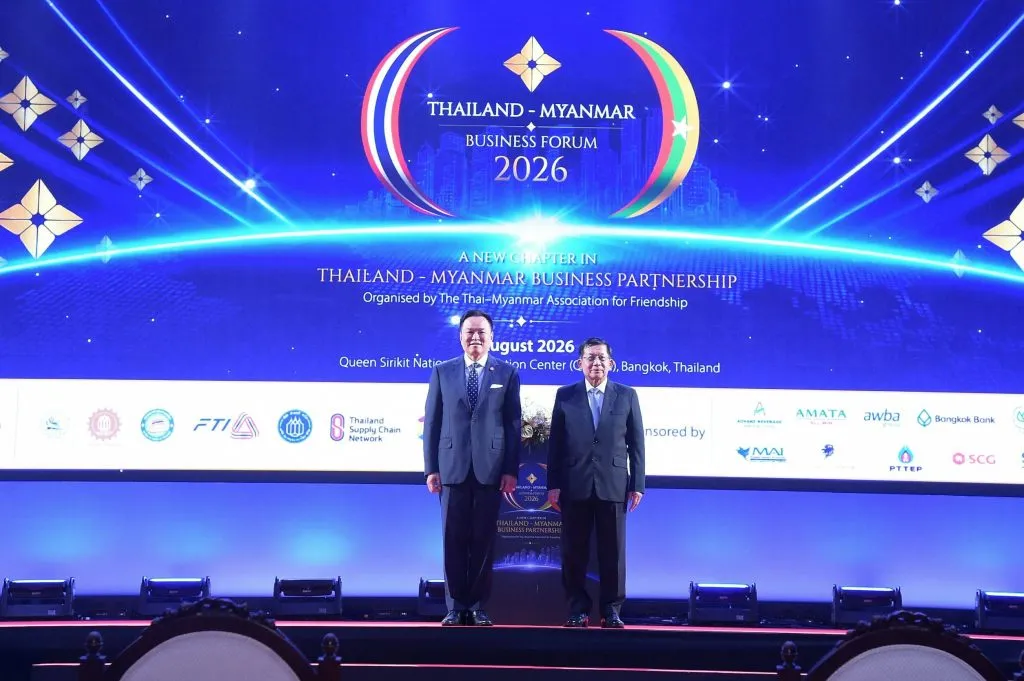
Hosted by Prime Minister Anutin Charnvirakul on August 6th, the visit combined high-level government talks with the Thailand–Myanmar Business Forum 2026, reflecting a common effort to expand economic ties while tackling the security and development challenges that continue to shape one of Southeast Asia‘s longest shared borders.
Anutin congratulated Min Aung Hlaing on assuming office and said Thailand remained ready to support Myanmar’s participation in ASEAN, with both governments agreeing to sustain dialogue and translate a new joint statement into practical cooperation spanning areas that included infrastructure and development.
The visit also produced three bilateral agreements covering labor cooperation, water quality management along shared rivers, and the peaceful use of Earth observation technology through a partnership between Thailand’s Geo-Informatics and Space Technology Development Agency (GISTDA) and the Myanmar Space Agency.
Building the next trade corridor
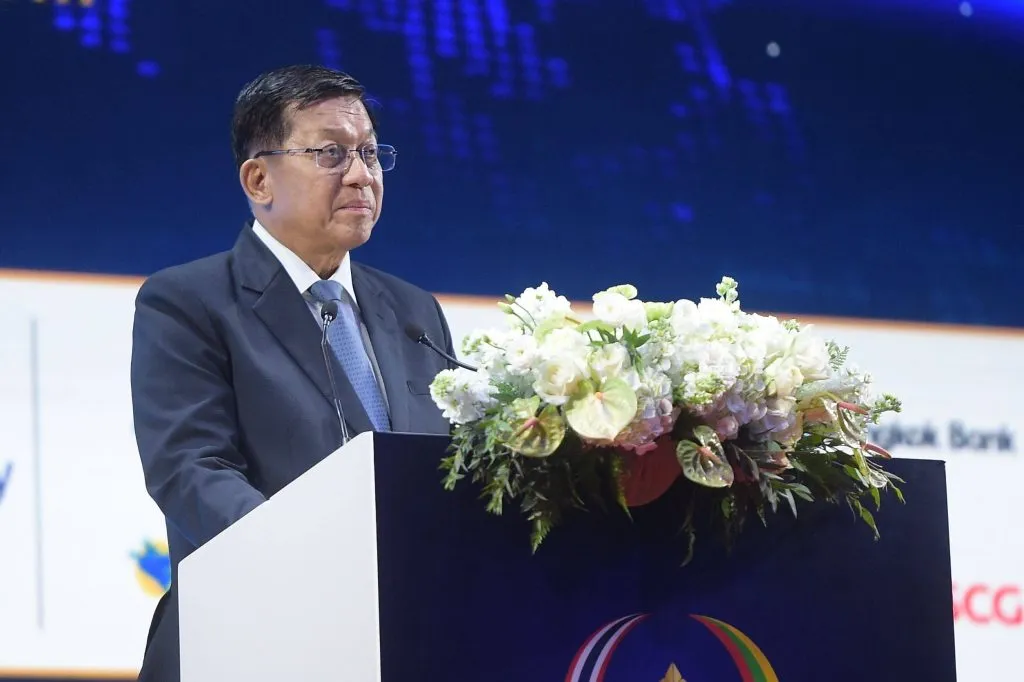
Economic cooperation emerged as the centerpiece of the visit, underscoring the strategic importance of the more than 2,400-kilometer Thailand–Myanmar border, which serves as one of the region’s most important commercial corridors.
Speaking at the business forum, Min Aung Hlaing described Thailand as one of Myanmar’s most important trading partners while urging closer cooperation to combat illegal trade, counterfeit medicines, and smuggling without disrupting legitimate cross-border commerce.
Anutin noted that bilateral trade currently totals around US$7.4 billion, with both governments reaffirming their ambition of raising that figure to US$12 billion. Thailand also confirmed it would host the next Joint Trade Commission meeting later this year to reduce regulatory barriers and improve trade flows.
Both leaders welcomed the reopening of the Second Thailand–Myanmar Friendship Bridge linking Mae Sot and Myawaddy, while agreeing to explore reopening additional border checkpoints where security conditions permit.
Myanmar also used the forum to promote its broader vision of becoming a regional land bridge connecting East Asia, Southeast Asia, and South Asia through projects including the Dawei Special Economic Zone and the India-Myanmar-Thailand Trilateral Highway. Min Aung Hlaing invited greater Thai investment in sectors ranging from electric vehicles and battery manufacturing to pharmaceuticals and logistics.
Balancing commerce with border security

Alongside economic initiatives, the talks reflected the growing importance both governments place on border stability. Both sides agreed on closer coordination against narcotics trafficking and online scam networks, together with strengthening information sharing and cooperation among relevant agencies.
Since assuming the presidency in April, Min Aung Hlaing has visited neighboring Asian countries as his administration seeks to rebuild regional relationships and present itself as a normal civilian government.
Thailand has meanwhile increasingly positioned itself as a bridge between Myanmar and the ASEAN bloc. Bangkok reiterated its support for Myanmar’s fuller participation in regional mechanisms and welcomed Myanmar’s stated commitment to pursuing peace talks through a Myanmar-led process.
A calibrated path back into the ASEAN fold
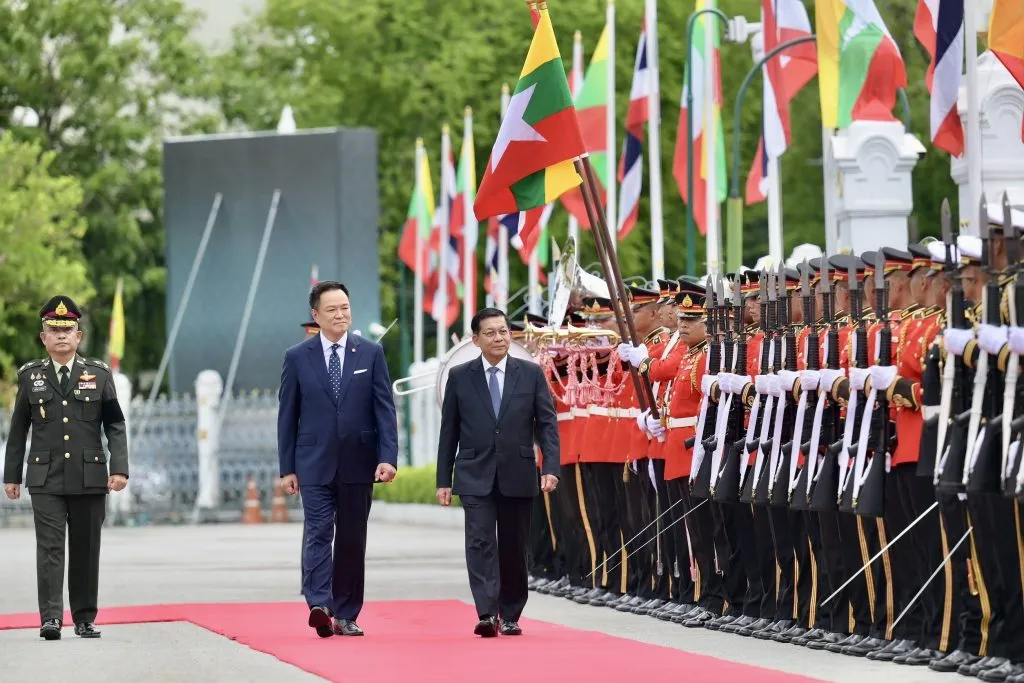
Thailand also reiterated that its policy of “calibrated re-engagement” is contingent on progress toward ASEAN’s Five-Point Consensus, which calls for reducing violence and fostering dialogue among all parties, as well as facilitating humanitarian assistance.
Deputy Prime Minister and Foreign Minister Sihasak Phuangketkeow recently said Bangkok welcomed Naypyidaw’s decision to allow the International Committee of the Red Cross (ICRC) to visit former leader Aung San Suu Kyi, adding that Thailand hopes the next step will be for the ASEAN Special Envoy to meet with her.
He further stated that Thailand would continue engaging Myanmar while supporting its progress toward democracy and stability, positioning itself as a facilitator between Naypyidaw, ASEAN, and the broader international community.
Both governments presented the visit as the start of a new chapter in bilateral relations, one focused on expanding practical cooperation and shared economic growth along their common border, as well as creating conditions for greater stability and strengthened regional connectivity.
Still, whether those ambitions ultimately reshape the relationship may depend on how nimbly greater economic engagement can coexist with the political and security realities that are increasingly defining the region.

 Teerin Julsawad