

Thailand is looking to get more out of its relationship with Russia, alongside the much larger Eurasian market surrounding it.
Thai Deputy Prime Minister and Foreign Affairs Minister Sihasak Phuangketkeow’s visit to Moscow from August 12th to 15th has been one of economic diplomacy, with discussions ranging from trade and investment to energy, agriculture, and a long-delayed free trade agreement with the Eurasian Economic Union.
While Thailand remains interested in the US market, trade negotiations are facing difficulties and the Kingdom is continues to look for alternatives. Moscow, meanwhile, appears keen to position Thailand as a gateway into ASEAN at a time when geopolitical instability is making Southeast Asia look comparatively attractive.
Key Takeaways
- Thai Deputy Prime Minister and Foreign Affairs Minister Sihasak Phuangketkeow visited Moscow from August 12 to August 15, 2026, to accelerate negotiations for a free trade agreement with the Eurasian Economic Union.
- Sihasak Phuangketkeow framed the Eurasian Economic Union initiative as a strategic effort to find alternative export markets while positioning Thailand as a gateway into ASEAN for Eurasian businesses.
- Thailand and Russia are addressing commercial obstacles in energy, natural gas, and agriculture through specialized payment mechanisms and streamlined sanitary inspection approvals.
- Thai delegates met with the Russia-Thailand Business Council to prepare for the second Russia-Thailand Investment Forum scheduled for October 2026 in Bangkok.
- Thailand maintains a balanced foreign policy across major global powers while preparing to mark 130 years of diplomatic relations with Russia in 2027.
From Moscow to a wider Eurasian market
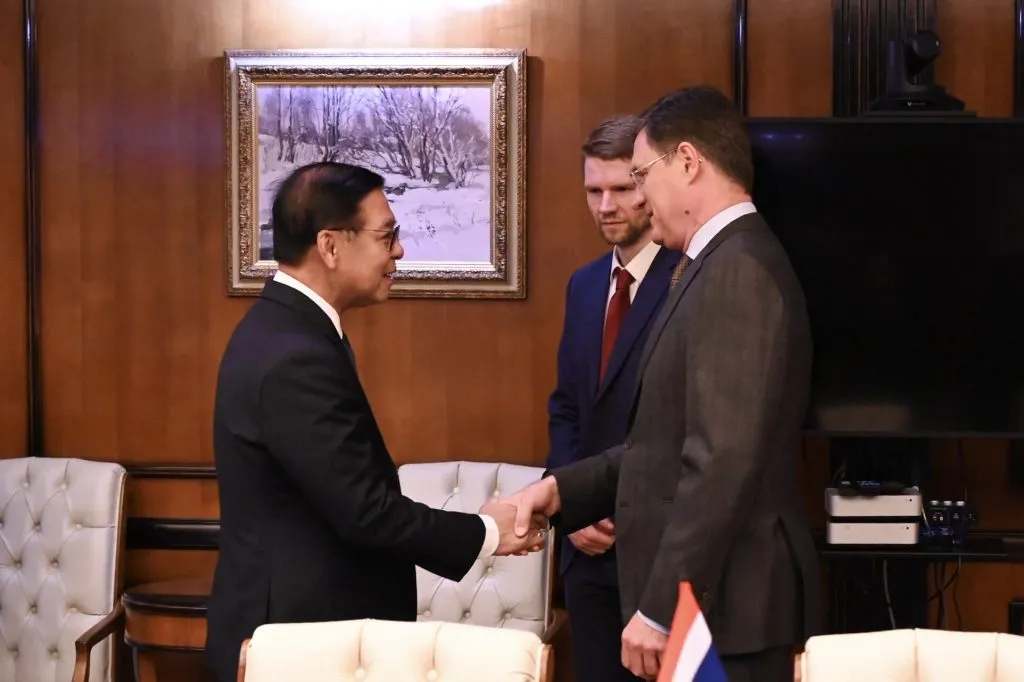
At the heart of the visit is Thailand’s push to finally move toward negotiations for a free trade agreement with the Eurasian Economic Union (EAEU).
Thailand first expressed interest in such an agreement more than a decade ago, but progress has been slow. Sihasak is now asking the Eurasian Economic Commission to accelerate the process, following a similar push during his recent visit to Kazakhstan, which recently held the EAEU chairmanship.
The bloc, comprising Russia, Kazakhstan, Belarus, Armenia, and Kyrgyzstan, represents more than 180 million people and a combined economy of roughly US$2 trillion. Thailand-EAEU trade exceed US$2 billion in 2025.
Speaking in Moscow, Sihasak framed the effort as part of a broader strategy to find alternative markets. He also pointed to the EAEU’s interest in Thailand as a gateway into Southeast Asia, particularly as ASEAN is increasingly viewed as relatively secure amid geopolitical instability elsewhere.
Energy, food, and the obstacles in between
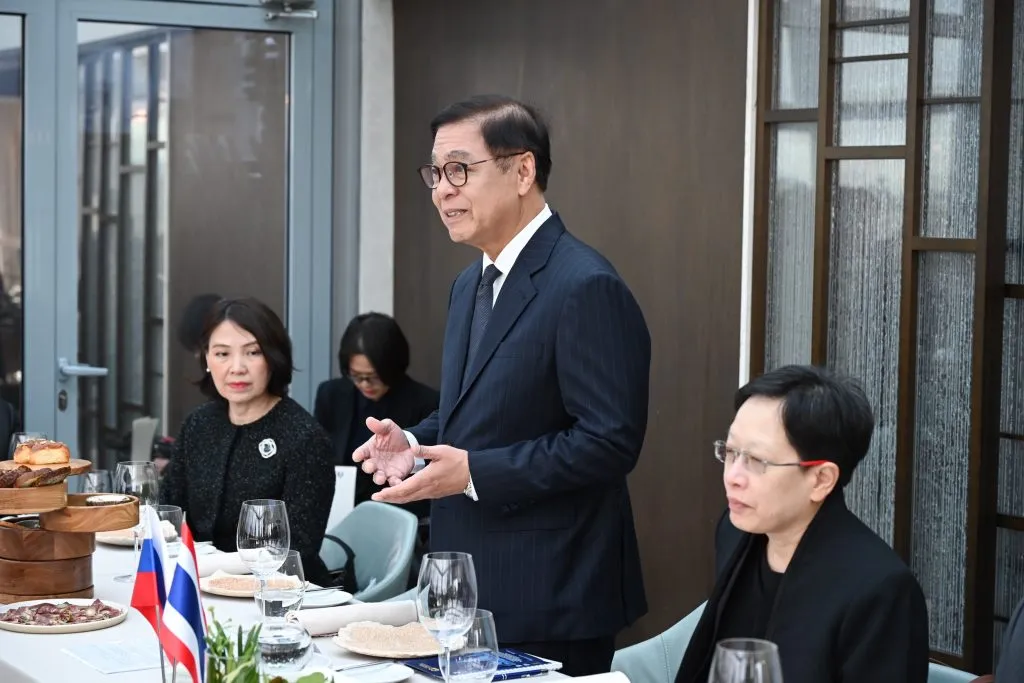
Russia, meanwhile, is pitching itself as a potentially important energy supplier to Thailand, including the traditional mainstays of oil and natural gas, but also nuclear energy.
Still, turning that offer into commercial deals could prove complicated. Payment and financial transactions remain a major concern, though Russian officials affirmed that mechanisms exist to conduct transactions without violating sanctions. Thai and Russian businesses will nevertheless ultimately have to decide which arrangements are practical and sufficiently secure.
Food and agriculture offer another avenue for growth but face a different set of obstacles. Thailand wants to expand exports to Russia, including agricultural products and food ingredients used by the country’s popular Thai restaurants. Russia, in turn, wants to export beef and pork to Thailand. The barriers here are more practical than tariff-related, with things like sanitary inspections and production-facility approvals slowing trade.
From diplomacy to private sector deals
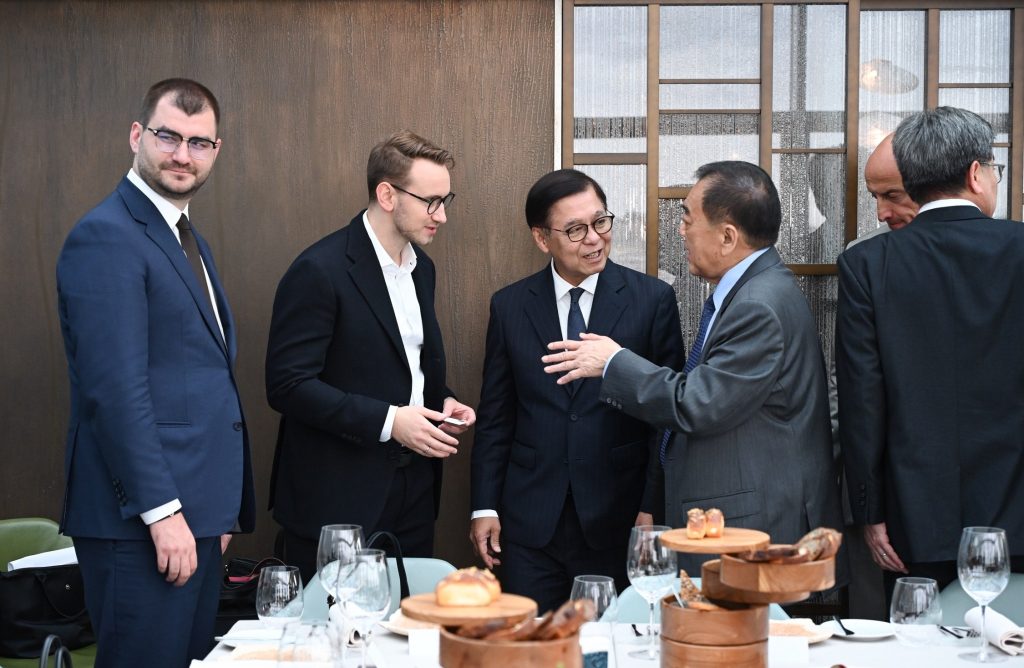
That may help explain why Sihasak has brought Thai business leaders into the delegation, underscoring the Thai government’s position that diplomatic contacts should ultimately produce tangible economic results.
Additionally, Sihasak held consultations with business leaders and met representatives of the Russia-Thailand Business Council (RTBC), whose members span industries such as energy, technology, and logistics. The sides are also preparing for the second Russia–Thailand Investment Forum, scheduled for October in Bangkok.
These developments reflect a pragmatic attempt on both sides to make a relationship that has often remained politically cordial but economically underdeveloped considerably more useful, without representing a dramatic Thai “pivot”.
“Russia understands Thailand’s balanced foreign policy, which maintains relations with all major powers – the United States, China, and Russia – without trying to pressure Thailand to choose a political or strategic side,” said Wanwichit Boonprong, a lecturer at Rangsit University’s Faculty of Political Science, following Prime Minister Anutin Charnvirakul‘s visit to Russia in June.
Regardless, as Thailand and Russia prepare to mark 130 years of diplomatic relations in 2027, Sihasak’s visit suggests Bangkok wants the next chapter of that relationship to be measured in the sort of trade and investment deals that actually cross the border.

 Teerin Julsawad