

Thailand arrived at the World Economic Forum (WEF) Annual Meeting 2026 this week with a clear and direct emphasis on being open for business and open to all sides, positioning itself as a connective hub between competing power blocs in an increasingly fractured global economy.
A trusted partner for everyone
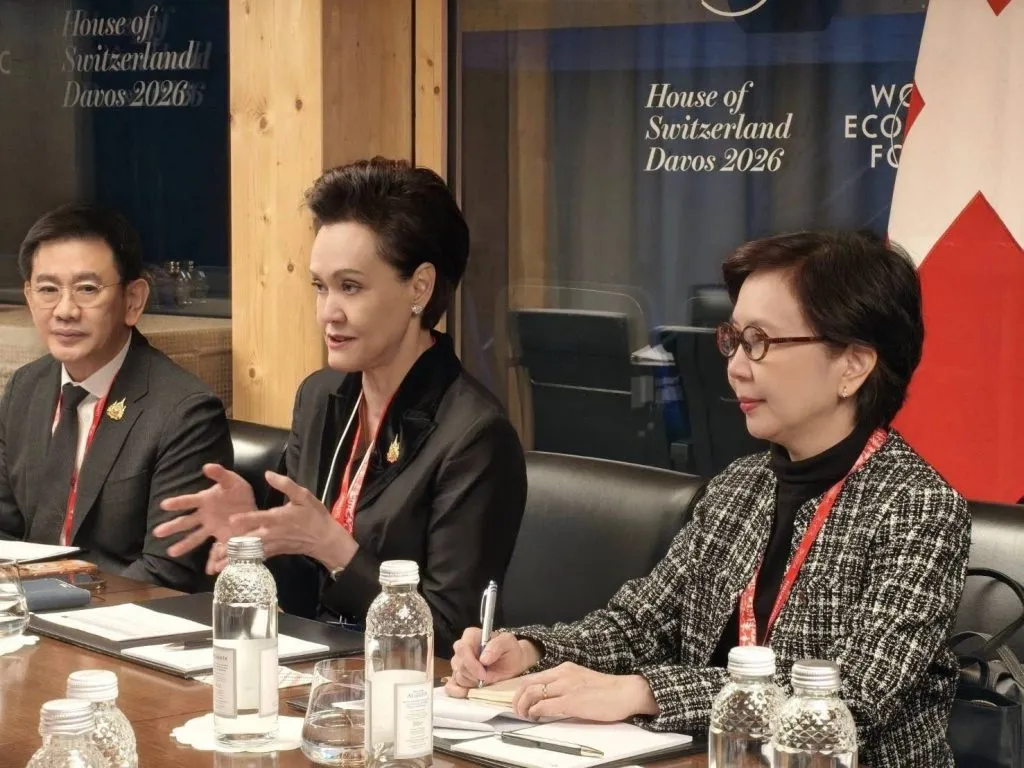
Commerce Minister Suphajee Suthumpun emerged as one of Thailand’s most visible voices in Davos, framing the Kingdom as the “heart of Asia,” a geographic and diplomatic bridge linking China-ASEAN trade routes in the north-south corridor and India-ASEAN flows along the east-west axis. In a polarized world, she emphasized Thailand’s non-aligned stance as a competitive advantage, calling it a “partner everyone wants to engage with,” whether companies are diversifying away from one region or rebalancing their exposure to another.
That positioning, Thai officials say, is meant to cast Thailand as a strategic trust hub, capable of attracting long-term investment while expanding its role in global supply chains at a time when geopolitical risk is reshaping corporate decision-making.
Courting capital and cloud giants
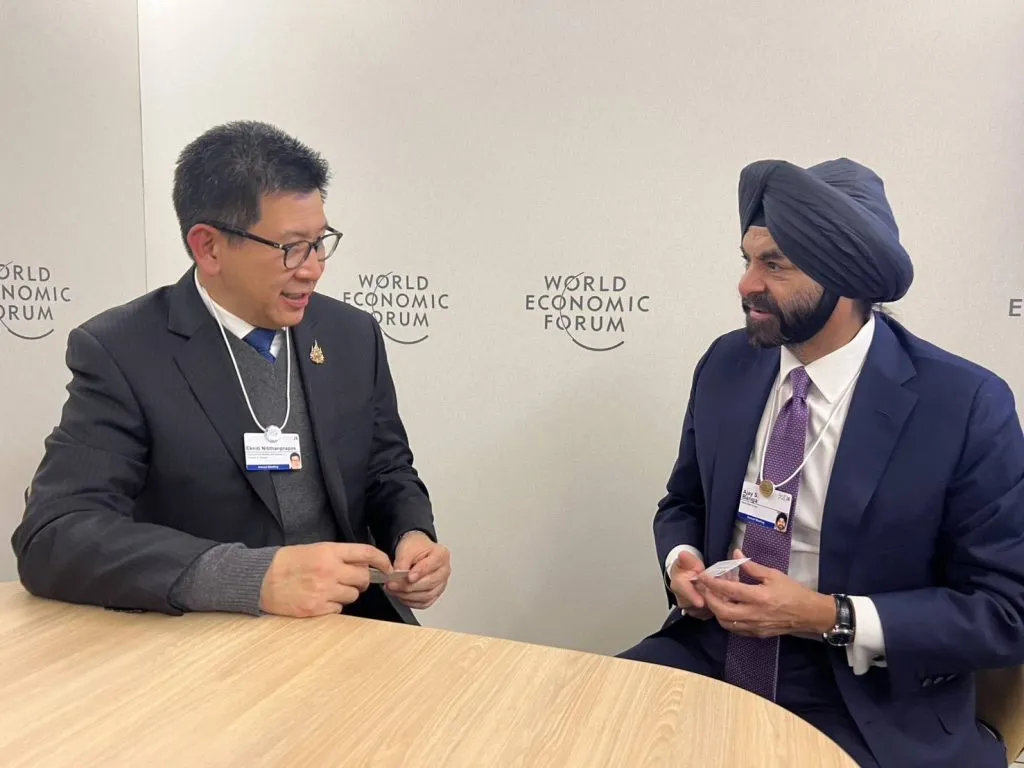
Leading the high-level Thai delegation, Deputy Prime Minister and Finance Minister Ekniti Nitithanprapas held a series of meetings with global technology leaders and international financial institutions. On the sidelines of the forum, he met World Bank Group President Ajay Banga and IMF Managing Director Kristalina Georgieva to discuss Thailand’s low-carbon transition, job creation, and ways to improve small and medium-sized enterprises’ access to global investment.
Talks with executives from Amazon Web Services, Microsoft, TikTok, HCL Technologies, and other firms, meanwhile, focused on expanding cooperation in digital infrastructure, artificial intelligence, and workforce development. According to Thailand’s Board of Investment, those engagements are tied to past and future investment plans exceeding THB500 billion (approx. US$16.04 billion), aimed at positioning the nation as a regional hub for cloud computing, AI, smart manufacturing, and advanced services.
The tech outreach also carried a diplomatic dimension. Several companies were invited to co-host business events and breakout sessions when Thailand welcomes the IMF-WBG Annual Meetings in Bangkok later this year, underscoring the government’s effort to blend investment promotion with global policy leadership.
Cyber cooperation as a key agenda
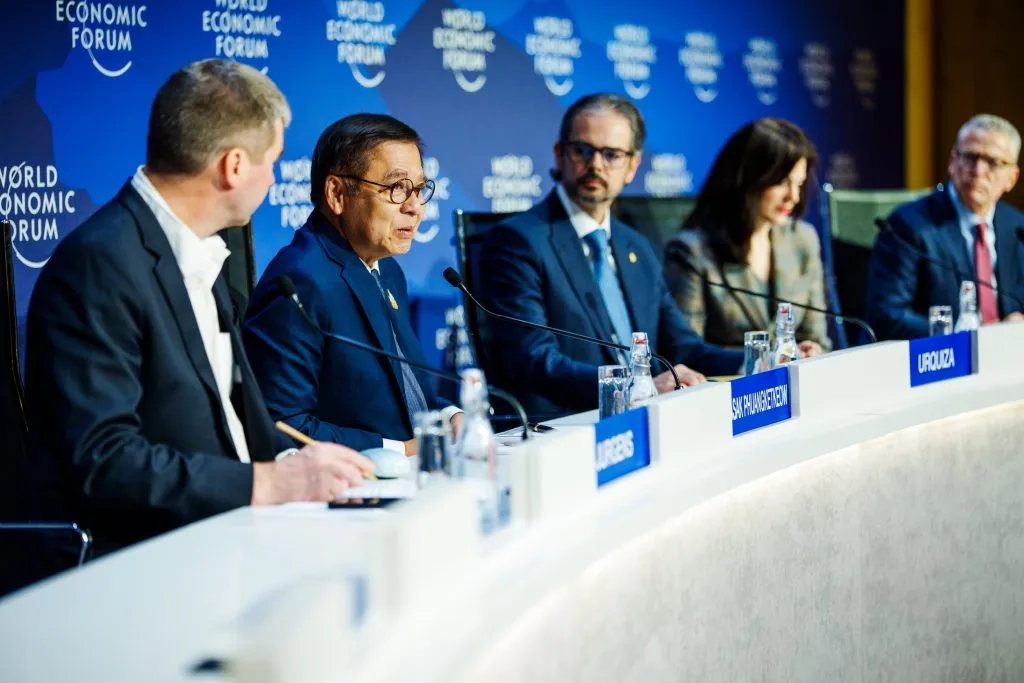
Closely related to Thailand’s digital investment agenda, Foreign Minister Sihasak Phuangketkeow participated in a WEF session titled “Cybercrime Has Real Victims,” engaging with senior figures from INTERPOL, International Justice Mission, and academia on the socioeconomic impacts of cybercrime.
Thailand further highlighted its proactive role in returning over 11,000 victims of cyber-enabled crime to their home countries, its contributions to international law enforcement cooperation, and its commitment to building legal and intelligence frameworks that bridge borders in the fight against cybercriminal networks.
Diplomacy on the sidelines
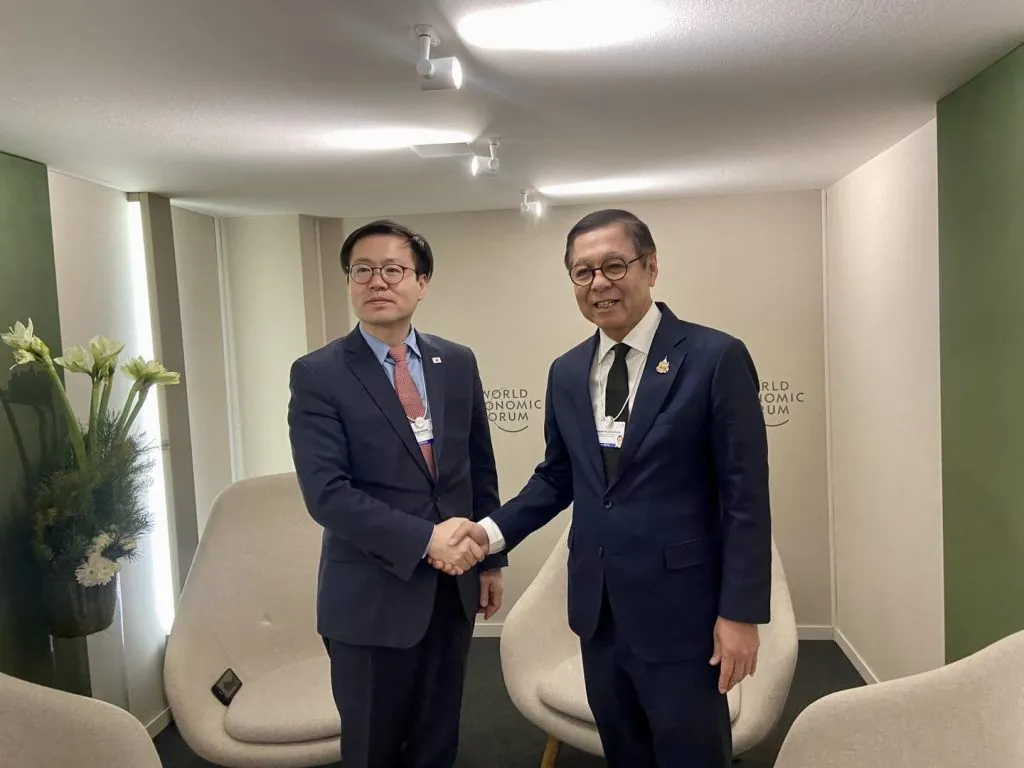
Beyond the boardrooms, Minister Sihasak met with South Korea’s Trade Minister Yeo Han-koo to accelerate talks on a Thailand-ROK Comprehensive Economic Partnership Agreement (CEPA), while reaffirming support for Korean investment in Thailand.
He also held discussions with Swiss Foreign Minister Ignazio Cassis on deepening trade ties following the Thailand-European Free Trade Association Free Trade Agreement (Thailand-EFTA FTA). Additional talks were held on climate cooperation under the Paris Agreement, as well as Thailand’s bid to join the OECD in a move seen as signaling Bangkok’s ambition to align more closely with advanced economies’ policy standards.
ASEAN ambitions and global signals
Moreover, Thai officials framed their Davos presence as part of a broader regional strategy. Deputy Premier Ekniti participated in high-level sessions on ASEAN’s growth pathways and global economic risks, presenting Thailand as both a national investment destination and a platform for scaling policy ideas across Southeast Asia.
As Davos drew to a close, the message from Team Thailand was unambiguous in emphasizing that neutrality is not passivity, and that being everyone’s partner may be the Kingdom’s strongest currency in a world of disrupted trade routes and shifting diplomatic relations.

 Teerin Julsawad
  Thailand NOW