

Thailand has rolled out the red carpet for visiting Chinese Foreign Minister Wang Yi, as the Kingdom seeks to deepen ties with its largest trading partner while positioning itself at the center of regional diplomacy.
Prime Minister Anutin Charnvirakul received Wang at Government House in Bangkok, where the two held talks on trade, security and regional tensions. The visit, which runs from April 23rd to 25th, comes as Thailand and China mark more than five decades of diplomatic relations and amid growing Chinese investment in Southeast Asia.
The meeting opened on a light note, with Wang reportedly telling Anutin on arrival that he looked “very handsome.” The Thai premier replied, “You are more handsome than me,” drawing laughter before formal talks began.
Trade, technology, and security in focus
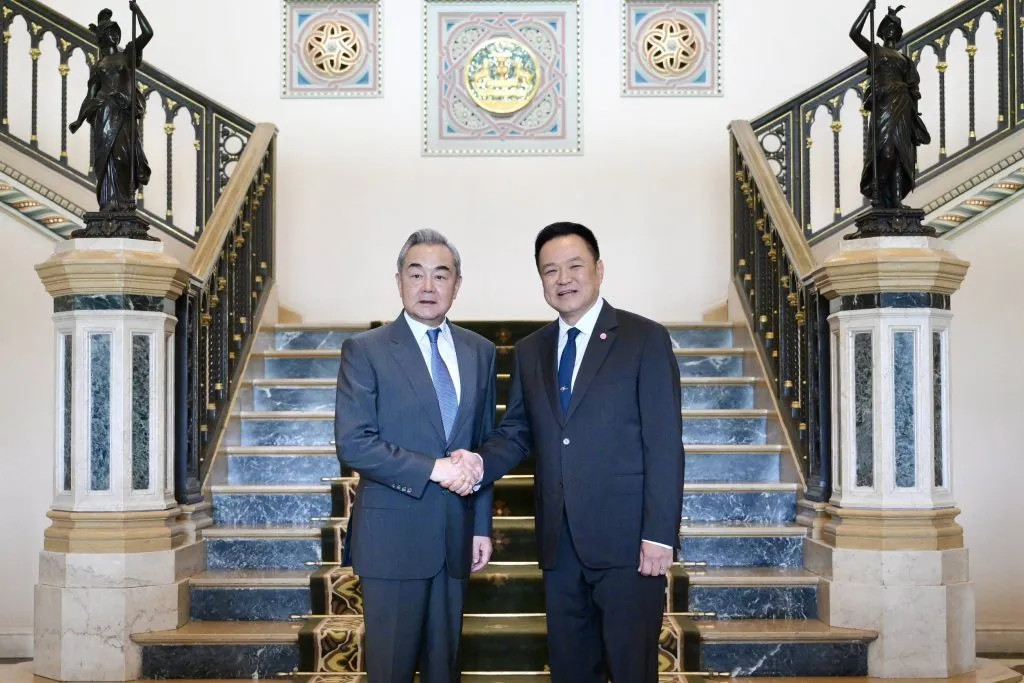
Both sides have agreed to elevate relations toward a deeper strategic partnership and accelerate work on a “Joint Action Plan” aligning the development priorities of both countries.
“This discussion reflects the close relationship and high level of trust between Thailand and China,” Government Spokesperson Rachada Dhnadirek said. “It is not only a symbolic relationship, but also one that aims to drive strategic and practical cooperation concretely over the long term.”
Thai Foreign Minister Sihasak Phuangketkeow said Bangkok wants stronger Chinese investment in advanced industries, especially electric vehicles and innovation.
“We do not want to be only a pathway,” Sihasak said ahead of Wang’s arrival. “We want investment in technology and innovation that strengthens our domestic capabilities.”
Security also featured heavily in the discussions, with both governments pledging closer cooperation against transnational crime and cyberscam networks that have plagued parts of mainland Southeast Asia.
Beijing signals support on border tensions
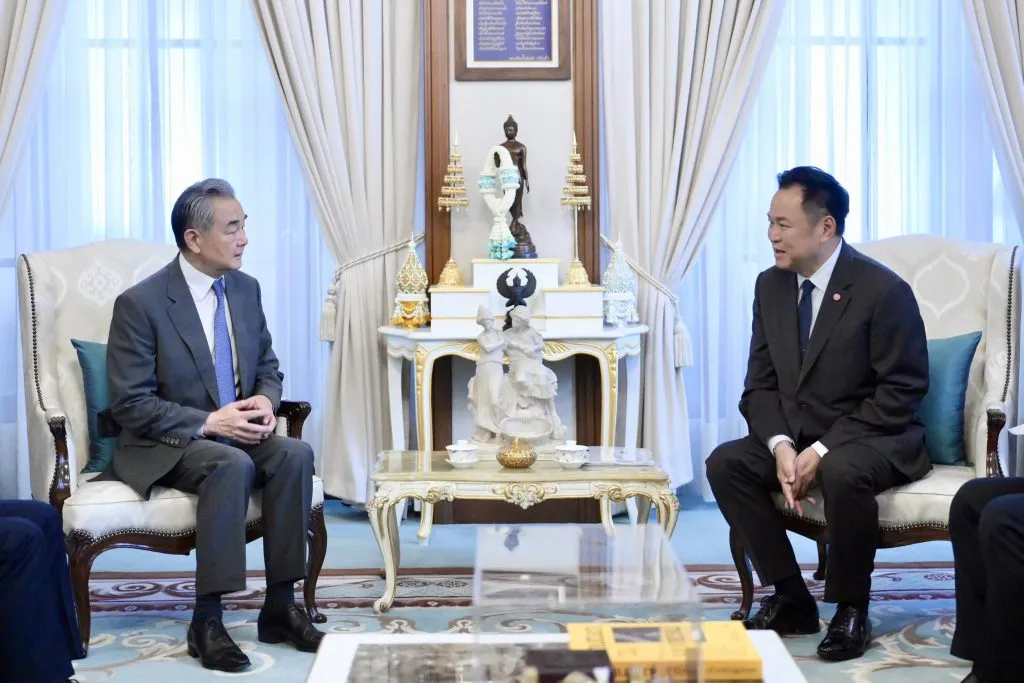
The diplomatic outreach also touched on Thailand’s relations with neighboring Cambodia following armed clashes last year.
Anutin said China had indicated that Phnom Penh appeared open to easing tensions and was willing to help mediate.
“He said Cambodia’s stance towards Thailand suggests they do not want to fight, do not want confrontation, and do not want conflict,” Anutin said of Wang’s message.
Still, Bangkok signaled caution.
“We need to establish the ground rules first—what kind of discussions would lead to a restoration of relations,” Anutin added.
Thailand reaches out to Myanmar
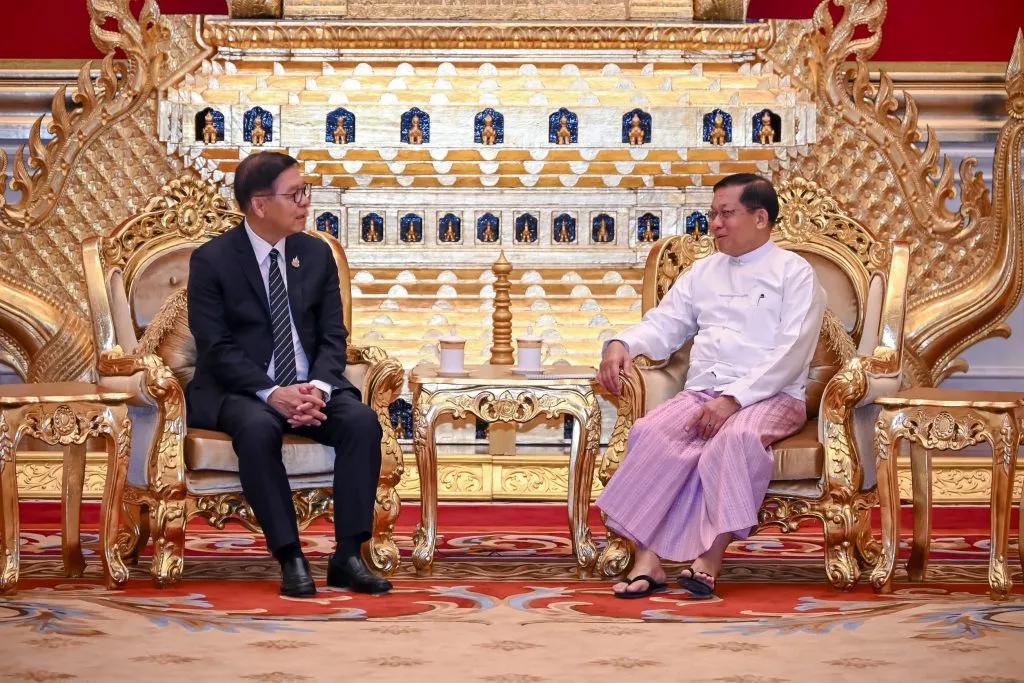
At the same time, Thailand has been pursuing a separate diplomatic track with neighboring Myanmar. Earlier this week, Sihasak visited Nay Pyi Taw, where he said Thailand wanted “lasting peace in Myanmar” and sought a “new chapter” in bilateral ties.
The Kingdom’s priorities included border security, suppressing scam, and narcotics networks, reopening trade routes, and encouraging Myanmar’s gradual reintegration into ASEAN after years of isolation.
Sihasak also pressed for action on scam operations, narcotics trafficking, and pollution spilling across the border, while urging de-escalation after recent incidents involving Myanmar aircraft mistakenly dropping bombs on Thai territory.
Furthermore, Sihasak said Myanmar President Min Aung Hlaing informed him that former leader Aung San Suu Kyi was being “well looked after,” after the foreign affairs minister relayed ASEAN concerns about her welfare.
Together, the diplomatic efforts reflect Thailand’s ongoing efforts to position itself as a pragmatic regional actor by balancing major-power ties with China while working to stabilize its immediate neighborhood through steady engagement.

 Teerin Julsawad