

How do you feel about migrant workers? How do you feel about migrants in general? How much of those feelings are shaped by the media? Amid the rising tide of inflammatory misinformation, it becomes that much more important for media outlets to commit to responsible journalism and provide balanced depictions of migrants and migration issues.
On January 10th, 2023, the Ministry of Foreign Affairs of Thailand (MFA) and the International Organization for Migration (IOM) co-hosted a public forum on “Shaping Public Perception Towards Migrants.” The event was joined by academics, civil servants, U.N. representatives, and members of the press.
While the IOM’s research findings shared that day pointed to some unexpectedly positive trends, some of the real surprises of the event were the poignant remarks made about Thailand’s role in the region, its obligations to migrant populations, and who we choose to claim as “Thai.”
Thailand’s complex relationship with migration
What’s Thailand’s role in migration? All of them.
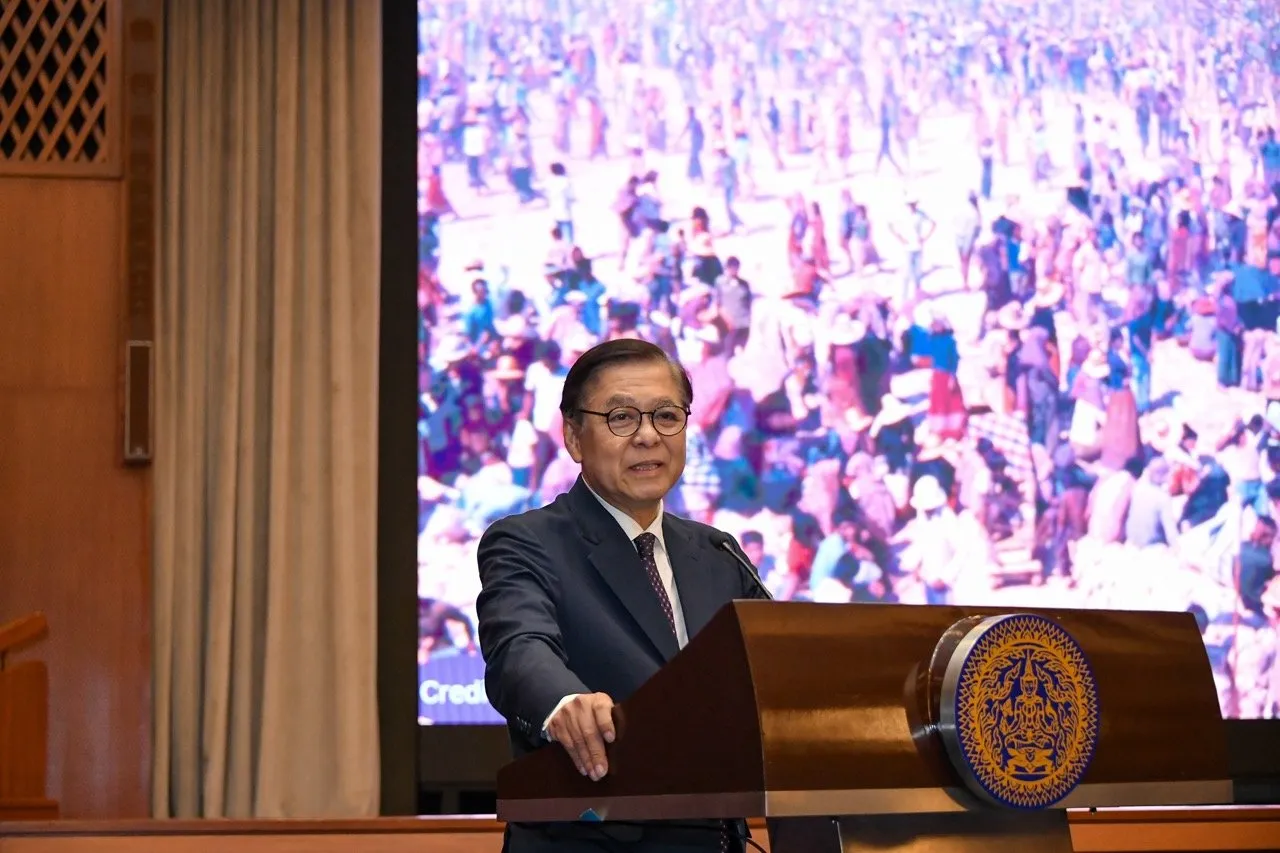
In his keynote address, H.E. Sihasak Phuangketkeow, Vice Minister of Foreign Affairs, indicated that the Kingdom is a country of origin, transit, and destination for migration. As a country of origin, Thailand has a global diaspora of roughly 1.28 million (🇹🇭) and 128,982 Thai migrant workers (🇹🇭), many of whom emigrate to affluent Asian and European countries. According to the Ministry of Labor, Thai migrant workers contributed personal remittances of nearly THB237.92 billion in 2022.
At the same time, Thailand has a growing non-Thai population of 4.9 million, mostly from neighboring countries (i.e., Myanmar, Cambodia, and Laos). Many labor-intensive sectors of the Thai economy — including agriculture, construction, and manufacturing — are dependent on migrant workers.
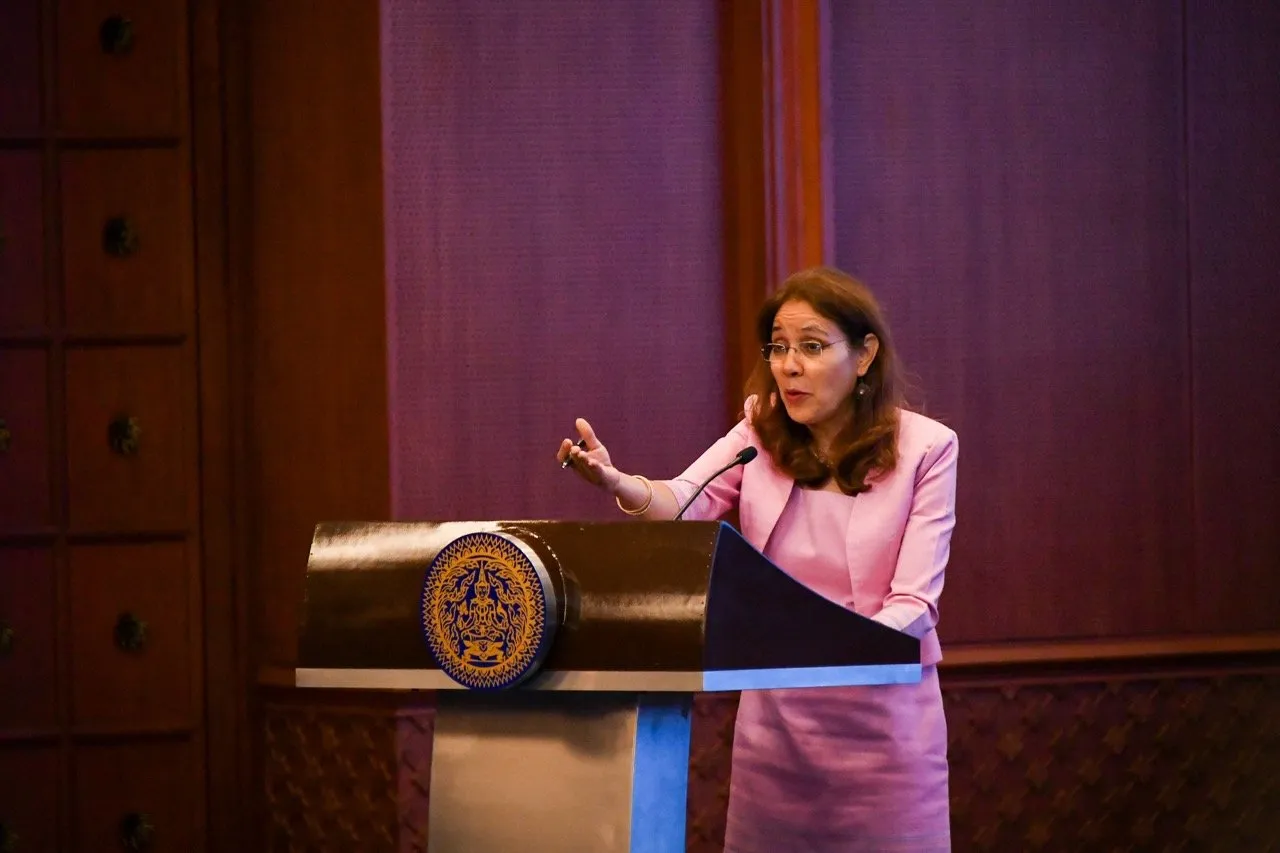
According to welcoming remarks made by Ms. Gita Sabharwal, United Nations Resident Coordinator in Thailand, this makes migration “a key driver for economic growth, not just here in Thailand, but across ASEAN,” adding that private-sector demand is growing for the ethical recruitment of migrant workers. With Thailand’s aging population and shrinking workforce, migrant labor is expected to continue rising and contributing to the Thai economy.
Of course, there are other, more somber reasons for migration. H.E. Sihasak reflected on his experiences during the Cambodian civil war, in which as many as 300,000 Cambodians fled to neighboring Thailand. “At the time, the Thai government had to balance issues of national security and humanitarian relief… with the eyes of the international community on us.”
Today, geopolitical conflicts and civil unrest continue to impact migrants and migration. Thailand currently still houses an estimated 105,000 previously displaced persons from Myanmar in nine temporary shelters along the border, has provided humanitarian assistance and shelter to other more recent groups temporarily fleeing intermittent fighting across that border, all while pursuing the repatriation of Thai nationals taken hostage in the Israel-Palestinian conflict.
Underscoring the widespread challenge of migration, H.E. Sihasak asserted his belief that “migration is a challenge faced by all countries, by this region, and by the world.”
Thai sentiment towards migrants improves*
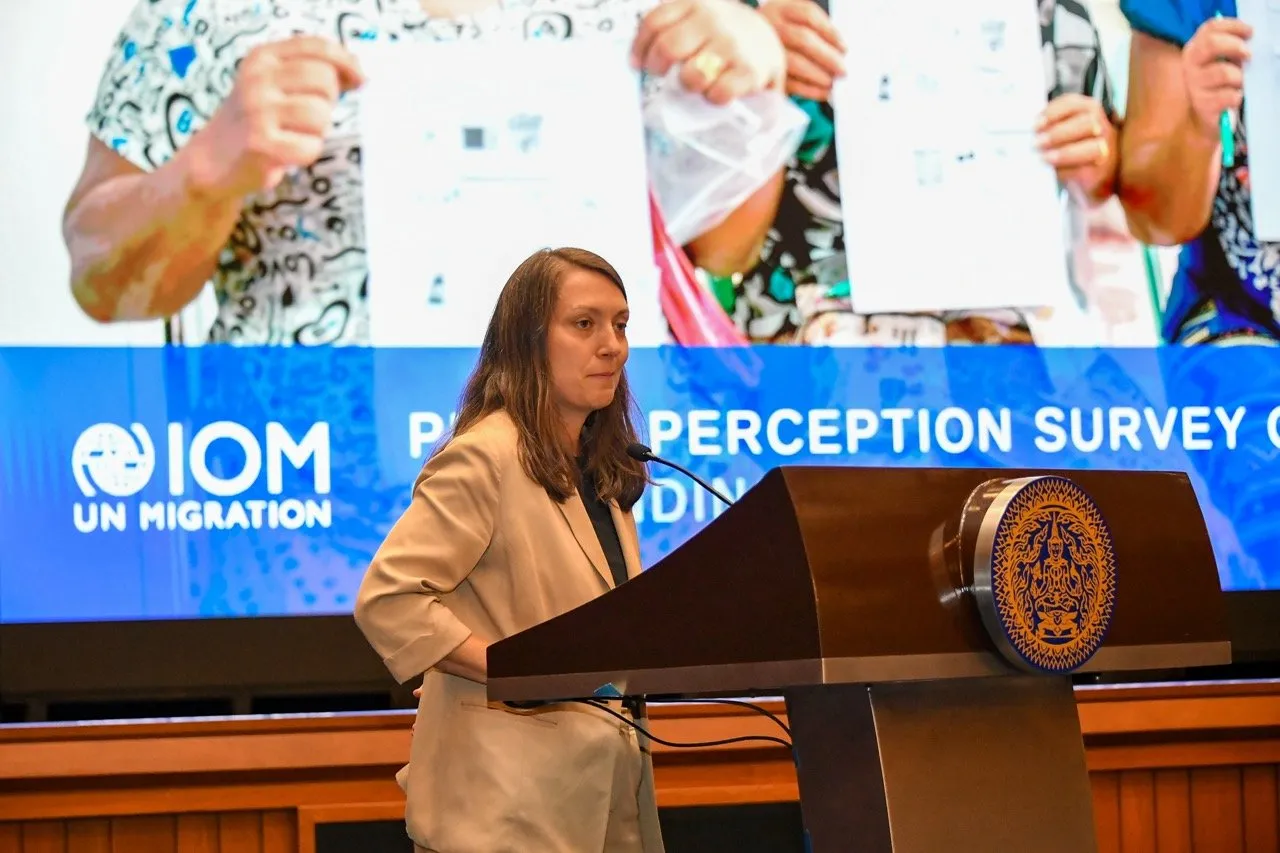
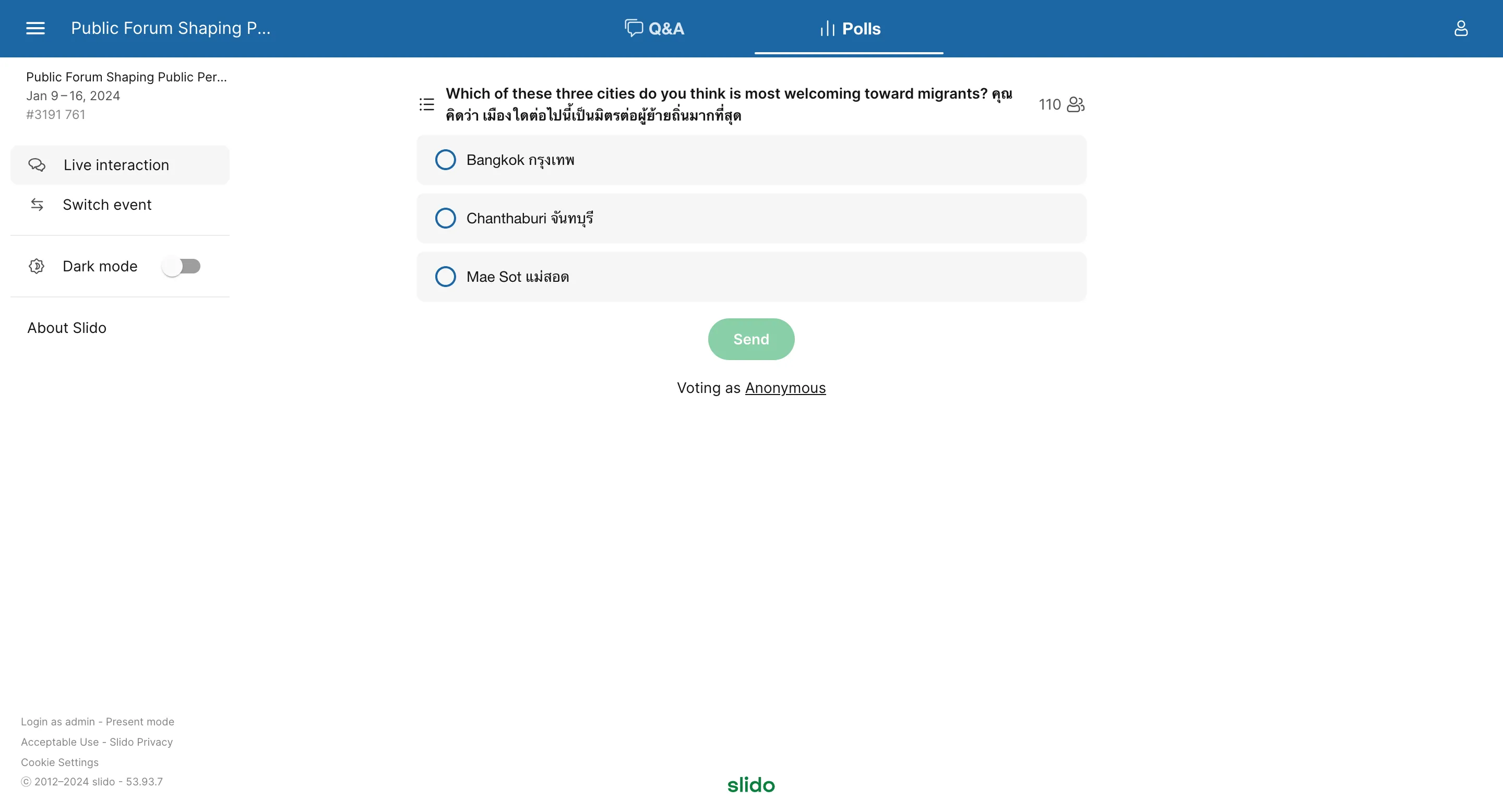
Before Ms. Géraldine Ansart, Chief of Mission of IOM Thailand, presented the 2023 findings of the IOM Assessment of the Public Perception of Migrants in Thailand, she conducted an online poll of forum participants.
With the freedom of anonymity, the majority of us responded that the Thai public has a negative perception of migrants. In a moment of complicit self-awareness (or mutual disdain), we, the media, also copped to portraying migrants in a less-than-positive light. Furthermore, we predicted that of the three survey cities, Mae Sot in Tak Province would be the most welcoming of migrants, followed by Bangkok and finally, Chanthaburi.
To our surprise, the IOM study revealed that positive attitudes towards migrants were far higher in the border cities of Chanthaburi (73%) and Mae Sot (61%) than in Bangkok (43%). Apparently, it’s far easier to be prejudiced against people you’ve never met: the report indicated that direct exposure and familiarity with migrants were strong predictors of welcoming attitudes towards migrants.
Regardless, the majority of all the respondents (90%) kept it classy and reportedly frowned upon speaking ill of migrants, and up to 70% of respondents said that if they encountered a migrant struggling with language barriers, they would help them.
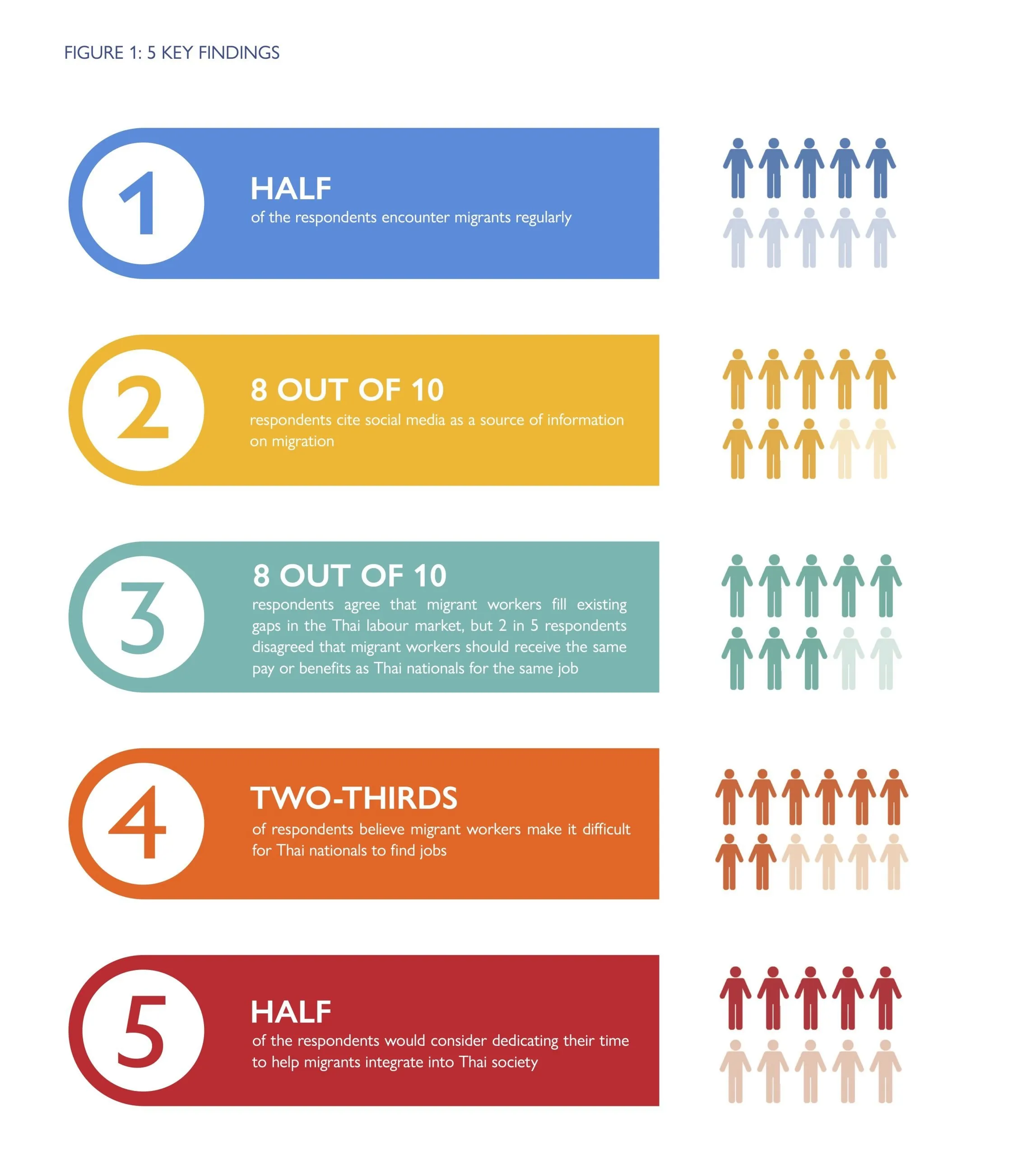
*It wasn’t all positive. While Ms. Ansart did indicate a positive trend among these reports over the last few years, two-thirds of respondents believed that migrants “make it harder for Thai nationals to find jobs” and two out of five respondents (40%) believed that migrant workers should not get equal job compensation. Bangkok respondents had the most negative sentiments, with 68% believing that their cultural diversity threatens Thai society.
Overall, respondents indicated a stronger preference for migrants seeking employment rather than asylum or protection, as well as migrants who come from poorer countries, as opposed to affluent countries.
The influence of (social) media in migrant storytelling
Having shared the current state of Thai sentiment, the forum welcomed a stellar panel representing Thai journalism, academia, advocacy, and government to weigh in on the media’s influence in the discourse surrounding migration.
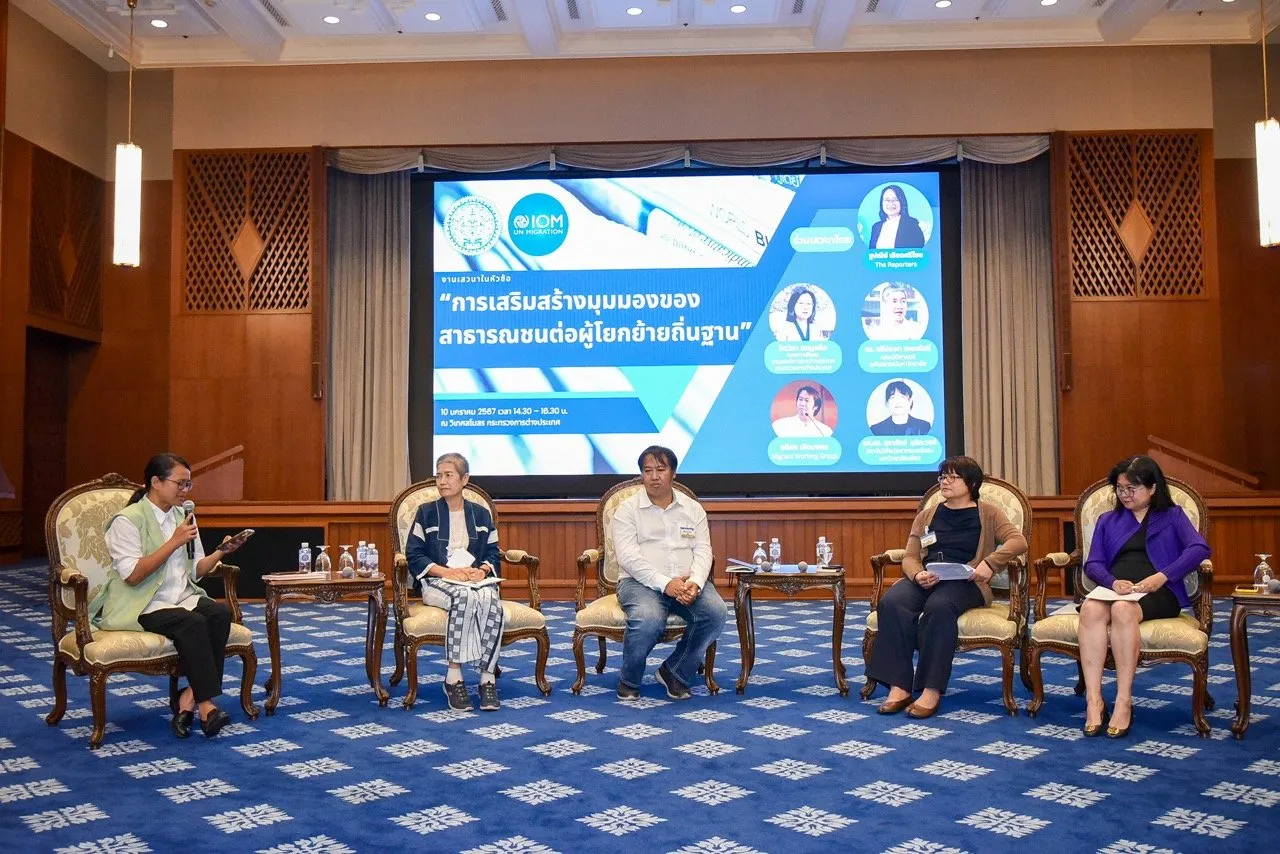
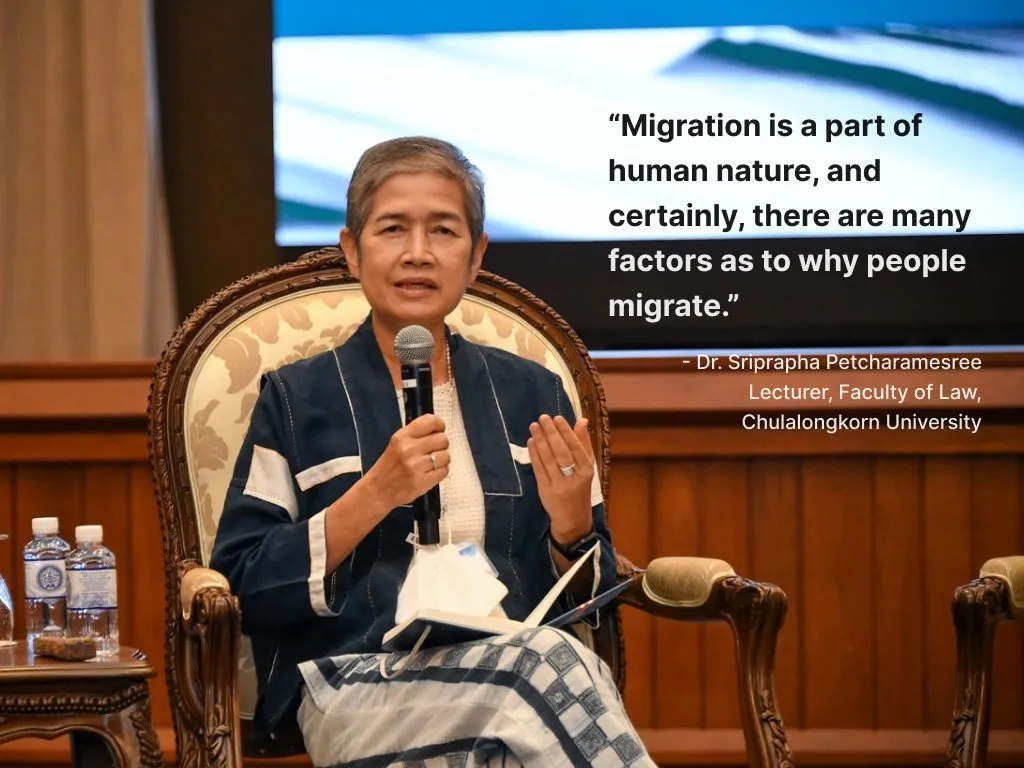
Citing her past experiences in media training workshops, Dr. Sriprapha Petcharamesree, Lecturer at Chulalongkorn University’s Faculty of Law, indicated that journalists in Thailand and neighboring countries tend to lack an understanding of the issue of mass atrocities and migration, which may have resulted in an unbalanced view of migration.
“They tend not to see connections between migration and other issues in the country. Once they can’t make those connections, then they can’t see how migration or migrants are relevant to them,” Dr. Sriprapha said.
She added that Thai journalists are extremely reluctant to participate in media training workshops. Dr. Sriprapha underlined the importance of capacity building and investigative journalism, singling out the award-winning work of Ms. Thapanee Eadsrichai, Founder of The Reporters, who served as moderator for this public forum.
Among the IOM findings was the fact that social media was the top source of information on migration, followed by television and family. Nowhere was this more apparent than in the MFA’s sizzle reel for the forum, which drew attention to several social media attacks levied at the moderator, Ms. Thapanee, for her investigative coverage of the Rohingya crisis.
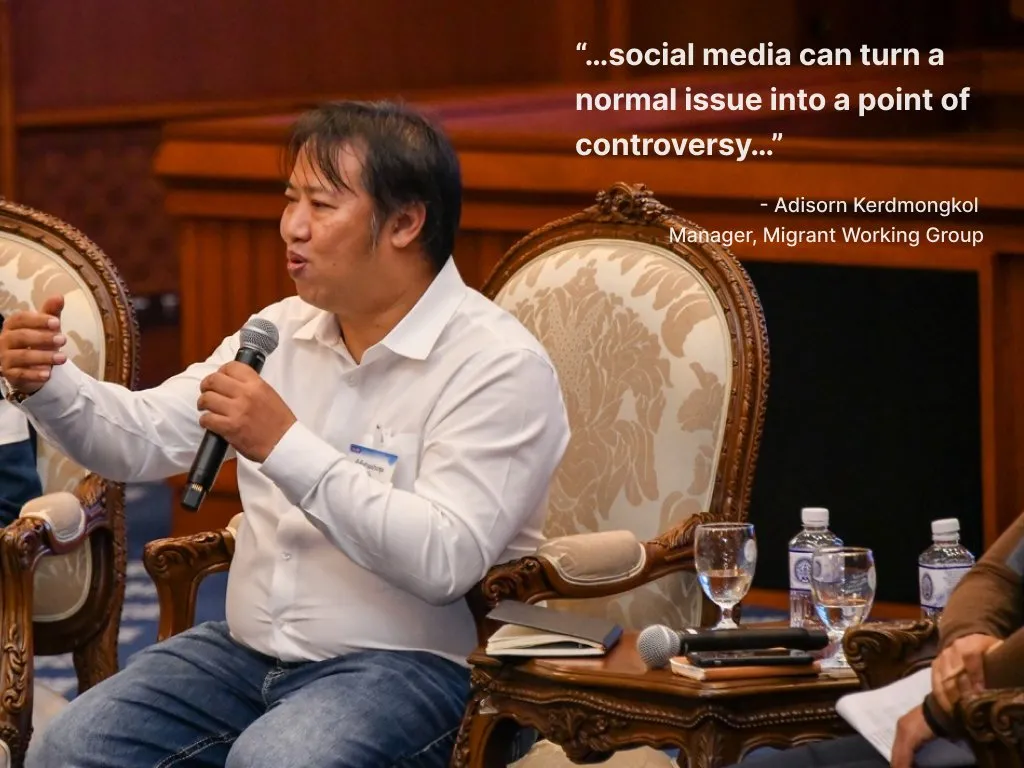
Adisorn Kerdmongkol, Manager of the Migrant Working Group, took a balanced view, saying that while “social media can turn a normal issue into a point of controversy,” it can also allow migrants to share their own experiences. Adisorn mentioned one TikTok account — which as of this writing, has 23.1 million likes and 545,000 subscribers — where a Thai woman and her longtime Burmese housemaid make entertaining clips together. “You can see a positive relationship that is evolving, and understand a different side of migrant workers.”
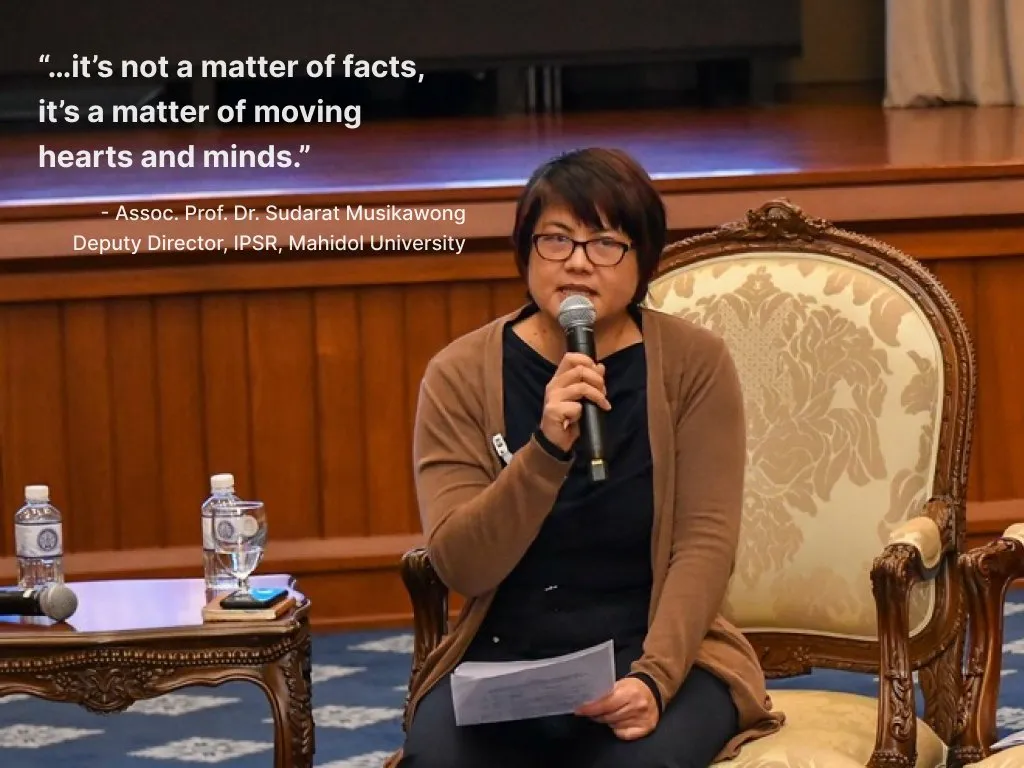
While facts and figures are important, a powerful tool in the media’s arsenal is their storytelling. Assoc. Prof. Dr. Sudarat Musikawong, Deputy Director of Mahidol University’s Institute for Population and Social Research, recounted her experiences holding student workshops with the Mahidol Migration Center’s Joint Research Unit.
“When we covered population statistics, the students almost fell asleep. But what caught their eye were documentaries by Vice, EJF [Environmental Justice Foundation], LPN [Labour Protection Network], ‘Ghost Fleet,’” Dr. Sudarat said. “So it’s not a matter of facts, it’s a matter of moving hearts and minds.”
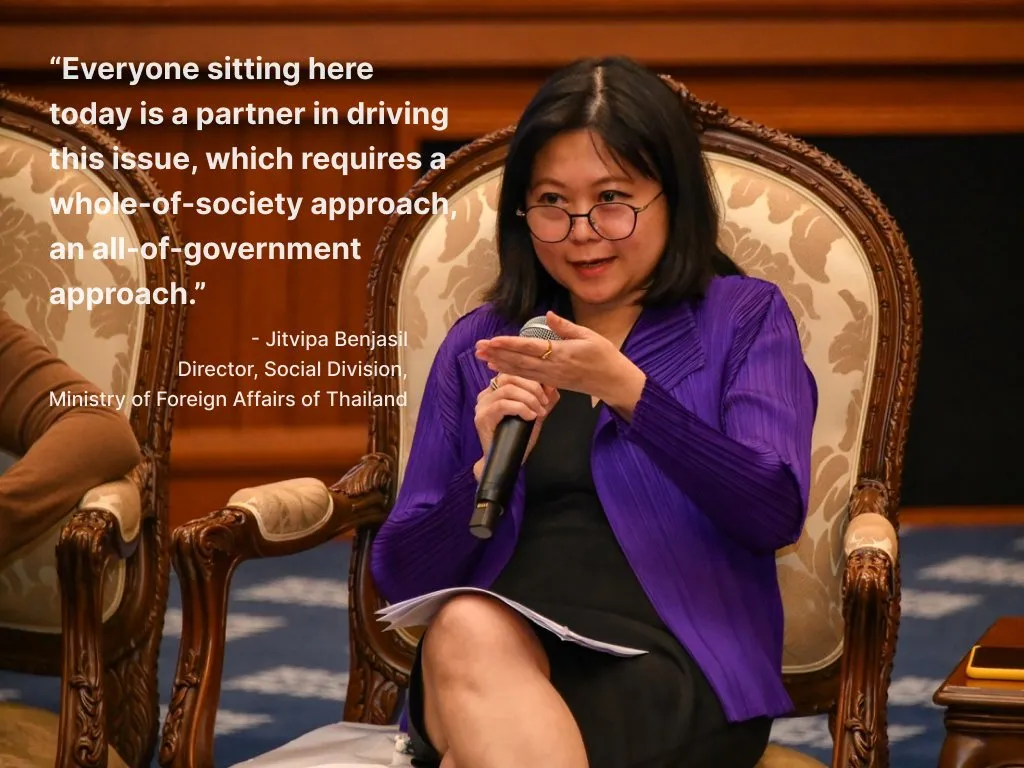
Nonetheless, moving hearts and minds can take a long time. According to Jitvipa Benjasil, Director of the Social Division, Department of International Organizations, MFA, “Policy isn’t an easy thing to change. Can changing perceptions lead to a change in policy? We have to take a long view of this issue. Policies are formulated by the government, and in a democracy, election platforms with migration policies can sway votes. The subsequent government is beholden to the voters who elected them,” she said. “This is a two-way relationship.”
The future of Thailand and the Thai identity
During the Q&A session, the panelists took notice of a surprisingly insightful commentary from one of the youngest voices in the room: an intern at the MFA’s Department of International Organizations. Chanakan Wichit, who’s pursuing a Bachelor’s degree from the Faculty of Social Science, Chiang Mai University (CMU), pushed for a stronger pathway to higher education for migrant children.
“Studying at CMU, I often encounter migrant workers and stateless children. The portrayal of migrant workers in mass media tends to be a population that is low quality, uneducated, and a financial burden, when actually, many stateless and migrant children struggle to access higher education due to obstacles such as obtaining documentation, especially if it requires out-of-province travel,” Chanakan explained. She offered that perhaps, there should be closer cooperation between government offices to strengthen and improve the efficacy of local-level administrations, which would then support the next generation of migrants.
“Many [of these migrant children] that I’ve encountered have no intention of returning to their country of origin. They hope to work and live in Thailand. So I think if we can solve this issue of education, they could contribute to a quality workforce.”
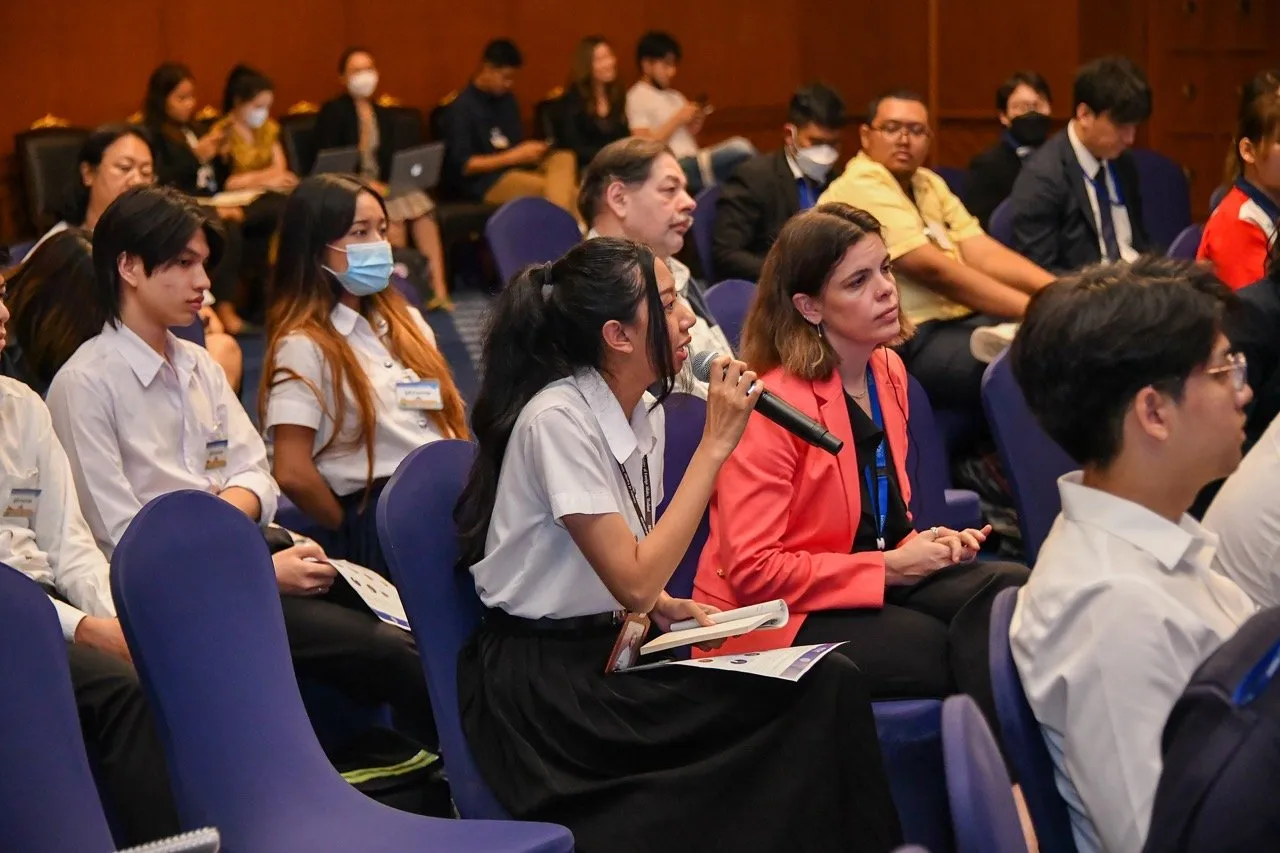
Chanakan also pointed to a lack of news covering the obstacles that migrant children face. “Media coverage could become a factor that compels the government sector to see the importance of such issues.”
Aside from receiving an on-the-spot job offer from Director Jitvipa, Chanakan’s comments also drew agreement from Dr. Sudarat, who called for more investment into creating channels for migrant education. For his part, Adisorn highlighted the urgency of Thailand’s aging society, pointing out that “over the next decade, Thailand’s population, particularly its working-age demographic, will lose six million people.”
Similarly, Dr. Sriprapha argued that, “Thailand has the lowest birth rate in the region, so our future may not belong to Thai people. It may belong to migrants.”
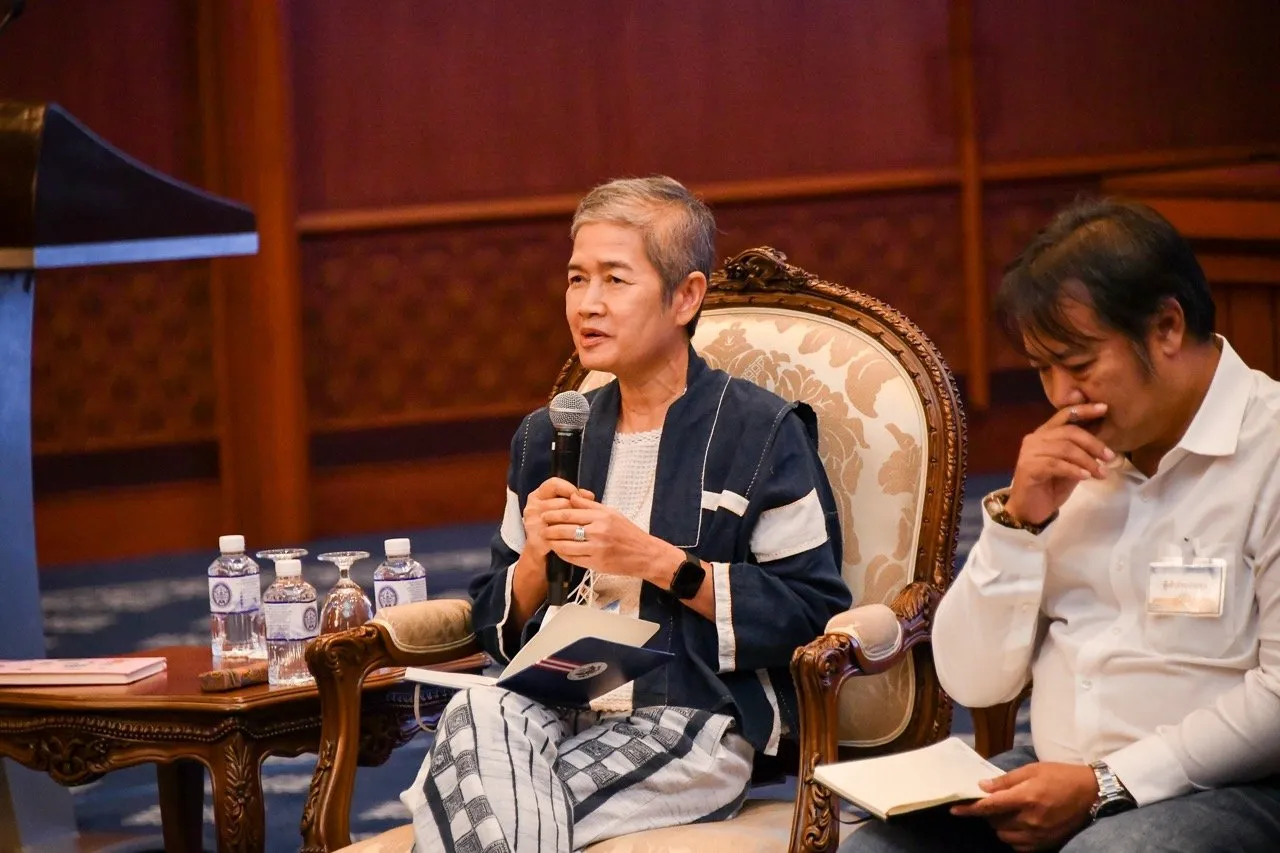
Addressing Chanakan directly, she lamented the fact that educators succeeded in pushing forward an “Education for All” policy, only to have that policy come into conflict with immigration law. She also took issue with the fact that the process to apply for citizenship for major investors is much easier than for children of migrants. “There is something abnormal about this concept of citizenship.”
She further challenged one specific characterization of Thailand’s role in migration. Technically, Thailand’s experience and location underscores its role as a transit country for those groups of people who choose to pass through Thailand to their intended destination elsewhere. But in Dr. Sriprapha’s view, we have to be more sensitive to other groups when we use this terminology, arguing that “for the people living in the nine ‘temporary shelters’ in the border areas for the last 30–40 years, this is not a transit country… not to mention for the migrant workers who live in Thailand, speak Thai, and have children in Thailand.”

 Paul Rujopakarn
  Teerin Julsawad