

Thailand has been edging closer to a nuclear energy future as it prioritizes building the rules needed to ensure safe development of the technology.
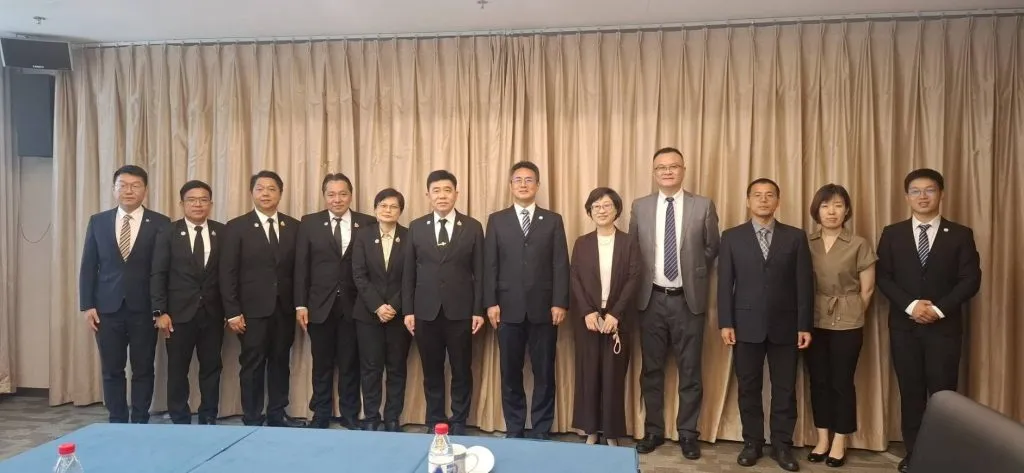
The Kingdom’s Office of Atoms for Peace (OAP) recently held talks in Beijing with China’s National Nuclear Safety Administration (NNSA), focusing on legislation, licensing, and emergency preparedness for Small Modular Reactors (SMRs). The talks are expected to lead to a formal memorandum covering everything from regulatory expertise to personnel training.
The Thai government is seeking to establish the regulatory framework before the arrival of an actual reactor, which is considered crucial given the current lack of a commercial nuclear fleet.
Key Takeaways
- Thailand’s Office of Atoms for Peace held talks in Beijing with China’s National Nuclear Safety Administration on legislation, licensing, and emergency preparedness for Small Modular Reactors, with a formal memorandum expected to follow.
- The Thai government aims to build its regulatory framework before any reactor arrives, a priority given the country has no commercial nuclear fleet.
- Thailand and China signed an MOU on peaceful nuclear technology in February 2025 and a nuclear fusion agreement during Prime Minister Anutin Charnvirakul’s July visit to Beijing.
- Officials are studying China’s Linglong One, a 125-megawatt SMR under construction in Hainan that has undergone IAEA safety review, while SMRs are included in Thailand’s draft Power Development Plan for 2024-2040.
- The partnership supports broader ambitions in energy security, precision medicine, agriculture, and high-tech industry, with experts stressing that radioactive-waste management and transparent communication will be key to public acceptance.
From nuclear power to fusion
Source: oap.go.th / Website
In February 2025, Thailand and China signed a memorandum of understanding (MOU) on the peaceful uses of nuclear technology, which explicitly included SMR preparations and research. This nuclear relationship has since been folded into a broader strategic partnership.
During Prime Minister Anutin Charnvirakul’s July visit to Beijing, both sides agreed to deepen science, technology, and innovation cooperation, specifically naming nuclear energy alongside artificial intelligence, health technologies, aerospace, and quantum science.
They also signed an agreement on nuclear fusion, in a clear indication that Thai interests extend far beyond mere electricity generation. Nonetheless, diversifying energy sources for the sake of energy security remains top of mind in Thailand, as it does in the rest of Southeast Asia, due to disruptions to shipping through the Strait of Hormuz.
Why China is an obvious partner
Source: gov.cn / Website
Especially useful for Thailand is the fact that China is already moving towards commercial deployment of SMRs.
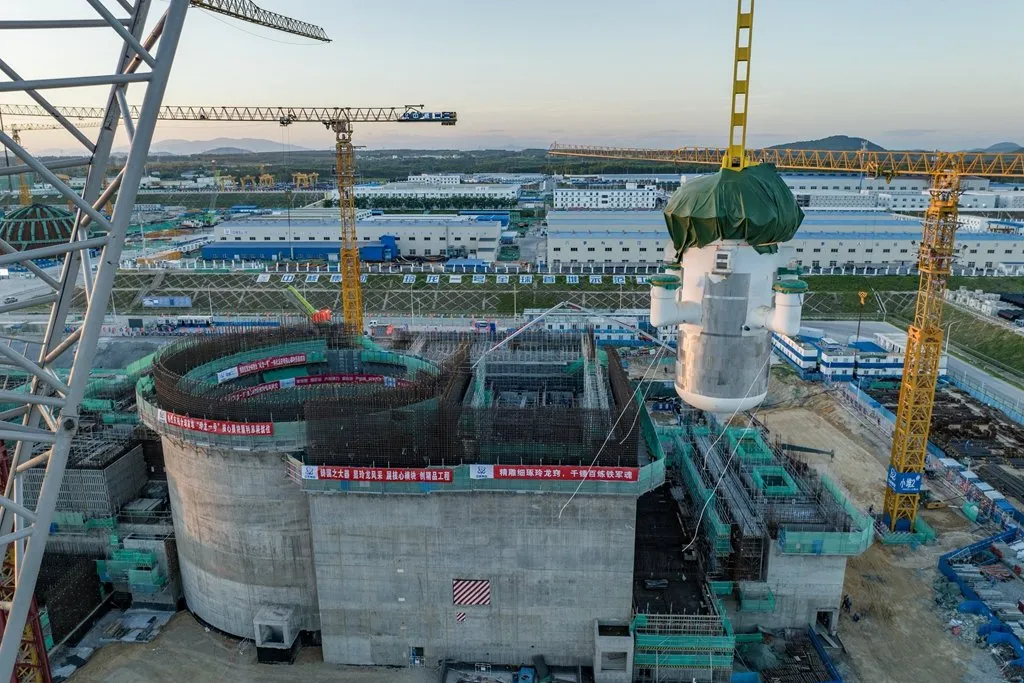
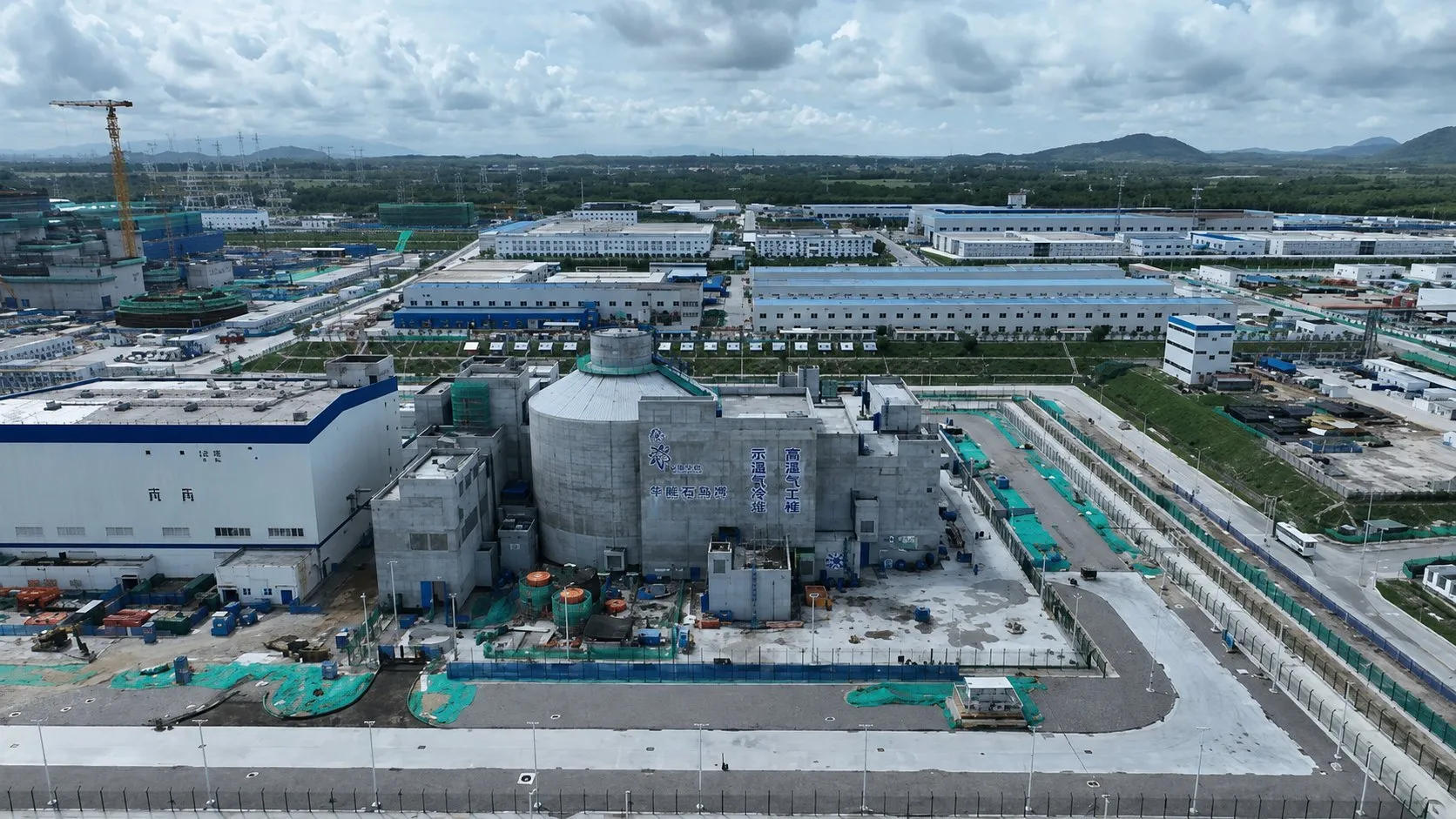
China National Nuclear Corporation’s (CNNC) Linglong One, a roughly 125-megawatt reactor being built in Hainan, is designed around passive safety systems and modular construction. The project has undergone the International Atomic Energy Agency’s (IAEA) Generic Reactor Safety Review (GRSR), giving Thailand a chance to study regulation alongside a real SMR project.
The appeal for Thailand largely has to do with energy security. SMRs can provide steady, low-carbon electricity for industry and data centers, while also serving locations where large reactors are impractical. Thailand has already included SMRs in its draft Power Development Plan for 2024-2040.
Notably, the technology is not being presented as a simple solution to Thailand’s rising electricity demand, with officials emphasizing radioactive-waste management and monitoring, as well as emergency response and transparent communication. Those issues may matter just as much as the reactor itself if nuclear power is to gain wide public acceptance.
Betting beyond the power grid
Source: world-nuclear-news.org / Website
Thailand is also taking a longer view in its framing of nuclear technology. Under its “Frontier Innovation” and “Green Energy Innovation Thailand” policies, the government sees nuclear capabilities supporting sectors such as precision medicine and high-tech industries, along with agriculture and food security.
The partnership is therefore more about preparing for a technology that may become commercially mature going forward than just shopping for a reactor in the immediate term. This includes allowing qualified experts in nuclear engineering and technology to lead and manage Thailand’s nuclear agencies.
“This would allow our country to fully enter an era in which nuclear technology can be applied to national development across many sectors: energy, industry, agriculture, the environment, materials, and beyond,” according to Assoc. Prof. Dr. Nares Chankow, lecturer in the Department of Nuclear Engineering, Faculty of Engineering, Chulalongkorn University. He added that “even without nuclear power plants, nuclear knowledge is highly beneficial to society.”
Should Thailand eventually enter the SMR era, the ambition is expected to arrive with regulators, engineers, and rules already in place.

 Teerin Julsawad