

If you tuned out during episode four of The White Lotus season three, you might’ve missed it: Jaclyn, Kate, and Laurie (the passive-aggressive trio of girlfriends), soaked to the bone, shrieking and yelling at a gang of Thai kids ambushed them with water guns in the middle of a Bangkok street. It lasted maybe a minute. But it captured what most people think Songkran is about: getting very wet, very fast.
Sure, the water fights are iconic. Foam parties, EDM stages, soaked tourists on Khao San Road — it’s the stuff travel blogs thrive on. But if you dig a little deeper, you’ll find another side of Thailand’s New Year. One that’s calmer, older, and perhaps a bit more meaningful.
A splash of Songkran history
Songkran comes from a Sanskrit word meaning “movement,” marking the sun’s shift into Aries. In Thai tradition, this signals the start of a new year. Before water guns and DJs, Songkran was — and still is — a time of cleansing, merit-making, and honoring elders.
Here are a few traditions that might just deserve more of the spotlight:
1. Rod Nam Dam Hua
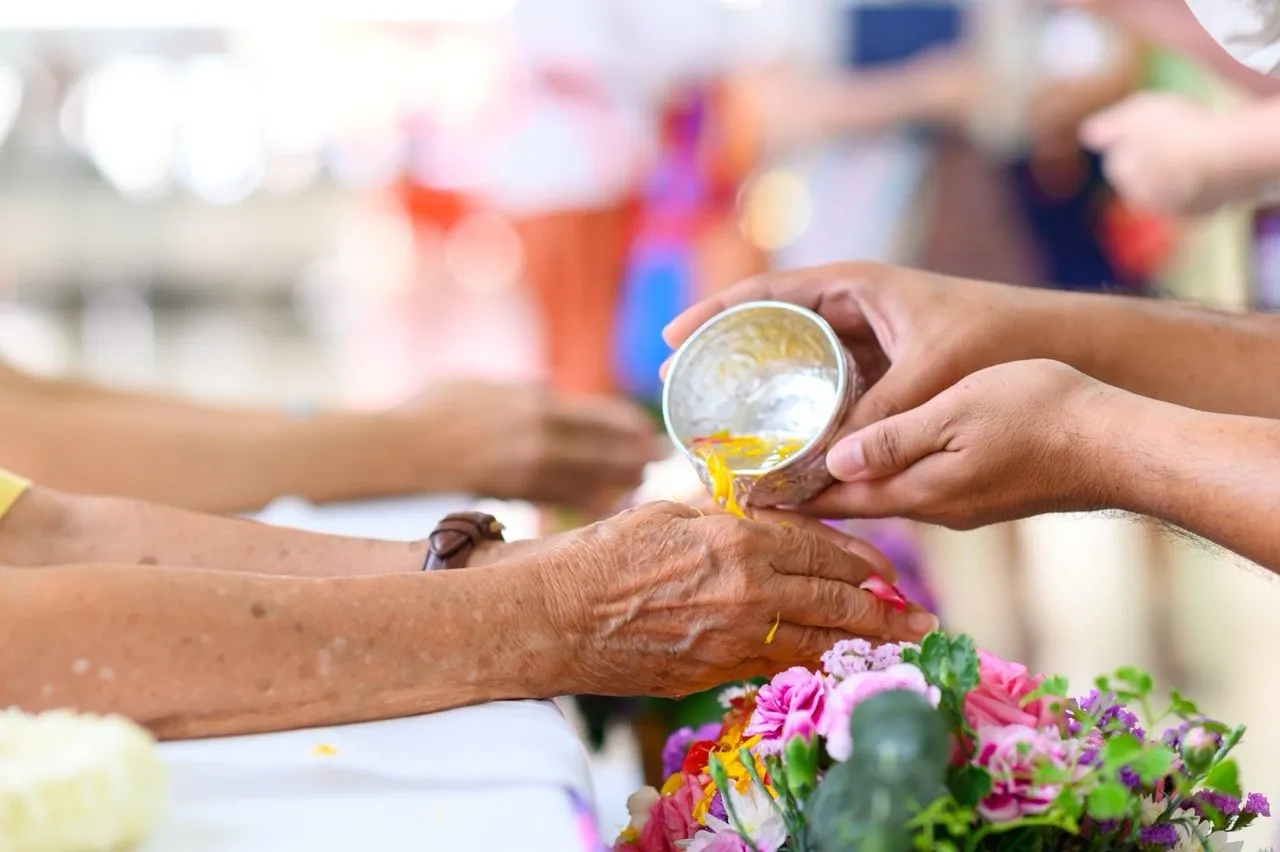
At the heart of traditional Songkran is rod nam dam hua, a ritual where younger family members gently pour scented water over the hands of their elders, asking for forgiveness and blessings. It’s tender. Intimate. A world away from street battles. The act symbolizes gratitude, humility, and starting the year with a clean slate. No goggles required.
2. Bathing Buddha
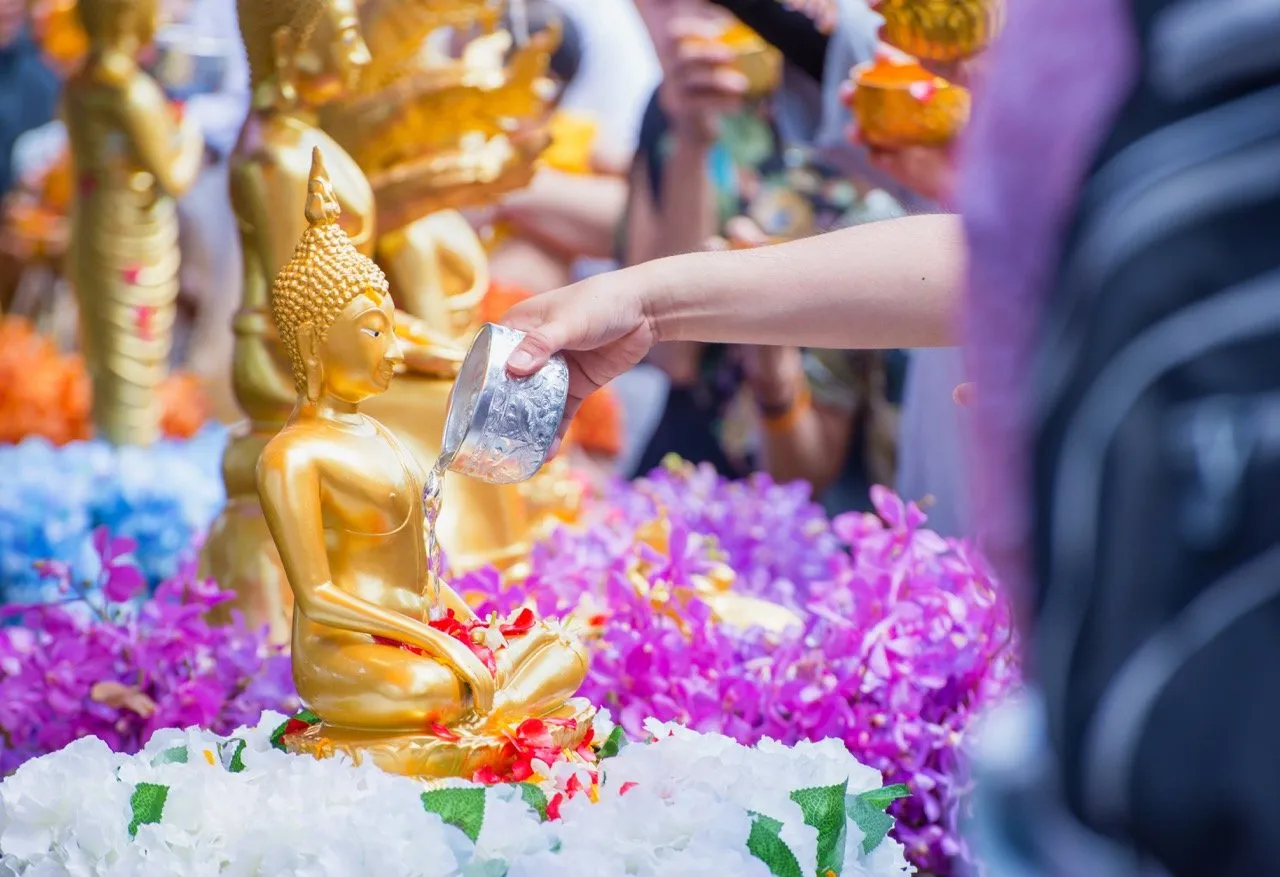
Another tradition? Bathing Buddha statues. Whether at home, at temples, or in mall atriums decked out with jasmine-scented basins, people pour water over Buddha images to invite peace and prosperity into their lives. It’s less about drenching and more about cleansing — literally and spiritually.
3. Sand Pagodas

Temples don’t have a revolving-door policy, but they do have sandy floors. And every time visitors walk out with a little bit of temple dust on their shoes, tradition says they owe something back. Enter the sand pagoda. During Songkran, communities return to their local temples and build small sand stupas, often decorating them with flags or flowers. It’s part religious act, part social glue. Think of it as the world’s most wholesome group project.
4. Mon Songkran
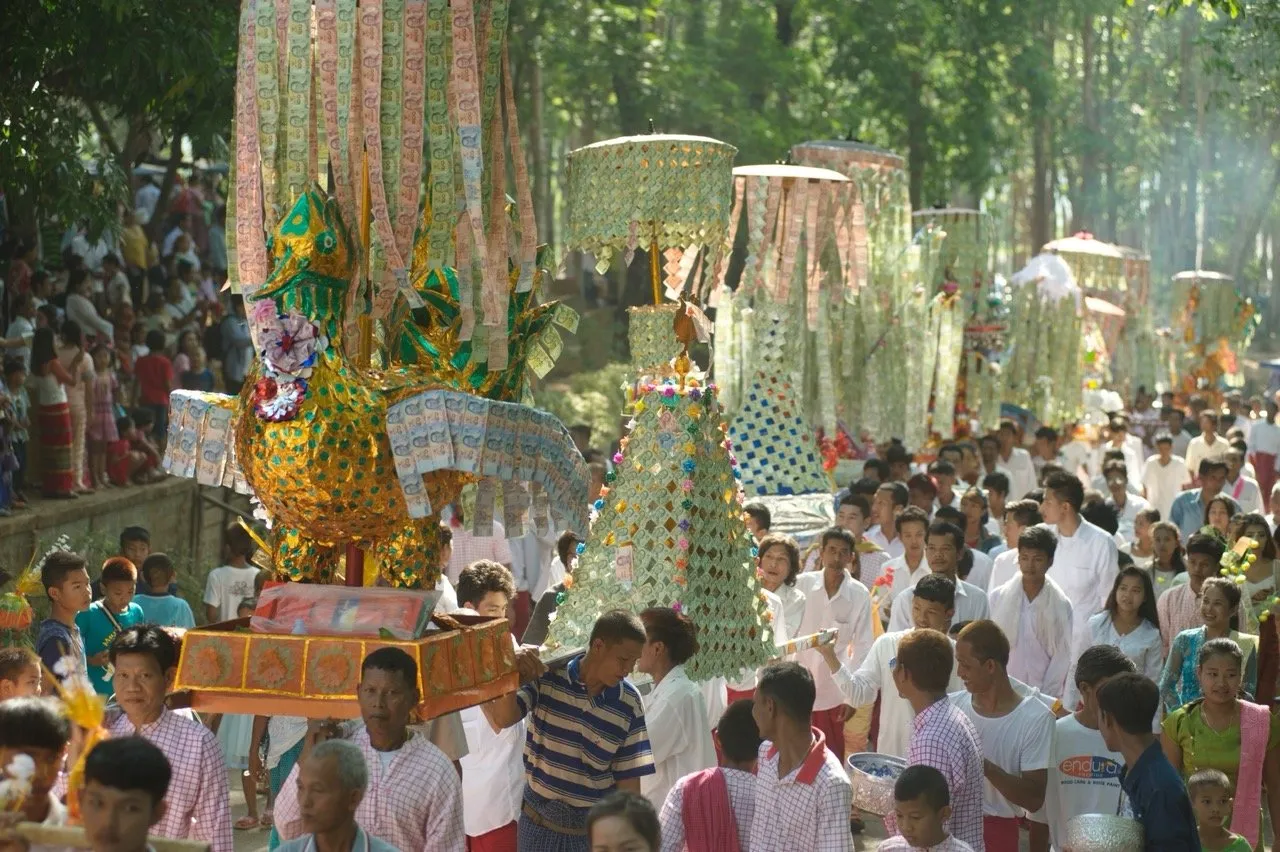
In Mon communities across Thailand, Songkran comes with its own flavor. Parades with bird and fish releases, khao chae (rice in jasmine-scented iced water), and the traditional tossing game saba, which doubles as a matchmaking ritual and a low-stakes way to flirt under grandma’s watchful eye.
6. Pi Mai Mueang
Head to the north and you’ll find Pi Mai Mueang, the Lanna-style Songkran. Here, the festivities include the dum hua hair-washing ceremony, loy kroh ritual offerings floated down rivers, and pagodas decorated with long paper flags called tung, said to lift spirits — literally — out of hell. It’s Songkran with a cosmic twist.
Songkran is more than meets the eye
So yes, Songkran is about water. But not just to soak. It’s to bless. To cleanse. To reset. There’s room for both the Super Soaker and the scented bowl. And maybe next time, The White Lotus girls will find themselves in a temple courtyard, barefoot and serene, instead of ducking for cover in Koh Samui.
Looking to join in this year? Check out what’s happening for Songkran celebrations and plan your own cultural deep dive.

 Paul Rujopakarn