

In 2024, Thailand became the first Southeast Asian nation to legalize same-sex marriage, marking a significant milestone in the kingdom’s journey toward LGBTQ+ equality. The Marriage Equality Act, effective from January 23rd, 2025, grants same-sex couples the same legal rights as heterosexual couples, including those related to adoption, inheritance, and healthcare decisions.
As the country takes this progressive step forward, we examine the cultural factors for Thailand’s tendency towards queer acceptance and sexual diversity, and how this has manifested in modern Thai society.
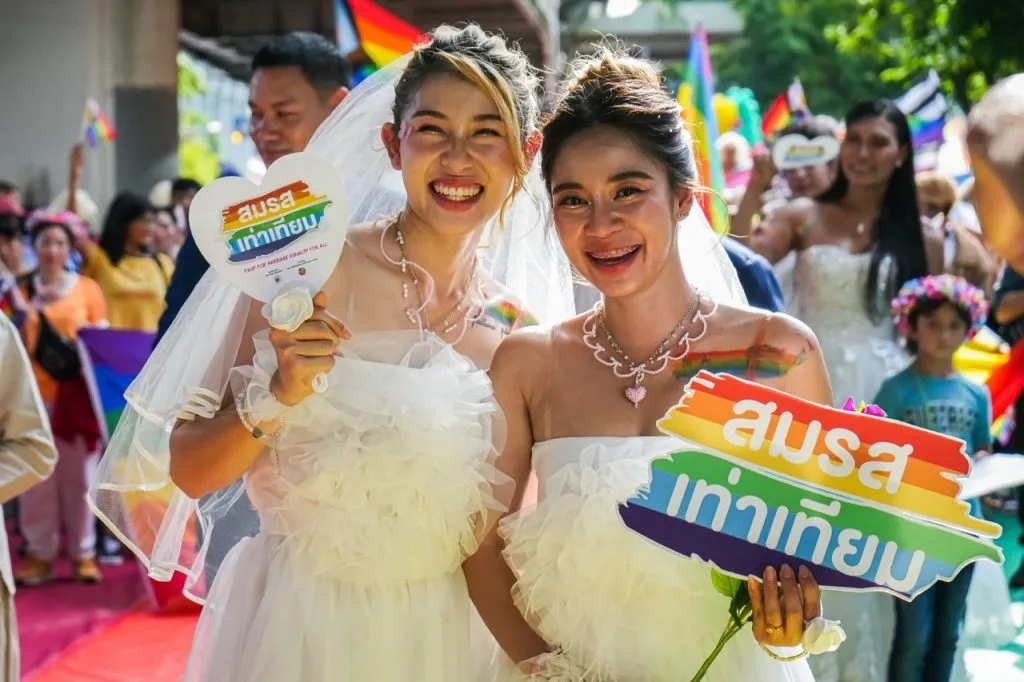
Thailand’s cultural landscape has long recognized gender diversity, with the concept of a “third gender” deeply embedded in its societal fabric. Thailand is also considered a top destination for gender-affirming care, attracting individuals from around the world seeking high-quality, affordable medical treatments.
Thailand’s majority religion, Theravada Buddhism, contains references to non-conforming gender identities or sexual orientations in its scripture, with some considering them as a punishment for past sins or a lack of control over sexual impulses. Nonetheless, some scholarly monks have refuted these interpretations of the Buddha’s teachings.
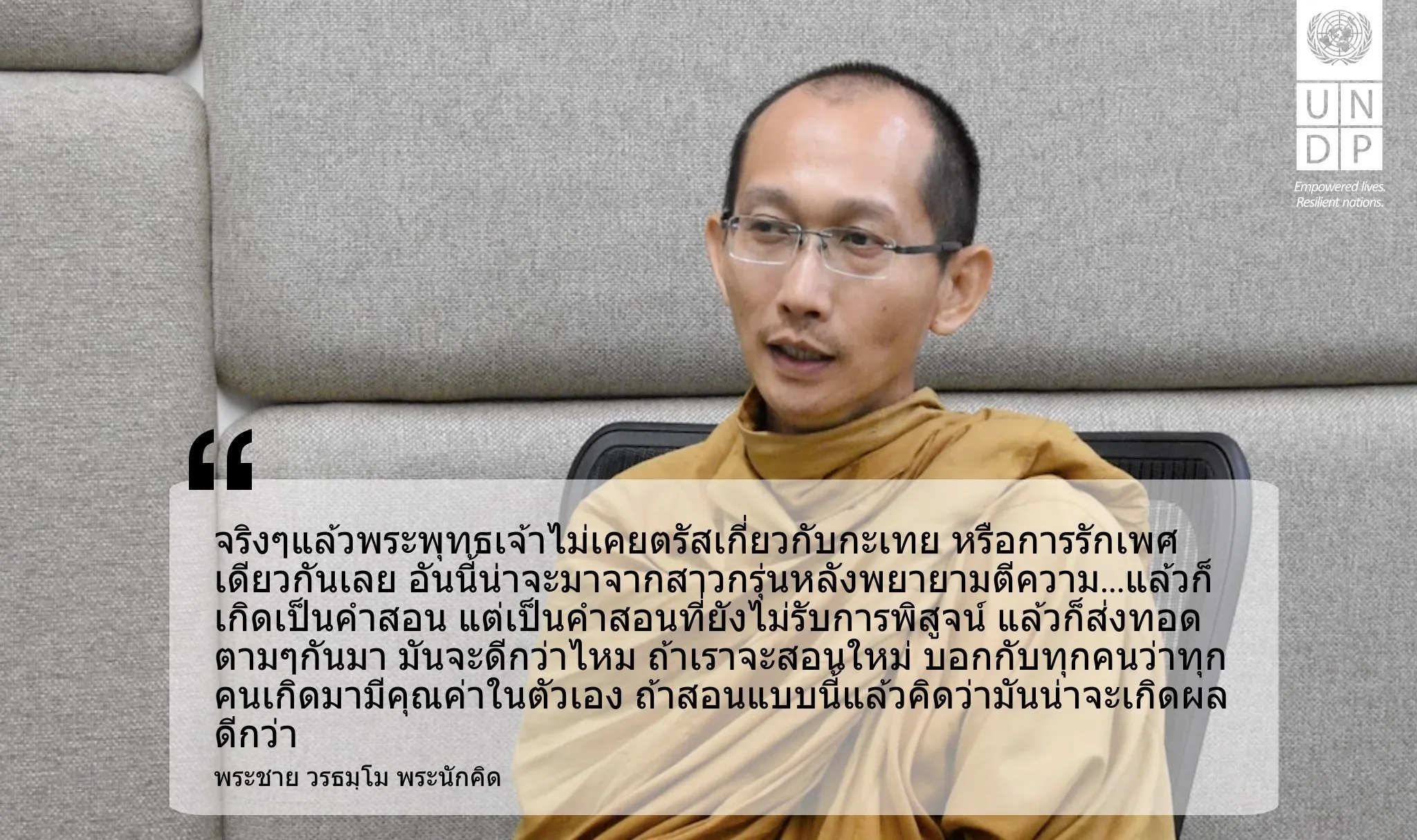
Phra Shine Wara Dhammo, a Thai Buddhist monk who also authored the book, Buddhism and Gender Diversity, says, “Actually, the Lord Buddha never mentioned anything about gender diversity or same-sex attraction. It was the followers who tried to interpret his teachings, interpretations for which there is no proof. Wouldn’t it be better to teach people that everyone is born with human dignity?”
The majority of Thai people would seem to agree. A 2022 Nida poll showed that a vast majority of Thais accept LGBTQ+ individuals as friends, colleagues, and family members, showcasing the nation’s growing social tolerance.
Thailand’s progressive stance is also evident in its vibrant media landscape. Once consigned to doomed romances or comedic relief, LGBTQ+ representation has become increasingly diverse, meaningful, and three-dimensional, with netizens celebrating more human portrayals. This visibility in media and popular culture helps foster an environment of inclusivity and normalizes the presence of diverse sexual orientations and gender identities in everyday life.
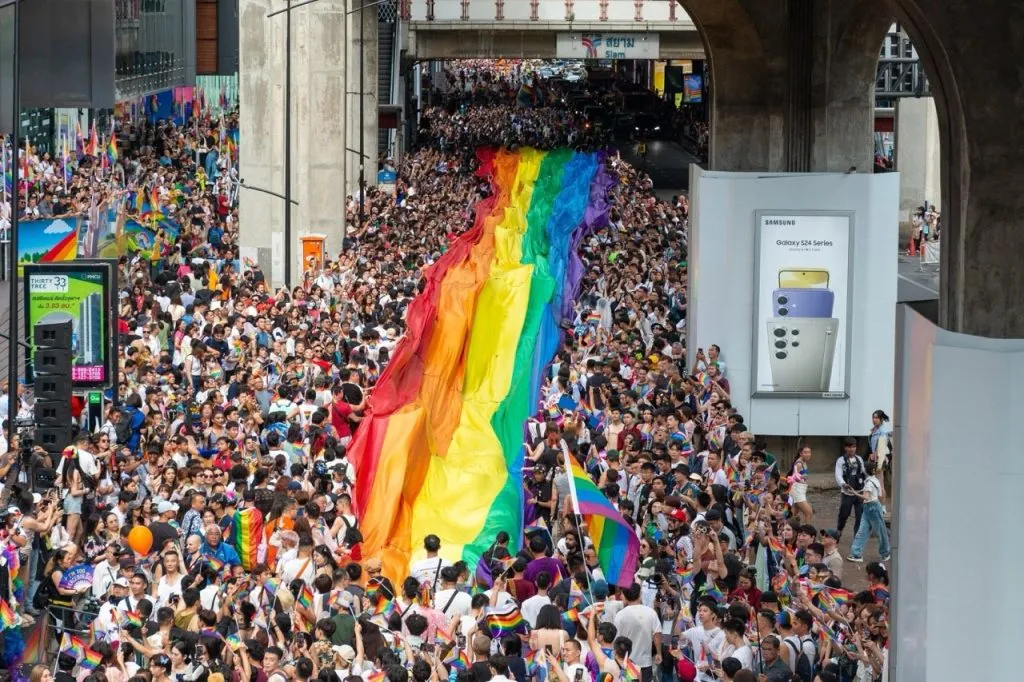
Moreover, Thailand’s ambitions to host World Pride 2030 further demonstrate its commitment to advocating for LGBTQ+ rights on a global stage. The nation’s ability to blend vibrant cultural festivities with meaningful rights advocacy provides a compelling model of how public celebrations can reflect and enhance social progress.
Despite the recent legalization of same-sex marriage in Thailand, significant legal and social challenges persist for the LGBTQ+ community, particularly for transgender individuals, who face substantial obstacles in obtaining legal recognition of their gender identity.
For instance, the inability to change gender markers on official documents, such as identification cards and academic certificates, leads to daily challenges. For instance, a transwoman is legally addressed by their birth gender’s prefix as Nai (“นาย” or Mr.) instead of Nang Sao (“นางสาว” or Ms.), which can expose transgender individuals to various forms of discrimination, including in employment.
Nonetheless, Thai society is far from rigid, and opinions toward LGBTQ+ rights continue to shift. If younger Thais are any indication, Thailand will continue to build upon its tradition of compassion and inclusivity.

 Teerin Julsawad
  Thailand NOW