

As part of Thailand NOW’s mission to share authentic insights into all things Thai, we’re spotlighting iconic individuals who have not only excelled in their respective areas, but influenced the complex tapestry of Thailand as it exists today and, in doing so, inspire us to be a part of the fabric of Thai society.
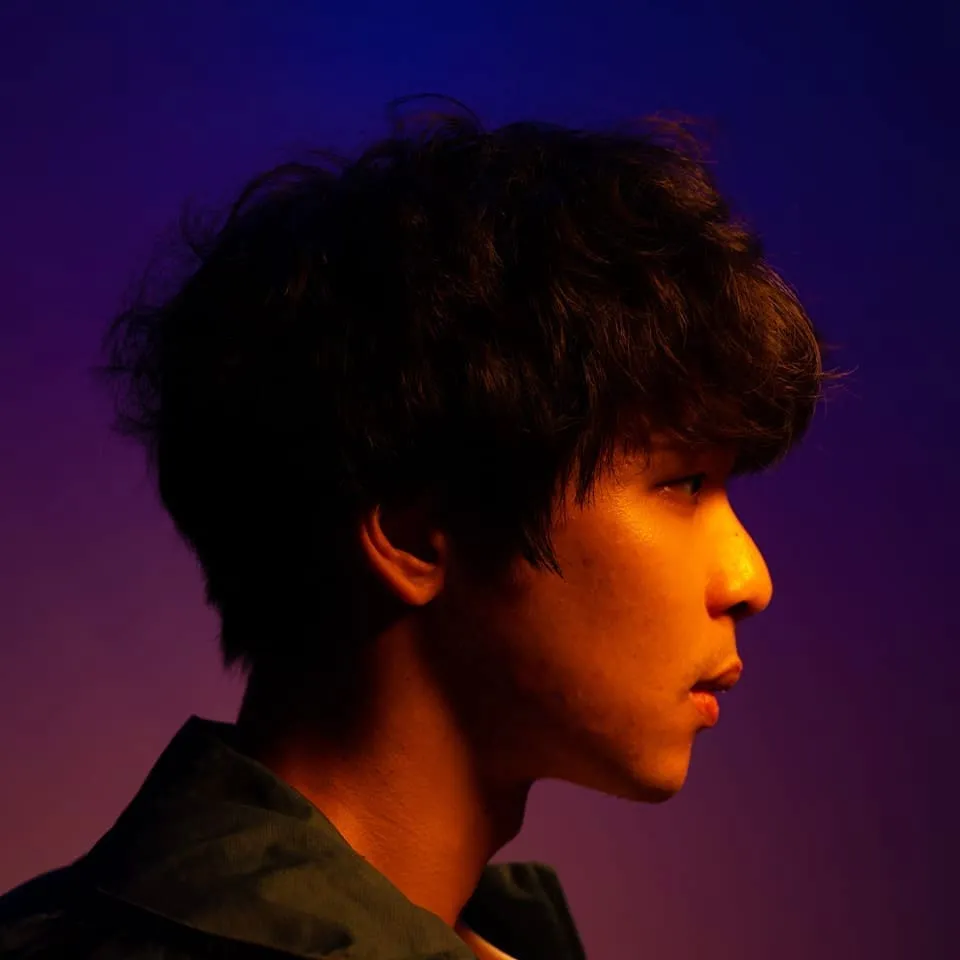
In this People NOW interview, Thailand NOW sits down with Tawanwad Wanavit, Director of Photography for the internationally acclaimed The Paradise of Thorns, a Thai feature film directed by Naruebet “Boss” Kuno and screened at the Toronto International Film Festival 2024. Tawanwad takes us behind the scenes on filming The Paradise of Thorns, his perspectives on Thailand’s recent Marriage Equality Act, and what he looks forward to in Thai cinema.
The lush greenery of a flowering durian orchard gives way to a quietly unsettling hilltop house. In The Paradise of Thorns, we’re introduced to Thongkham and Sek, a couple who own the orchard and patiently work the land to cultivate a high-risk, high-reward crop. But one fateful night, Sek suffers a fatal accident, and Thongkham’s dreams of harvesting the fruits of his labors with his partner are in jeopardy.
The land is only registered under Sek’s name because Thailand’s Marriage Equality Act has yet to be passed. Sek’s mother, who lives with her adopted daughter, is instead the legal successor of the orchard. After the two move into the orchard to grieve Sek, Thongkham soon discovers that there are thorns more dangerous than those of the durian.
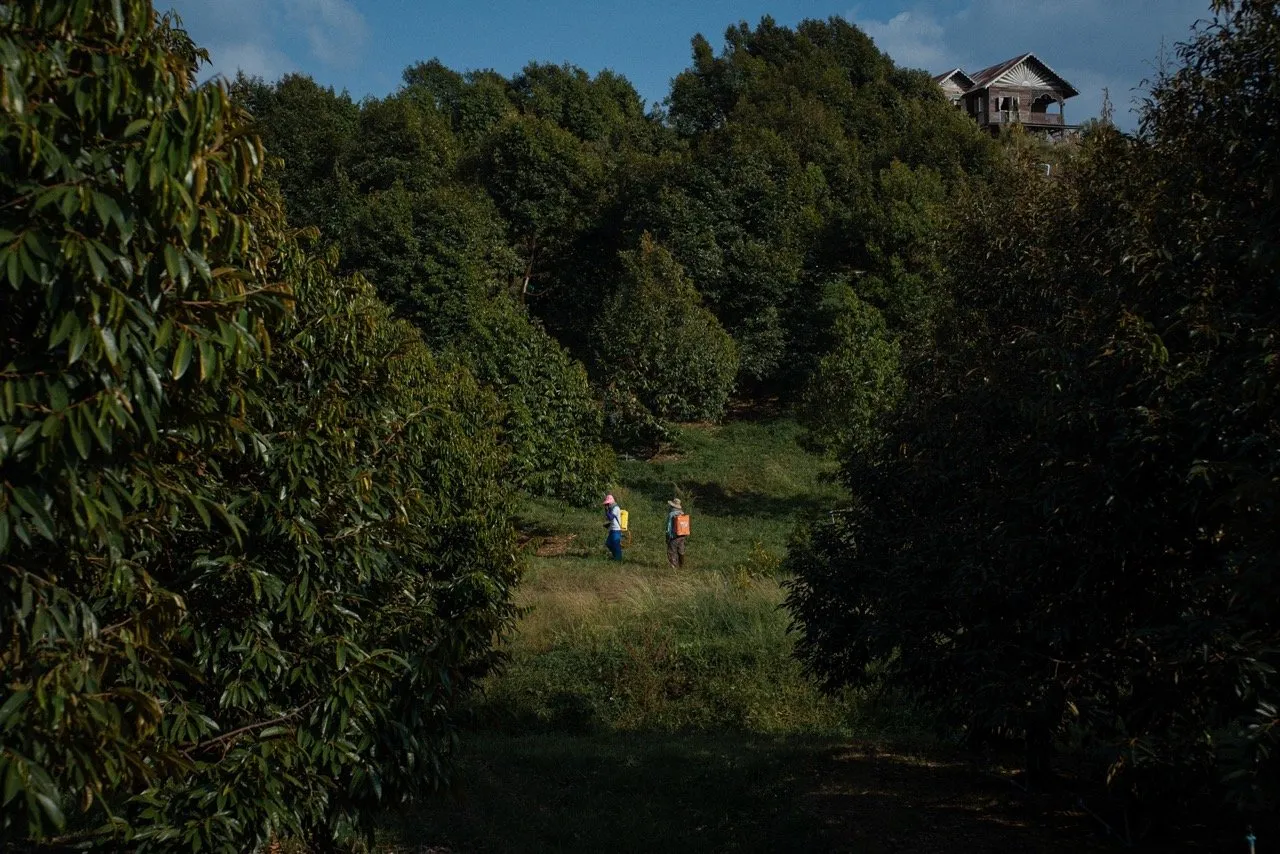
When asked how the durian, a seemingly Thai and Southeast Asian motif, played a role in the film, Tawanwad reveals, “The initial idea from the script team and Boss, the director himself, was to use durian as the main element for the film.”
“[The durian] wasn’t intended to be used symbolically, but the long process of growing a durian and the unique visual aesthetic of the fruit itself helped the film emotionally. It feels complex just watching the process of durian cultivation,” he explains.
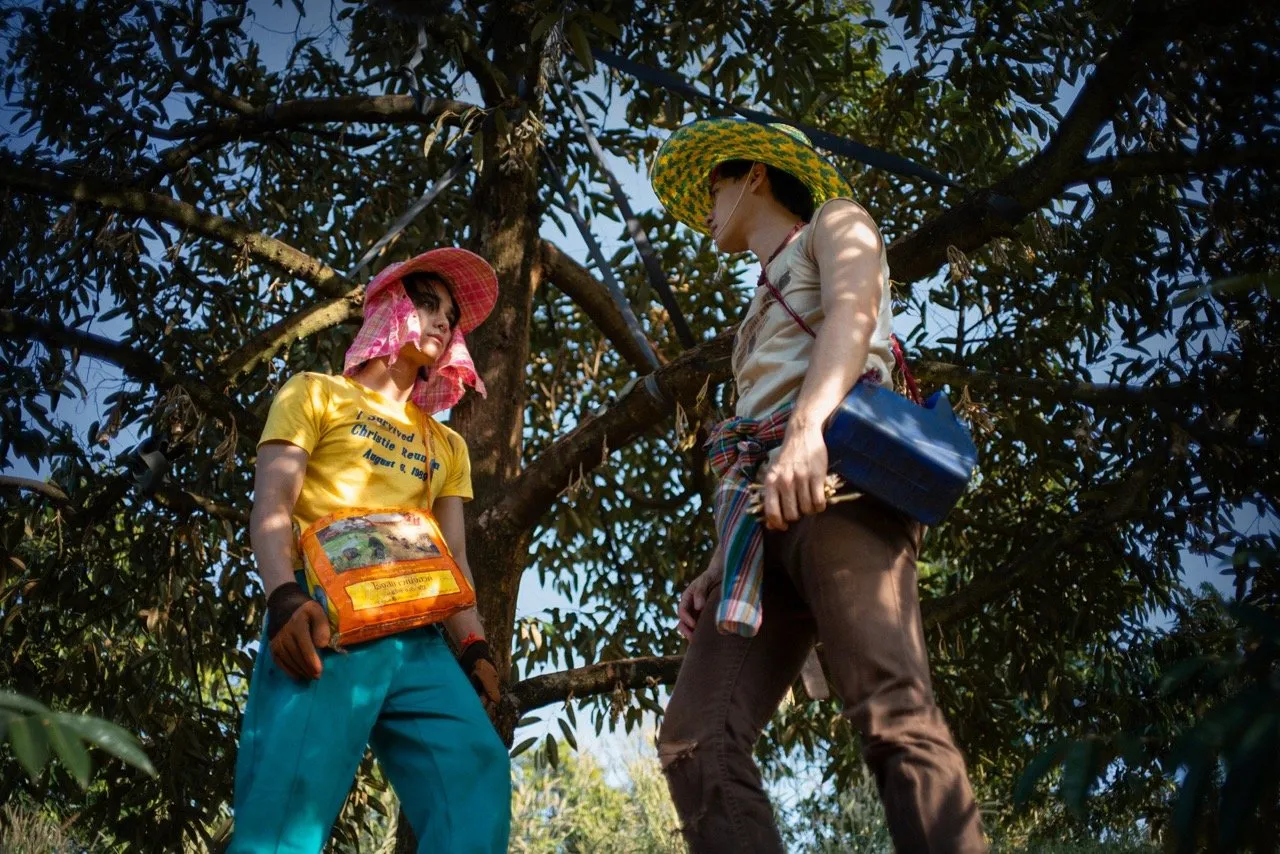
Unlike other fruits, durian can take up to five years to cultivate. The patience and discipline of durian cultivation thus parallels an everlasting love.
“This made me feel complete.”
The durian is not the only Thai motif distinctively woven into the film. Audiences are also introduced to several Thai traditions in the film, such as the Bun Bung Fai Festival, the auspicious conch shell water ceremony of a traditional Thai marriage, and Thongkham’s Tai Yai Buddhist ordination.
“I’ve always wanted to shoot a Bung Fai Rocket, so this is my first time shooting it. This made me feel complete,” said Tawanwad.
With shots panning over the mountains of Mae Hong Son and lush, sunny acres of durian set to the accompaniment of northern Thai mandolins, Tawanwad’s love of rural Thailand comes through the lens.
“…I honestly didn’t think of it as a gay film. I pretty much saw it as a love story.”
The DP had previously collaborated with Boss Kuno on I Told Sunset About You, a coming-of-age drama that also explored LGBTQ+ themes. Nonetheless, he balked at the idea of being pigeonholed into ‘gay films’ or, indeed, that such films were fundamentally different from heterosexual ones.
“When I read the script, I honestly didn’t think of it as a gay film. I pretty much saw it as a love story,” says Tawanwad. “I’ve had many conversations with many people who seriously told me that I should stop shooting gay films for a bit because I would be ‘labeling myself’ as a gay film cinematographer, but I still do not understand the difference between shooting a male and female love story; a male and male; or female and female love story.”
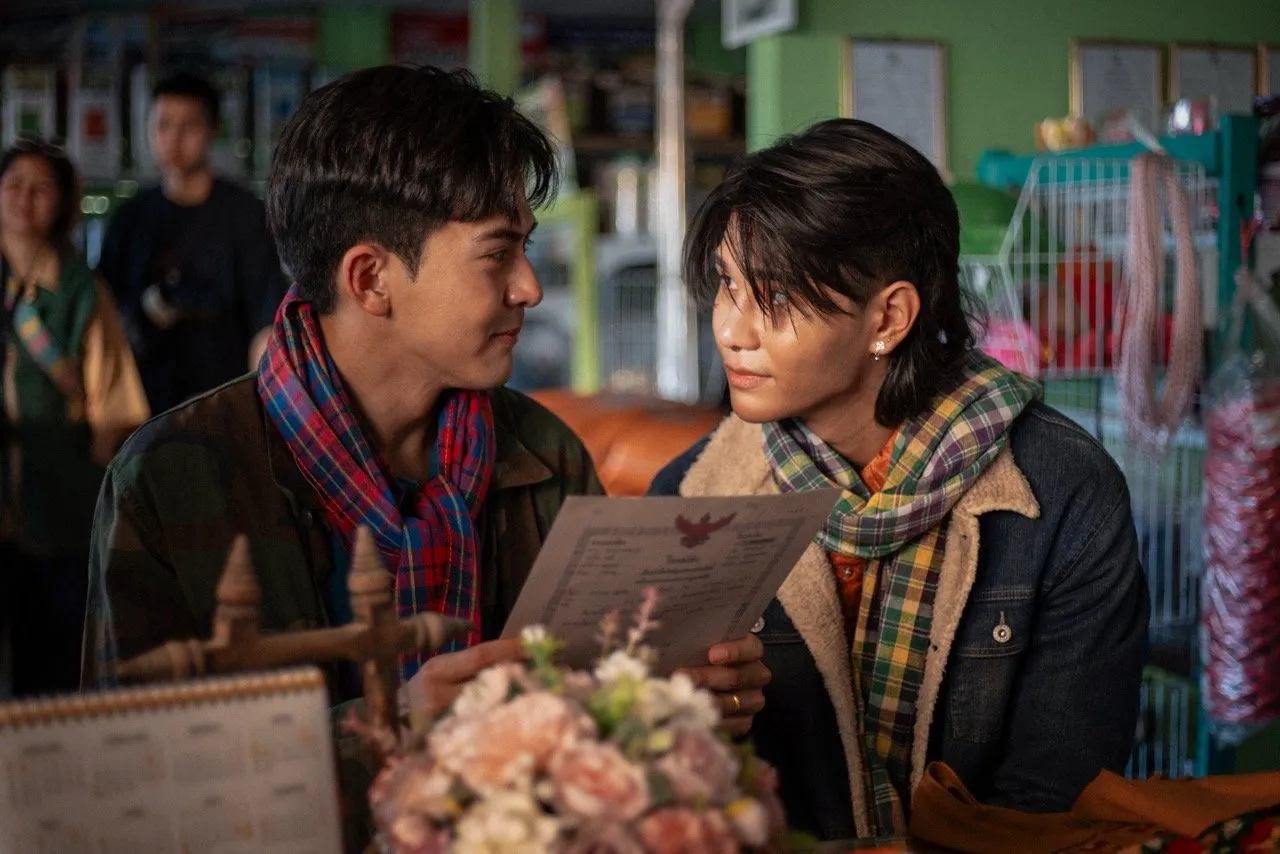
Love may be universal, but sadly, the law is not. The Paradise of Thorns plays out the very real legal consequences of pre-marriage equality in Thailand when Thongkham is unable to consent to Sek’s surgery, such medical authorizations being limited to legal next-of-kin and partners.
Ratcheting up the dramatic tensions, the film cuts to a long-distance commute by Sek’s mother and her adopted daughter on their way to the hospital — another dimension of healthcare inequality that will be familiar to anyone living in rural areas.
Distraught, Thongkham grips the medical authorization form he signed as a “Witness,” with his relationship status filled out as “Friend.” While effective, Tawanwad has mixed feelings.
“I felt like I could’ve shot the scene better, I didn’t like the close-up cut of the paper personally, it felt a little forced, but I understand why it had to be there. The scene is an execution of how the law excludes anyone who’s not straight sexually, and gives them no practical solution even in times of crisis.”
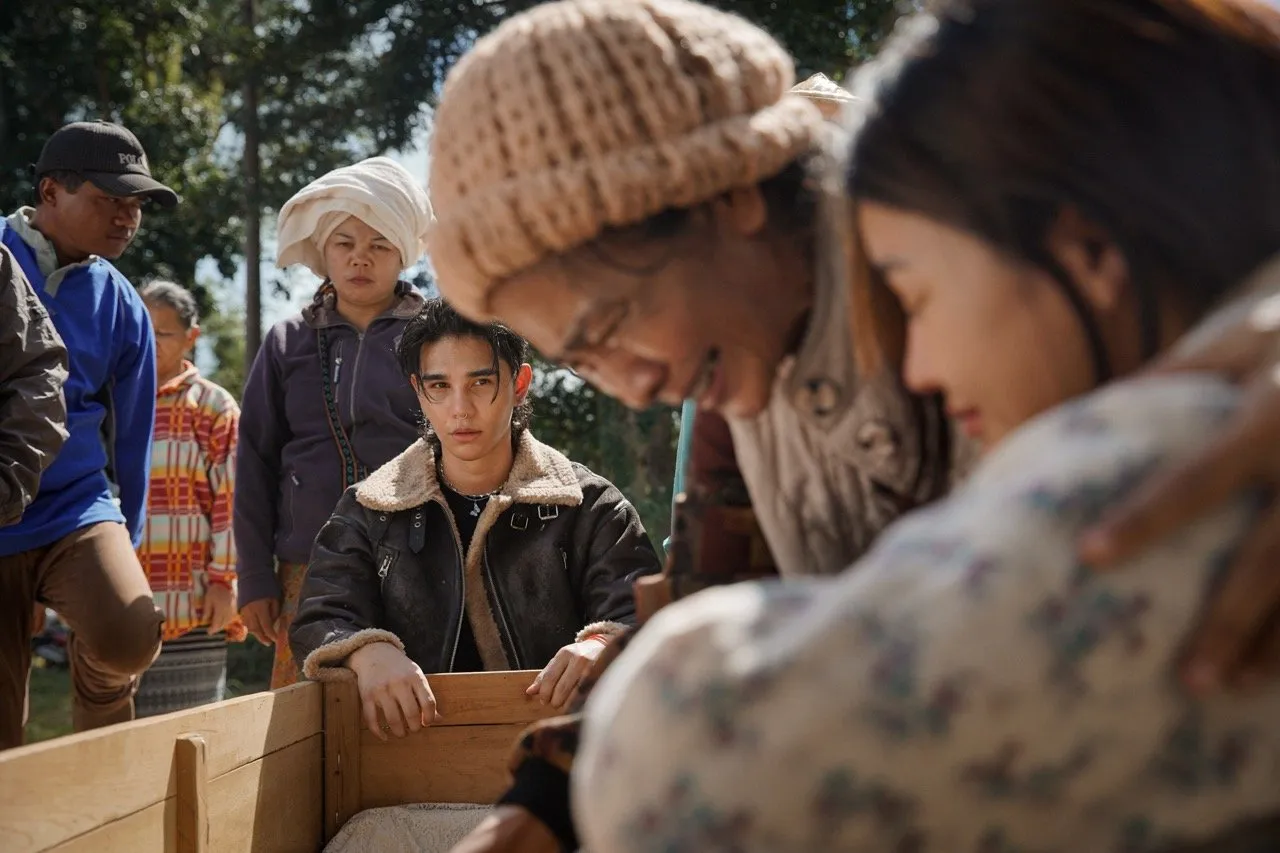
The film’s lyrical musicality often underlines the micronarratives at play. While Thongkham’s wedding to Sek foregoes the Thai traditional rite of passage that is the auspicious conch shell water ceremony, the scene’s subtext is verbalized in the film’s official soundtrack, “Rain wedding,” with the line, “As the rain pours down, I can only hope that the skies are giving praise.”
“The script had it all, Boss and his team came up with this amazing idea, every time Boss talks about this scene [rain wedding], it’s almost like he already has every image of the scene in his head. He had it all planned from the beginning, all I did was shoot it,” says Tawanwad.
“When I saw them [Engfah Waraha and Jeff Satur] in the acting workshop room, I saw their skills, dedication, and what they’re capable of. I constantly think about how I would shoot them, and how I want people to see them in the film because it’s magical what they’re capable of.”
“…the process of working on this film will stay with me for as long as I live.”
When asked what The Paradise of Thorns meant to him, Tawanwad puts simply, “I feel like it portrays the truth.”
“For decades, cis-heterosexual men have been running important roles in society while other gender identities exist in the footnotes. I feel great that we’re able to show this naturally in the film without the storyline appearing forced,” he says.
The filming and production process itself has been a test of sorts. The timeline and filming location were a new challenge for the director of photography. Despite this, Tawanwad said The Paradise of Thorns is a testament to what this great team has been able to achieve.
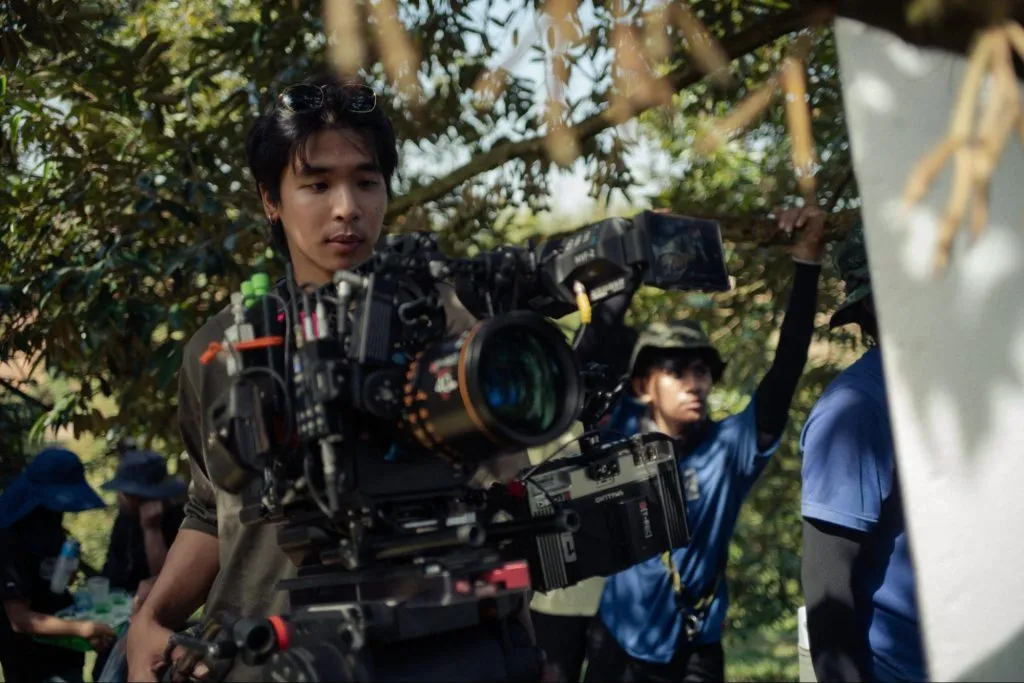
“Congratulations to everyone who is involved in The Paradise of Thorns on the Toronto International Film Festival world premiere — the process of working on this film will stay with me for as long as I live,” he concludes.
The Toronto International Film Festival is one of the largest and most prestigious film festivals internationally, having served as a launchpad for critically acclaimed films such as Parasite (2019) by Bong Joon-ho. Over the past decade, a handful of Thai films have also premiered and featured at TIFF, giving a megaphone to the voices and perspectives in Thai cinema — an industry that, Tawanwad argues, is worth supporting.
“Imagine how far Thai cinema can go with the right funding or support. There is so much possibility beyond supporting merely the soft power of cinema; cinema speaks to different dimensions of humanity and society.”
With recent standouts like The Paradise of Thorns and How to Make Millions Before Grandma Dies (2024), we’re excited for the future of Thai cinema and to see how Thai culture will be shared with international audiences on the big screen.

 Teerin Julsawad
  Paul Rujopakarn