

Thailand’s creative economy pitch has been around for years. What CEA Forum 2026 tried to do is make it feel less like a slogan and more like a working plan.
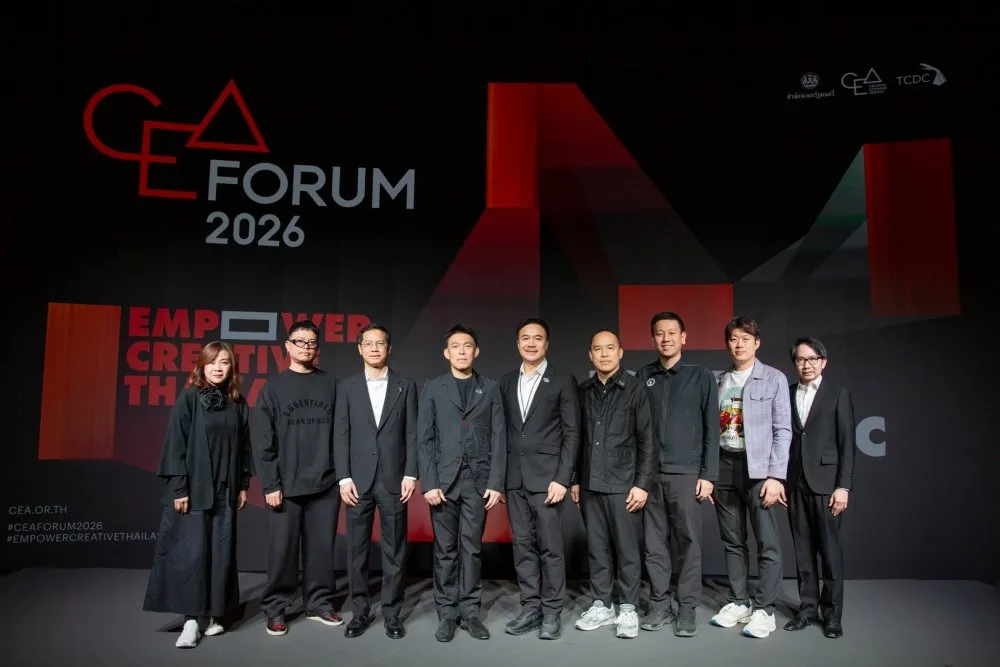
Held on Monday, January 12, 2026, at the Thailand Creative & Design Center (TCDC), the Creative Economy Agency’s (CEA) annual forum came under the theme “Empower Creative Thailand, Ignite Economic Impact.” The framing was direct. Creativity is already part of Thailand’s economic base, and CEA wants to push it into a stronger, more scalable “new growth engine” built on people, cities, and intellectual property.
The event brought together a mix of policymakers, city leaders, academics, and creative-industry operators to answer one big question at the center of the forum: How can Thailand accelerate the creative economy so it produces real national and global impact?
Why “creative” matters
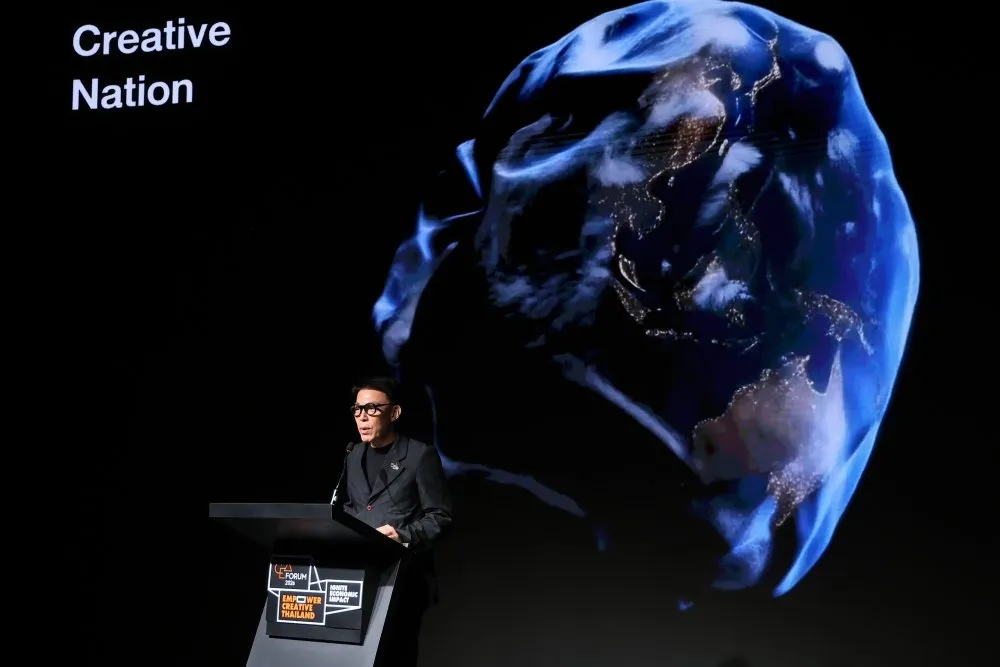
In the keynote “Creative Nation & Global Outlook 2026,” CEA’s Chairman of the Board Chaiyong Ratana-Angkura set the scene with four overlapping pressures: geopolitical volatility, climate change as lived reality, prolonged economic stagnation, and rapid disruption from technology and AI.
His message was basically: Thailand can’t solve this with short-term fixes. It needs an economic model that holds up under pressure. The forum positioned the creative economy as that model, describing it as a kind of “operating system” that turns cultural assets, creativity, and identity into long-term economic capital and sustainable value.
The emphasis here was also about how value gets created. The creative economy, in CEA’s framing, generates value through meaning, identity, experience, and trust, instead of competing purely on volume.
The growing creative economy
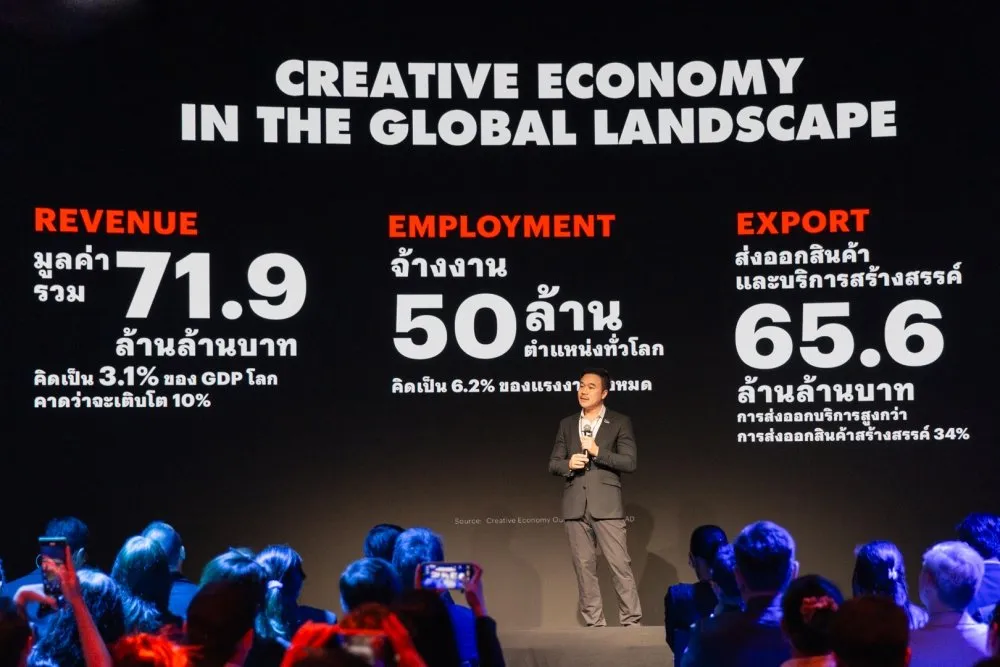
In CEA Strategic Direction 2026, Executive Director Chakrit Pichyangkul put hard stats behind the narrative.
Globally, the materials cite the creative economy at more than THB71.9 trillion (US$2.256 trillion), around 3.1% of global GDP, supporting over 50 million jobs.
For Thailand, the forum cites creative industries at THB1.44 trillion (US$45.39 billion), or 8.01% of national GDP, and highlights the sector’s ability to recover quickly after crises.
That’s the justification for the bigger pivot CEA wants to make in 2026, shifting from “cultural capital” as heritage to cultural capital as a pipeline into IP, especially IP that can compete internationally.
“From Cultural Capital to Creative IP Economy”
CEA’s 2026 direction is summed up in one phrase: “From Cultural Capital to Creative IP Economy.” It’s a move away from treating creativity as a soft-value layer on top of tourism, and toward treating it as a system that produces ownable, monetizable assets.
The forum materials list concrete targets tied to that shift:
- Empowering more than 300,000 creators and entrepreneurs.
- Generating at least 350 new IP assets.
- Increasing average entrepreneurial income by over 30%.
- Driving growth of Thailand’s creative economy (GVA) at more than 5%.
The idea is that Thailand should stop defaulting to “work-for-hire” creative production and start building a bigger base of IP ownership that can travel across platforms, languages, and markets.
The “City as a Stage” model
Deputy Executive Director Pichit Virankabutra talked about creative city development through three linked dimensions: Place, Assets, and People. In the forum’s framing, when these align, a city becomes a platform, described as “City as a Stage,” where creative talent and businesses can generate new value.
A key mechanism here is what CEA calls Festival-Led City Development, supported by a nationwide network of design festivals. The forum also points to expanding new TCDC hubs in the regions, including the opening of TCDC Songkhla and the development of creative destinations, alongside city branding work and UNESCO Creative Cities Network engagement.
The point was less “Bangkok as the creative capital” and more “Thailand as 77 provinces of creative capital,” with infrastructure that helps it circulate.
Building capacity, then building markets
On the industry side, Deputy Executive Director Inthaphan Buakeow outlined a 2026 approach built around strengthening talent and businesses while expanding markets domestically and internationally.
The forum materials describe work across the value chain, including:
- Upstream development through Content Lab.
- Downstream market expansion through Music Exchange and Music Business Lab.
- Cross-disciplinary capacity building in advertising, design, architecture, and creative products/services.
- Flagship platforms like Bangkok International Content Market (BICM) and participation in international trade fairs.
The consistent theme across all of it is that competitiveness comes from infrastructure, partnerships, and market access, not just talent.
AI as a production multiplier
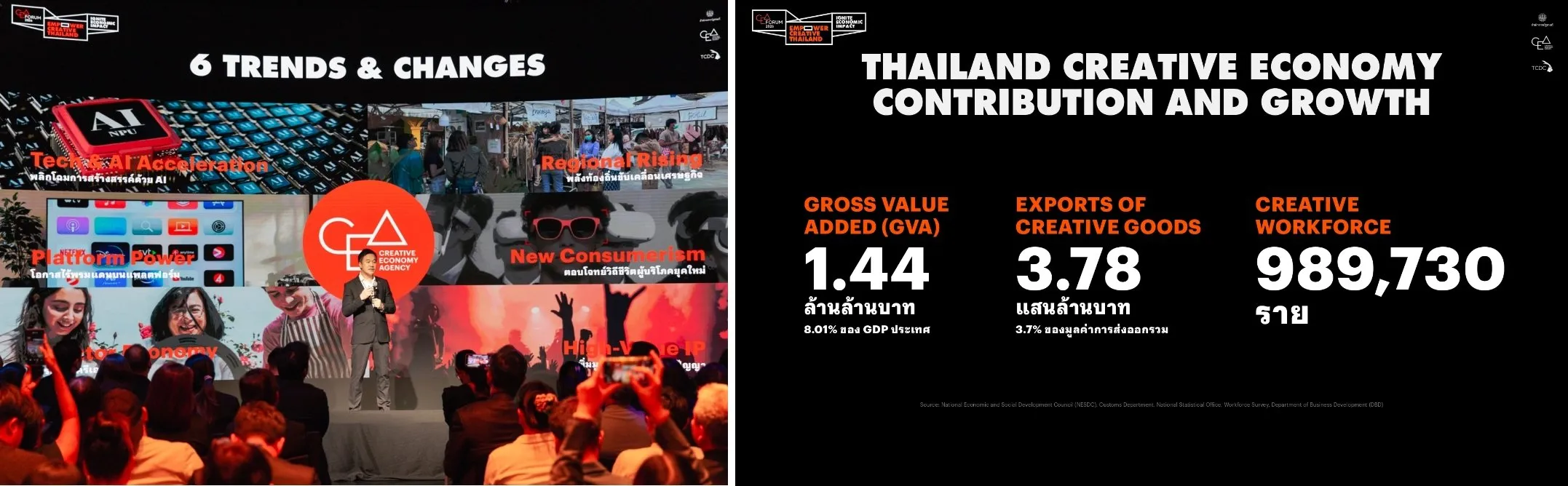
The first panel session, Creative Industries & People, leaned into IP and global reach.
Speakers pushed the idea of turning cultural capital into high-value IP and building with global distribution in mind from the start, rather than retrofitting later. AI came up as a practical lever, described in the materials as a “growth multiplier,” including examples like AI dubbing to reduce costs and break language barriers.
The discussion also flagged a structural problem, which is creators carrying too much weight alone, from funding to business operations to rights protection. The forum materials reference South Korea as a model and list four support pillars to build toward:
- Funding support
- Knowledge and networking
- Business negotiation skills
- A robust copyright protection system
Alongside that, there’s also a push for a “Respectful Use of AI” approach around intellectual property.
The second panel session, Creative Places & Cities, argued that a creative city can’t be defined by the public sector alone. The materials stress “activation” through collaboration between the state and citizens, and recommend moving toward a private sector–led, government-supported approach.
A policy idea that shows up clearly is simplifying public services and reducing complexity through One Stop Service models, and shifting success metrics toward citizen well-being and convenience.
What CEA Forum 2026 really said
Stripped down, the forum’s message is:
- Thailand already has cultural capital everywhere.
- The next step is turning it into IP that can scale, travel, and generate value long-term.
- Cities matter because creative ecosystems need platforms, infrastructure, and coordination.
- People matter because talent without support burns out or stays stuck in work-for-hire loops.
- Industry growth needs market access, not just inspiration.
CEA Forum 2026 reads more like a systems pitch: If Thailand wants resilience in a chaotic global economy, creative capacity has to be treated like economic infrastructure, with targets, platforms, and real collaboration behind it.

 Paul Rujopakarn