

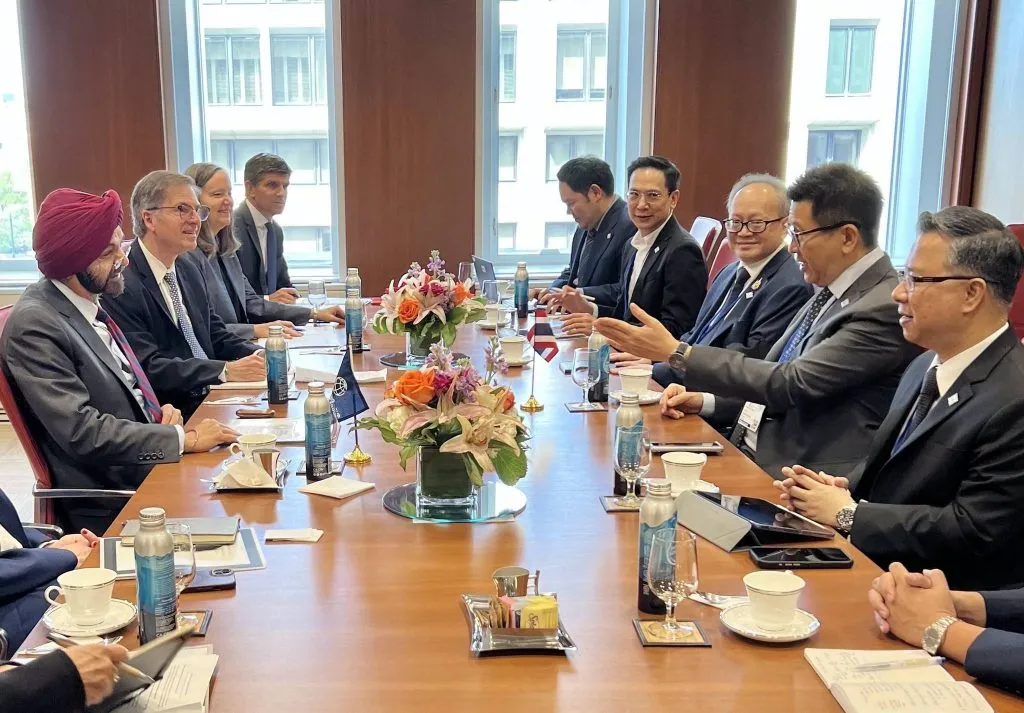
Thailand has taken the opportunity to sharpen its economic diplomacy at the World Bank and IMF Spring Meetings in Washington, with Deputy Prime Minister and Finance Minister Ekniti Nitithanprapas holding talks with World Bank President Ajay Banga focused on development finance, energy transition, and digital inclusion.
The April 17th meeting reaffirmed cooperation between Bangkok and the World Bank as governments across Asia are balancing slower growth, higher energy costs, and rapid technological developments.
Among the flagship items discussed was Thailand’s Low Carbon City Project, which aims to support the Kingdom’s shift toward cleaner energy use and a greener economic model. Officials said the initiative would play a key role in helping Thailand adapt to a more carbon-conscious global economy.
The two sides also reviewed digital financial inclusion, an area where Thailand has increasingly promoted the use of technology to widen access to services and improve resilience.
AI and productivity push
The World Bank has praised Thailand’s efforts in using digital finance and artificial intelligence to “enhance skills, quality of life, and productivity” for citizens, according to official accounts of the meeting.
That recognition comes as the lender’s latest East Asia and Pacific outlook points to AI-linked trade and investment as one of the few bright spots in an otherwise cooling regional economy. The World Bank projects growth across East Asia and the Pacific to slow to 4.2% in 2026, down from 5.0% in 2025, amid energy shocks, trade barriers, and domestic vulnerabilities.
Thailand was highlighted alongside Malaysia and Vietnam as a beneficiary of rising AI-related exports and investment, underscoring the nation’s ambition to position itself as a regional technology and manufacturing base.
All eyes on Bangkok in October
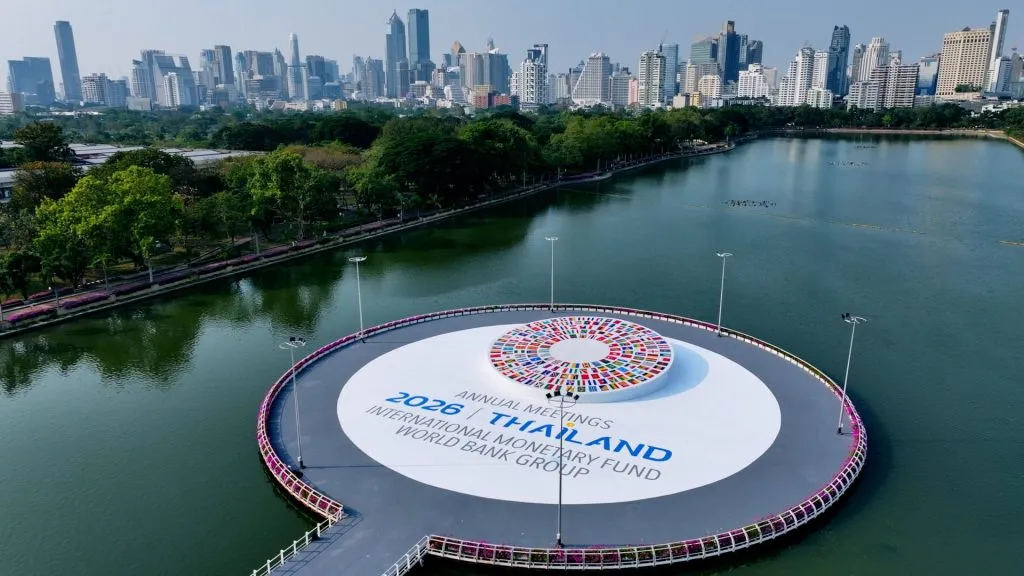
The Washington talks also turned to Bangkok’s preparations for hosting the IMF-World Bank Group Annual Meetings from October 12th to 18th at Queen Sirikit National Convention Center.
The event provides Thailand with a promising opportunity to present its development model to global policymakers, investors, and central bankers, while also showcasing Southeast Asia’s broader economic evolution.
Hosting the meetings also reflects Thailand’s ambition to play a larger role in global economic governance, especially as supply chains shift and investors reassess Asia’s next growth hubs.
Navigating a volatile world
Finance leaders leaving Washington this week are still grappling with the fallout of conflict in the Middle East, volatile oil markets, and weakening global forecasts.
Thailand, a net energy importer, is particularly exposed to higher fuel prices, with Ekniti acknowledging the pressure but framing it as a catalyst for structural reform.
“We need to commit to transform…to help people transform to face the new fragmented world and high oil prices,” he said.
Thailand’s bid to realize that transformation is now increasingly evident as it pursues cleaner energy, smarter finance, and a stronger international profile.

 Teerin Julsawad
  Thailand NOW