

Thai Prime Minister Anutin Charnvirakul has returned from his first official visit to China touting a package of investment commitments and new channels of cooperation that underscore the growing importance of China in Thailand’s economic and foreign policy positions.
The five-day trip, which spanned Shanghai, Chengdu, and Beijing, expanded cooperation across a broad range of sectors, from artificial intelligence and clean energy to space industries and digital technologies. Thailand and China signed a staggering 15 agreements covering areas including education, intellectual property, and water management.
Government Spokesperson Rachada Dhanadirek described the trip as a success that strengthened Thai-Chinese ties.
Key Takeaways
- Thai Prime Minister Anutin Charnvirakul’s five-day China visit produced 15 agreements and expanded bilateral cooperation across economic, technological, educational, and environmental fields.
- The Prime Minister presented Thailand as a partner in China’s innovation ecosystem and promoted an inclusive approach to artificial intelligence development.
- The Thai delegation met Chinese technology and automotive companies, brought 153 executives from 48 Thai companies, and opened a Board of Investment office in Chengdu.
- Thailand and China agreed to establish a foreign and defence ministers’ dialogue while strengthening cooperation against online scams, human trafficking, and threats to tourist safety.
- The Prime Minister linked stronger relations with China to sustainable investment, regional stability, tourism recovery, and Thailand’s preference for diplomatic dialogue.
A push into China’s innovation ecosystem
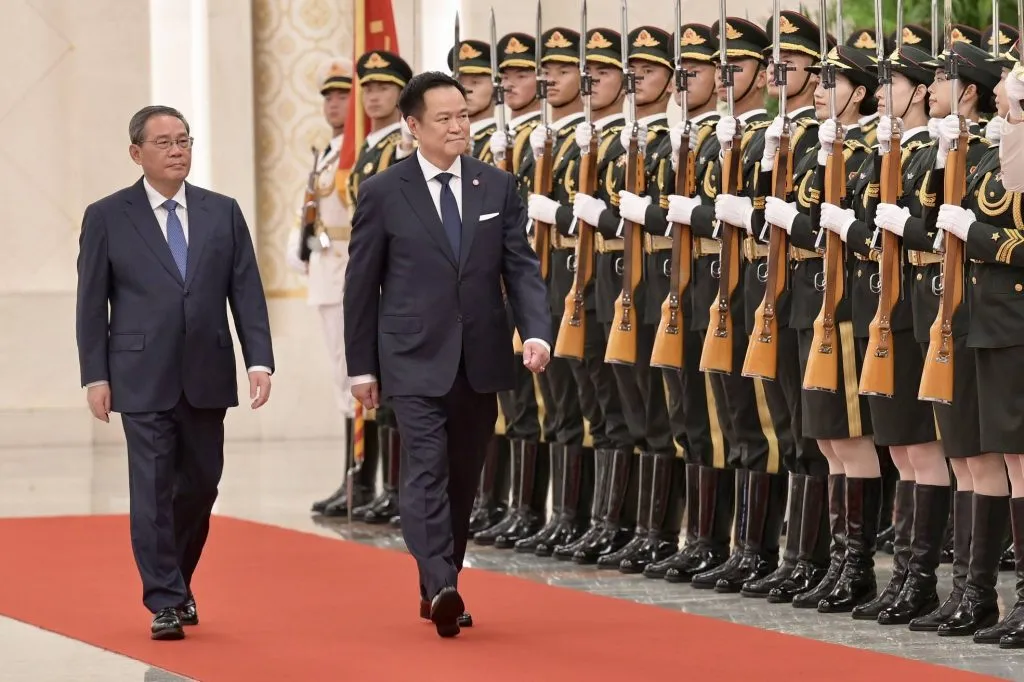
A major focus of the visit was positioning Thailand as a partner in emerging industries in addition to a manufacturing base.
During top-level meetings with Chinese President Xi Jinping, Premier Li Qiang, and Zhao Leji, Chairman of the Standing Committee of the National People’s Congress, Thailand and China agreed to deepen cooperation in AI, the digital economy, and other future-oriented sectors.
At the World AI Conference 2026 (WAIC 2026) in Shanghai, Anutin outlined Thailand’s vision for shared prosperity in an “AI future that leaves no one behind.”
The Thai delegation also embarked on a technology-focused roadshow, meeting executives from companies including Xiaomi Corporation and ChangAn Automobile, along with leading photonics firms.
The trip’s economic emphasis was reinforced by the presence of more than 153 executives from 48 major Thai companies comprising the largest business delegation ever to accompany a Thai prime minister abroad. Thailand’s Board of Investment also opened a new office in Chengdu, expanding its presence into western China, a region viewed as a growing hub for advanced technology and clean energy.
Ensuring visitor flows and regional stability
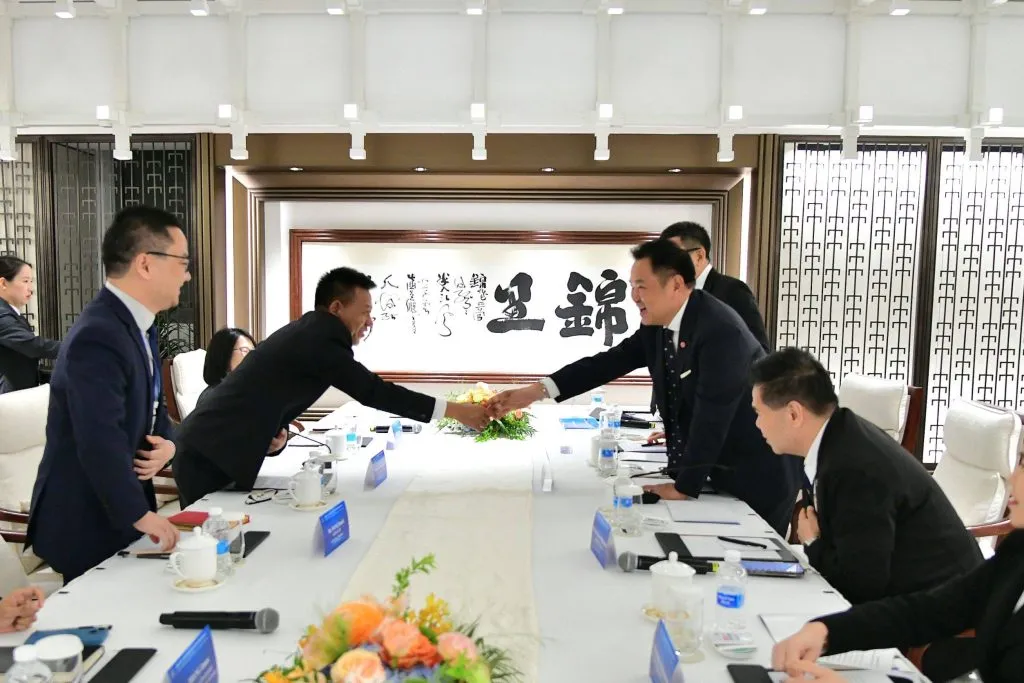
Economic cooperation was accompanied by a broader security agenda as the two nations agreed to establish a new “2+2” dialogue mechanism involving their foreign and defense ministers and discussed cooperation against transnational crime, including online scams and human trafficking.
Team Thailand also sought to reassure Beijing over the safety of Chinese tourists, an issue of immense importance as the Kingdom works to revive visitor numbers. The Tourism Authority of Thailand (TAT) now expects Chinese arrivals to reach 5.13 million this year, with officials citing momentum generated by Anutin’s visit as one factor supporting the recovery.
Additionally, the Thai premier reaffirmed during meetings with Chinese leaders that Thailand prefers dialogue and bilateral mechanisms in addressing the ongoing Thailand-Cambodia border issue.
Warm gestures amid practical considerations
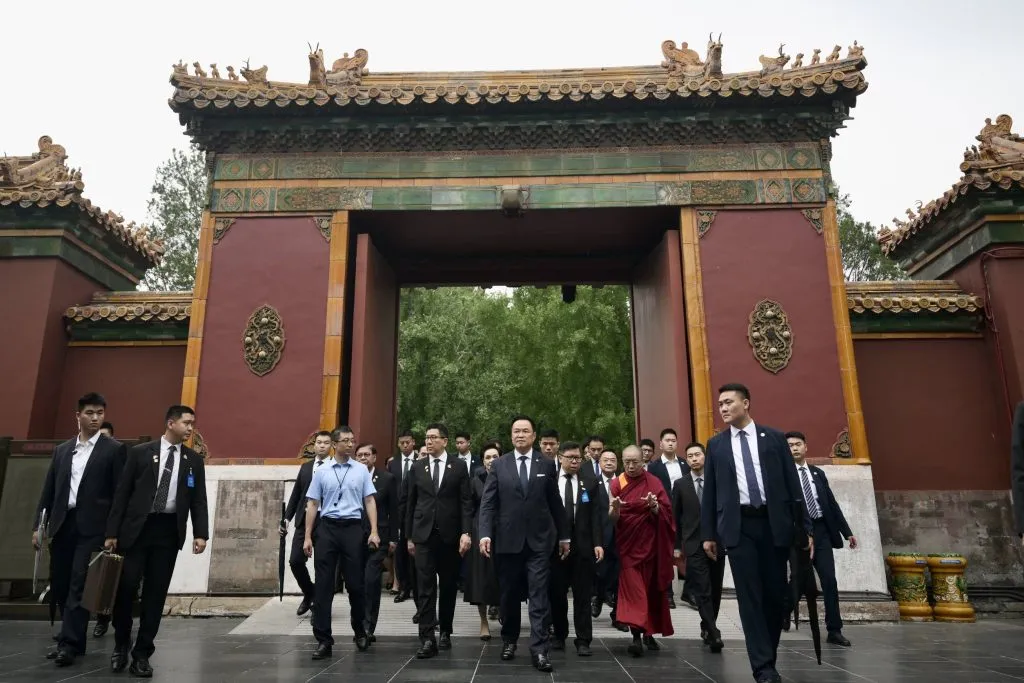
The visit featured several highly public displays of goodwill, with Anutin posting the phrase “中泰一家亲” on social media, which translates to “China and Thailand are one family.” He also met Foreign Minister Wang Yi and even joined in singing the beloved Chinese classic Tian Mi Mi during a luncheon hosted by Premier Li.
Answering questions at home over the environmental implications of new Chinese investments, Anutin assured that environmental standards and green development were recurring themes throughout discussions with Chinese counterparts. He further stressed that future cooperation must support sustainable growth alongside economic expansion.
As governments across Asia recalibrate their economic relationships while seeking to preserve room to maneuver, Anutin’s high-profile trip to China serves to signal how Thailand sees its place in an increasingly complex strategic landscape.

 Teerin Julsawad