

The Thai government is making its position increasingly clear as artificial intelligence becomes yet another front in an ever-widening geopolitical rivalry between the United States and China, with the Kingdom reaffirming that it does not intend to choose between the two global superpowers.
Reuters reported on August 14th that Washington was preparing to tell 35 countries that participation in its “Pax Silica” technology framework would be incompatible with any agreements carrying conflicting expectations. The outlet cited an unnamed U.S. official as saying countries “can’t have it both ways.”
Thailand, however, has been steadfast in its determination to stay neutral.
Key Takeaways
- Thailand has reaffirmed it will not choose between the US and China in the AI rivalry, following a Reuters report on August 14th that Washington would tell 35 countries its “Pax Silica” framework is incompatible with conflicting agreements.
- Digital Economy and Society Minister Chaichanok Chidchob said Thailand “still won’t choose” if forced, while Prime Minister Anutin Charnvirakul stated there has been no US pressure and no impact on tariff negotiations.
- Deputy Prime Minister Yodchanan Wongsawat argued neutrality requires building domestic capability across data, hardware, infrastructure, expertise, and cybersecurity rather than simply buying technology from all sellers.
- Thailand is partnering with France, Japan, and South Korea on workforce development and technology capacity, alongside a four-pillar public-private strategy covering agriculture, community economy, investment, and trade.
- The government frames the superpower rivalry as an opportunity akin to its historical balancing of great powers, aiming to avoid dependence on a single AI ecosystem.
Thailand’s answer is not to choose
Source: thailand.prd.go.th / Website
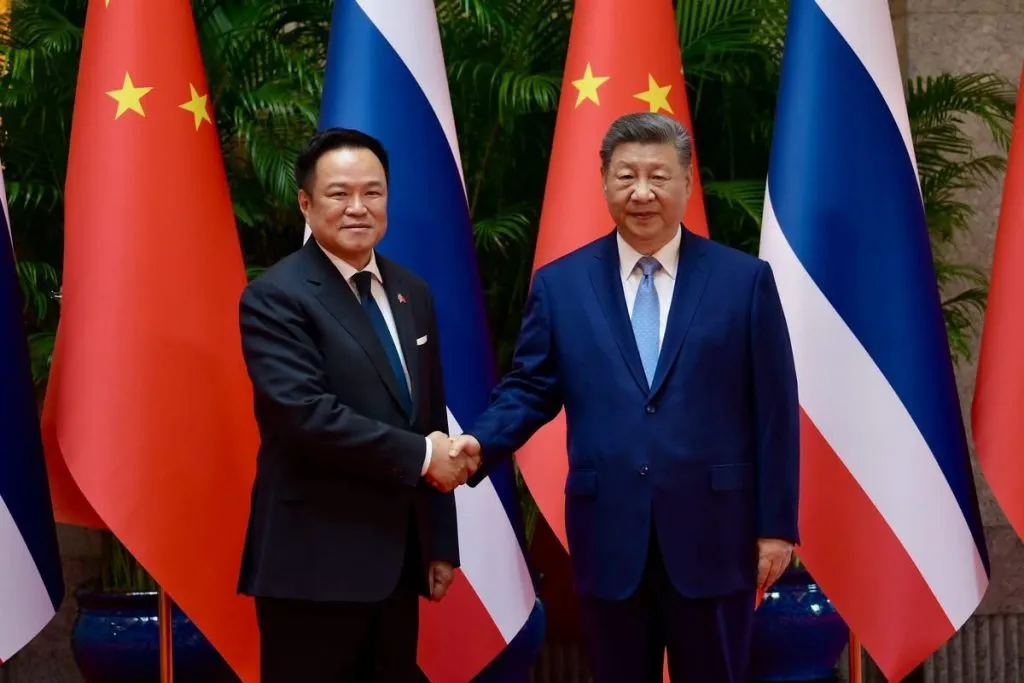
Digital Economy and Society Minister Chaichanok Chidchob has been especially direct about the issue of Thailand’s AI neutrality.
“If we’re forced to choose, we still won’t choose,” he said, arguing that if either side moves to withhold technology, then it would not be Thailand making that decision.
Prime Minister Anutin Charnvirakul has nevertheless struck a measured tone, pointing out that Thailand has not faced pressure from Washington and that the AI issue has had no bearing on ongoing tariff negotiations.
“Everything has taken place in an atmosphere of mutual appreciation and cooperation,” Anutin said at a recent press conference, adding, “There was no pressure at all.” Jaithai Upakarnitikaset, spokesperson for the Ministry of Foreign Affairs, similarly said Thailand had not received any notification from the United States and would continue monitoring the situation.
The distinction may be tested as AI becomes more integrated with areas such as semiconductors, supply chains, investment, and national security.
Neutrality needs options and muscle

Deputy Prime Minister Yodchanan Wongsawat has meanwhile argued that the real issue has less to do with picking sides and more with becoming less dependent overall.
AI, he said, is only the top layer, and underneath it is data, hardware and infrastructure, scientific expertise, and cybersecurity. Without those foundations, Thailand risks allowing tech dependence on others to become a form of leverage in future negotiations.
Neutrality therefore requires having enough domestic capability to decide what Thailand actually needs, and not just buying technology from everyone willing to sell it.
To that end, the government has been working with countries including France, Japan, and South Korea on workforce development and technology capacity, while also bringing the private sector on board as part of the effort.
Rivalry presents opportunities
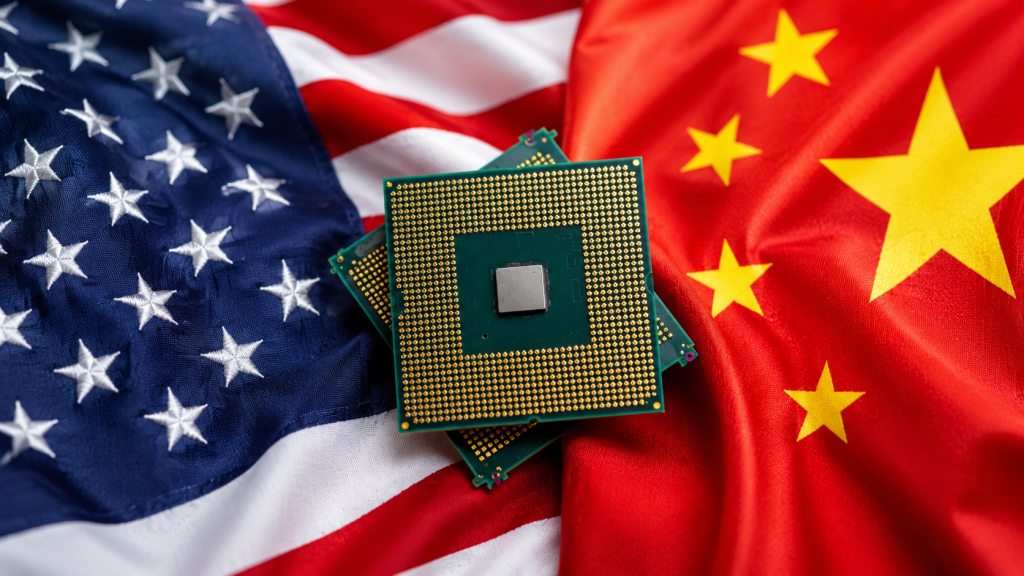
The U.S. remains exceptionally strong in areas like frontier AI, advanced chips, and software, while China has developed formidable advantages of its own in lower-cost, open-source models and industrial applications. Thailand does not necessarily have to replicate either system, but it does need enough capability to benefit from both.
That potentially makes the rivalry itself an opportunity, similar to how the Kingdom managed competition between great powers in centuries past to help maintain its independence from foreign colonialism, with the aim now being to avoid becoming dependent on one AI ecosystem.
The government’s four-pillar public-private strategy, covering everything from agriculture and community economy to investment and trade, is intended to help create the room needed to maneuver.
As Washington and Beijing push their AI competition deeper into the global economy, neutrality remains firmly Bangkok’s preferred position. The real test may be whether it can quickly develop the technological foundations necessary to ensure that stance continues to be an option.

 Teerin Julsawad