

Thailand’s export engine has entered the second half of 2026 in exceptional shape, even as a fresh round of U.S. tariffs threatens to complicate projections going forward.
Thai exports surged 20.8% year-on-year in June to US$34.66 billion,the 24th straight month of growth, according to the country’s Ministry of Commerce. Shipments to the United States jumped 44.3%, while the AI gold rush drives demand for data centers and, in turn, Thai electronics.
However, some of that growth reflected U.S. importers racing to secure goods before earlier tariff measures expired. With Washington now imposing a new 12.5% levy on many Thai products, officials and analysts expect export growth to lose momentum in the months ahead.
Key Takeaways
- Thailand’s export boom remains resilient, but the separate U.S. investigation into structural excess capacity creates further uncertainty for automobiles and machinery later in 2026.
- Thailand’s exports rose 20.8% year-on-year to US$34.66 billion in June 2026, extending growth to a 24th consecutive month.
- Shipments to the United States jumped 44.3%, with AI-linked demand driving especially strong growth in Thai electronics exports.
- The United States imposed a 12.5% Section 301 tariff on many Thai products from July 24, 2026, although broad exemptions cover major electronics, aviation, rubber and agricultural goods.
- Commerce Minister Suphajee Suthumpun says Thailand will pursue a balanced reciprocal trade agreement while preparing loans, tax support, logistics measures and market diversification.
A tariff blow with a sizable cushion
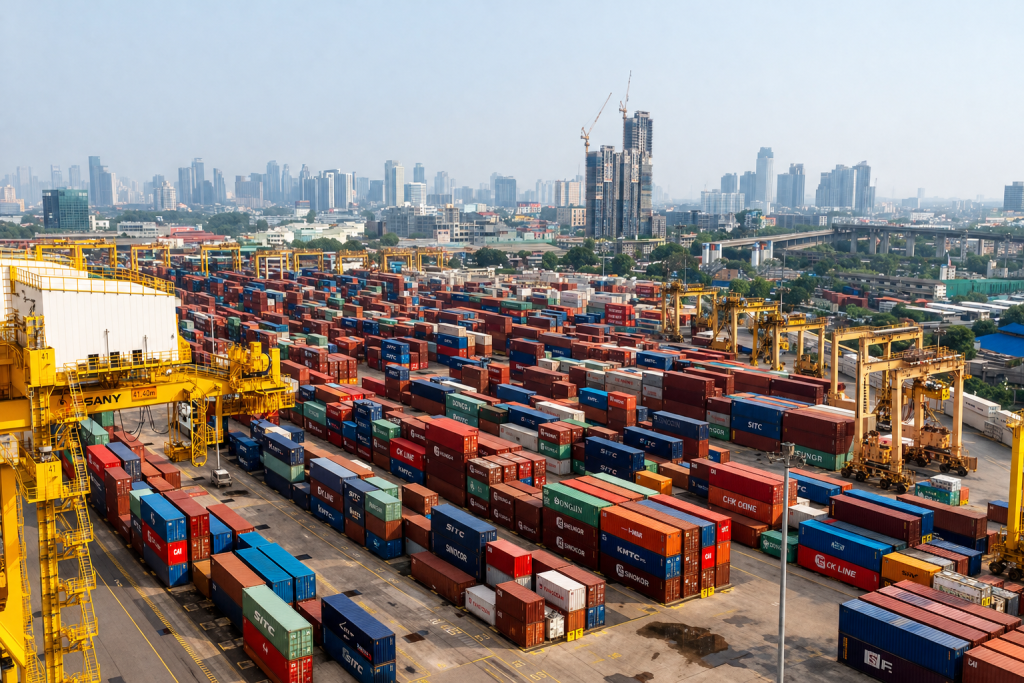
The new tariff, imposed under Section 301 of the Trade Act of 1974, took effect on July 24th and added 12.5% to normal Most-Favored-Nation duties on affected Thai goods.
Still, the impact may be softer than the headline rate would seem to suggest. More than 2,100 Thai product categories are exempt, accounting for over half the value of Thailand’s exports to the U.S. They include integrated circuits, hard disk drives, aircraft parts, natural rubber, and several agricultural products.
These products exemptions are a welcome reprieve for the nation, as electronics have become the star of Thailand’s export story. Electronics shipments surged 66% in June, according to Kasikorn Research Center, contributing 14.7 percentage points to overall export growth. Electronics exports to the U.S. soared 73%.
Thailand faces roughly the same tariff treatment as Vietnam and the Philippines, limiting some of the impact on competitiveness, though Malaysia and Indonesia managed to secure a lower 10% rate.
A frank and honest trade dialogue

Thailand is pressing ahead with negotiations on an Agreement on Reciprocal Trade with Washington, but Commerce Minister Suphajee Suthumpun has signaled that Bangkok will not accept a deal at any cost.
She noted that the agreement must provide balanced benefits and cannot compromise national security or the government’s ability to issue domestic policy.
In the meantime, the Thai government is preparing low-interest loans, tax support, and logistics measures for affected businesses, while seeking new export markets to reduce the country’s exposure to any single market.
Sompop Manarungsan, President of Panyapiwat Institute of Management, has argued that Thailand should also look beyond bilateral talks and strengthen ASEAN coordination to give Southeast Asian economies greater leverage in the current trade climate.
The looming challenge yet to come

Beyond the immediate tariff, as Washington is separately investigating “structural excess capacity” in 16 economies, including Thailand, with possible measures later this year.
Unlike the current tariff regime, that investigation has no specified ceiling on potential duties. Thai officials are eying any impact this investigation could have on categories related to automobiles and machinery.
That uncertainty hangs like a cloud over an otherwise stellar export performance. Thailand shipped US$196.74 billion of goods in the first half, up 17.6%, but imports also surged 38% to US$228.49 billion, producing a US$31.74 billion trade deficit.
Kasikorn Research Center has raised its full-year export growth forecast to 14% , while the Ministry of Commerce has outlined scenarios ranging from 5% to 11% growth.
The new U.S. tariffs might best be viewed as a warning shot rather than an inevitable derailment of Thai trade. Thailand’s technology-heavy export boom remains intact, for now, but sustaining momentum will increasingly depend on navigating a more unpredictable global trading system that can rearrange the board almost overnight.

 Teerin Julsawad