

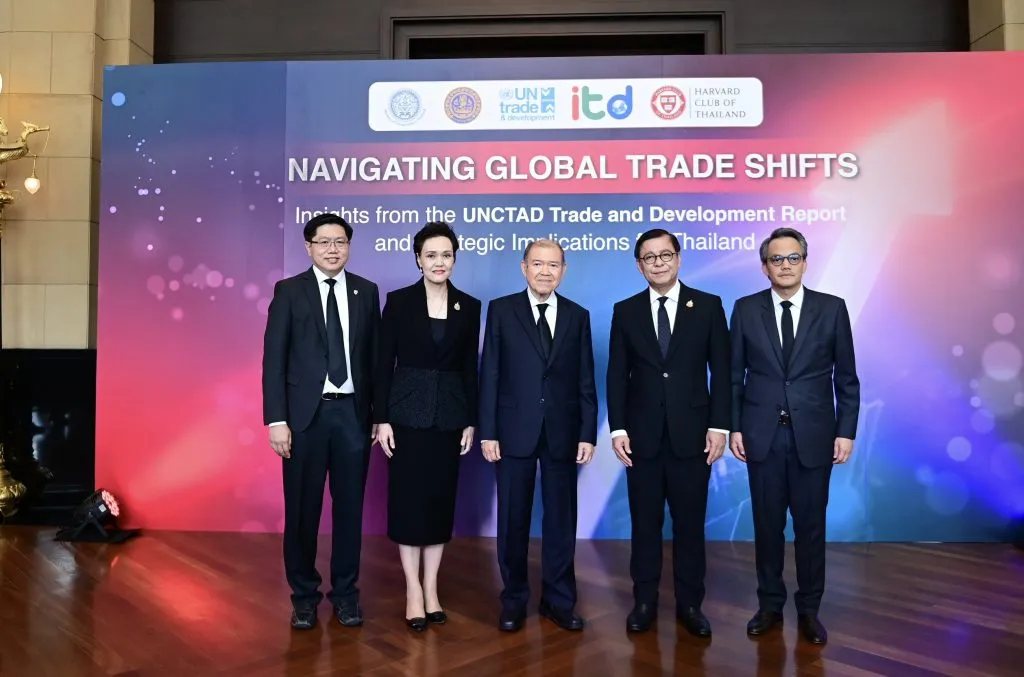
As geopolitical tensions, shifting supply chains, and financial volatility redraw the map of global commerce, Thailand is signaling to the world that it’s taking the necessary steps to ensure it adapts quickly. That message was front and center at a recent international seminar titled “Navigating Global Trade Shifts: Insights from the UNCTAD Trade and Development Report and Strategic Implications for Thailand,” where policymakers, economists, and diplomats gathered to assess how the Kingdom should respond to a rapidly evolving world economy.
Hosted at the Ministry of Foreign Affairs and organized with partners including UN Trade and Development (UNCTAD) and the International Institute for Trade and Development, the event drew more than 150 participants from government, business, academia and international organizations.
From “deglobalization” to “reglobalization”
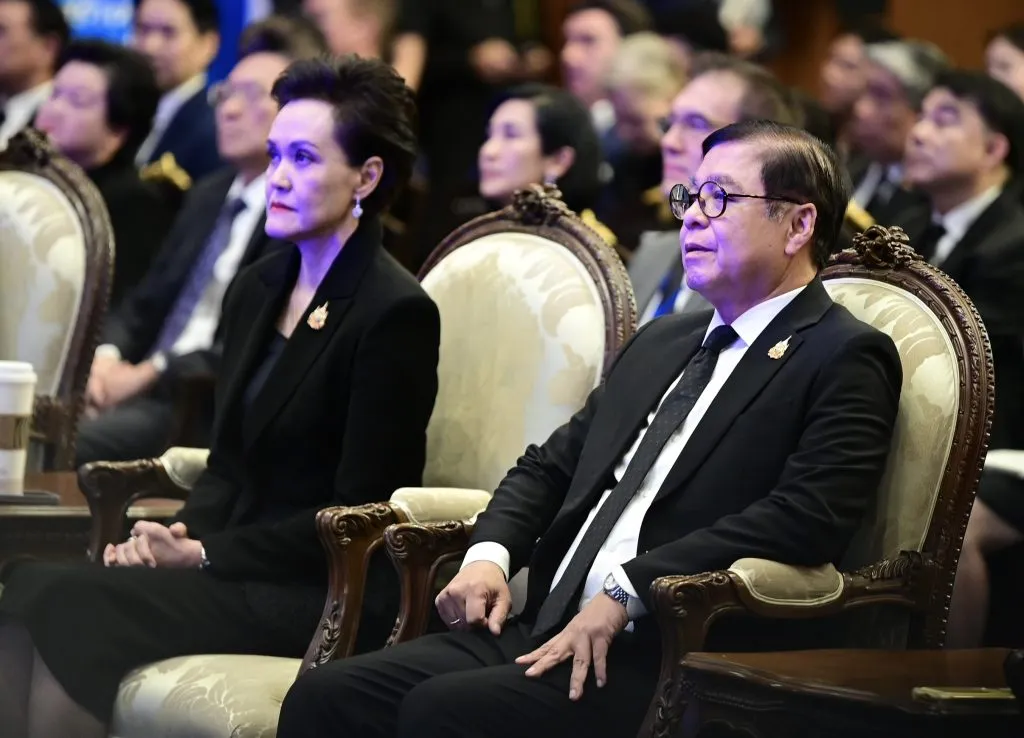
A recurring theme at the seminar was that globalization is changing form rather than coming to an end or being scaled back.
Foreign Affairs Minister Sihasak Phuangketkeow explained that the world is entering an era of “reglobalization,” as characterized by a strategic realignment of trade, production, and finance. Trade volumes continue to grow, he noted, but the structure around them is shifting amid tariffs, protectionist policies, and geopolitical competition.
Former UNCTAD Secretary-General Supachai Panitchpakdi echoed the sentiment, warning that the global economy is entering a period of heightened uncertainty driven by supply-chain restructuring, trade diversion, and financial risks. He stressed that modern economic diplomacy must therefore address geo-strategic economic issues comprehensively, including digitalization and financial resilience.
Economic diplomacy takes center stage

For Thailand, adapting to these changes means allowing for a closer integration of foreign policy and economic strategy.
Minister Sihasak outlined a three-pillar economic diplomacy framework aimed at building confidence in Thailand, strengthening competitiveness, and expanding international partnerships. Measures include modernizing regulations, improving trade facilitation, and aligning policies with international standards. It also involved mobilizing embassies and consulates to help connect Thai businesses, especially small and medium-sized enterprises (SMEs), with global opportunities.
Commerce Minister Suphajee Suthumpun meanwhile emphasized that trust has become a new currency in international trade, and that Thailand aims to remain an open, reliable partner despite growing global polarization. She highlighted efforts to diversify markets, expand free trade agreements, and promote digital trade frameworks, including ASEAN’s proposed Digital Economy Framework Agreement (DEFA), which could open a regional market of more than 600 million people to SMEs.
Trade, finance and resilience
Speakers also underscored the increasingly tight links between trade and financial stability.
UNCTAD representatives warned of a growing “trade-finance asymmetry,” rising debt levels in developing economies, and climate-related financial risks that could threaten global growth. Trade is projected to expand, but at a slower pace, particularly in goods, as tariffs and financial volatility weigh on markets.
Supachai cautioned that Thailand must strengthen domestic fundamentals, such as fiscal capacity, education and industrial policy, while diversifying markets and investing in future industries ranging from biotechnology to digital services.
A changing role in a changing world
The seminar concluded with a broad consensus that trade, finance, geopolitics, and climate are now inseparable forces shaping economic outcomes.
Thailand’s strategy, officials emphasized, is to navigate this complexity through coordinated action, in what policymakers call a “Team Thailand” approach, by bringing together ministries, the private sector and international partners to translate diplomacy into tangible economic gains.
With globalization entering a new phase, Thailand is positioning itself to adapt accordingly as well as carve out a role as a resilient, clear-eyed, and forward-looking player in the shifting architecture of global trade.

 Teerin Julsawad