As Thailand prepares for a pivotal general election on February 8th, voters, parties, and regulators alike are navigating an unusually dense calendar along with some of the strictest electoral rules the nation has ever enforced.
This year’s vote will also make history by pairing a nationwide election with a referendum on whether Thailand should draft a new constitution, adding another layer of scrutiny to an already closely watched process.
Key dates voters need to know
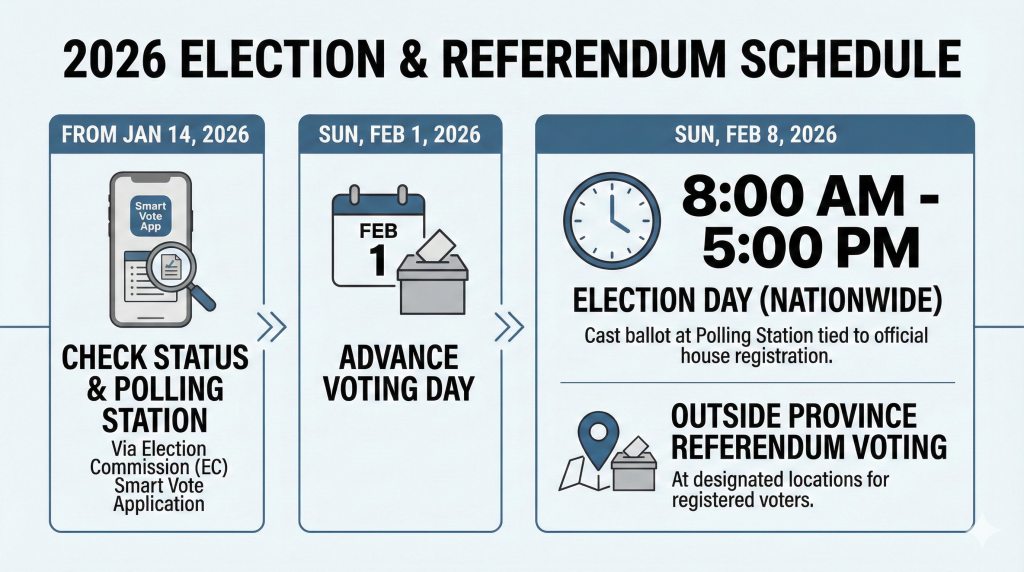
Election day is set for Sunday, February 8th, 2026, with polling stations open nationwide from 8:00 a.m. to 5:00 p.m. Voters must cast ballots at the polling station tied to their official house registration.
Advance voting will take place on February 1st, while voters registered to take part in the referendum outside their home province will vote on February 8th at designated locations.
From January 14th, eligible voters can check their voting status, polling station, and referendum details via the Election Commission’s (EC) Smart Vote application, after updates were rolled out to correct district information in several provinces.
Expanded preparations for advance voting
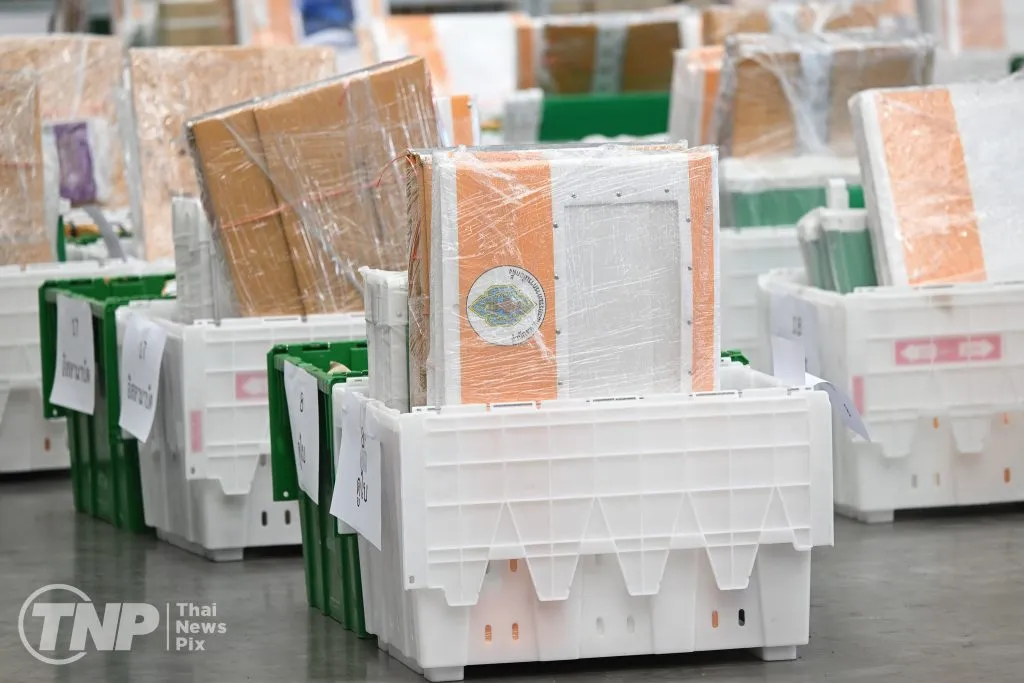
Election officials say demand for advance and out-of-area voting has surged, particularly in Bangkok. In districts such as Bang Kapi and Chatuchak, registrations far exceed venue capacity, prompting the EC to expand staffing and consider shuttle services to move voters efficiently.
Officials are also drawing lessons from logistical issues during the 2023 election, including ballot delivery errors and weak connectivity at polling sites, to avoid a repeat.
Thailand is expected to have around 53 million eligible voters, though final figures are still being compiled by the Interior Ministry.
Campaign rules, debates, and strict penalties
The EC has reiterated tight controls on campaigning. All election and referendum campaigning must stop from 6:00 p.m. on February 7th until polls close the following day. Alcohol sales will also be banned nationwide during the same period.
Violations can carry penalties ranging from fines of THB10,000 (US$304) to prison terms of up to 10 years, depending on the offense. Vote-buying, providing free transport to influence voters, publishing opinion polls within seven days of election day, or photographing marked ballots are all criminal offenses.
On the campaign trail, the EC has clarified that political parties may use non-party assistants on debate stages, including media-hosted debates, but their photos cannot appear on campaign signage unless they are party members or official prime ministerial candidates.
Competing visions for Thailand’s future
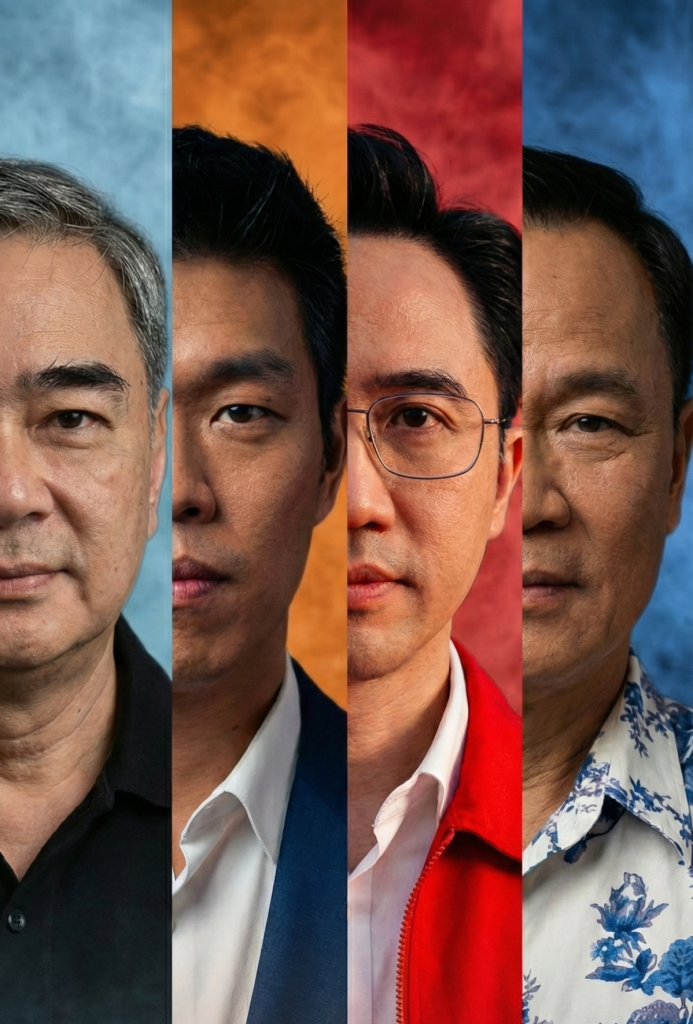
Policy debates are intensifying as parties court voters. The Pheu Thai Party, following talks with the Thai Chamber of Commerce, has rebranded its economic message as “Hope 2026,” promising innovation-driven growth, education reform, political stability, and a shift toward “future food,” wellness tourism, and a digital government.
By contrast, the People’s Party – the successor to the progressive Move Forward – is campaigning on a platform centred on political reform, decentralization and expanded social welfare. It has emphasised education reform, universal social protections, and reducing inequality, framing its message around empowering younger generations and limiting the influence of entrenched power structures.
The Bhumjaithai Party, a key player in the outgoing governing coalition, has meanwhile leaned into themes of experience, continuity, and pragmatic governance. While avoiding sweeping ideological promises, the party has highlighted policy stability and its record in office, positioning itself as a steady hand amid economic uncertainty. Its campaign has also underscored sector-specific policies and locally tailored development initiatives.
Meanwhile, more traditional parties such as the Democrat Party and Phalang Pracharath have focused on broad-based welfare across age groups, education and skills development, and measures to ease household debt, particularly among students and working families. Other conservative-aligned parties have stressed social assistance, vocational training, and job readiness, often linking education reform directly to employment outcomes.
The business community has stressed that political stability under the next government will be critical for investor confidence in the post-election period.
Technology, misinformation, and voter awareness
To counter misinformation, the EC has also partnered with TikTok Thailand, which will launch an official Election Center on January 15th. The platform will promote verified information, label AI-generated content, and provide tools for reporting misleading posts, reflecting how digital platforms have become central to modern Thai elections.
With tight enforcement, record participation, and a constitutional referendum on the same ballot, Thailand’s February vote is shaping up to be one of the most consequential in the Kingdom’s political history.