

We’re all familiar with the idea of cultural neighborhoods abroad. Chinatowns exist all over the world. Koreatowns have become major cultural hubs in cities like Los Angeles and New York. But fewer people realize there’s also an officially designated Thai Town in the United States, and it happens to be in Hollywood.
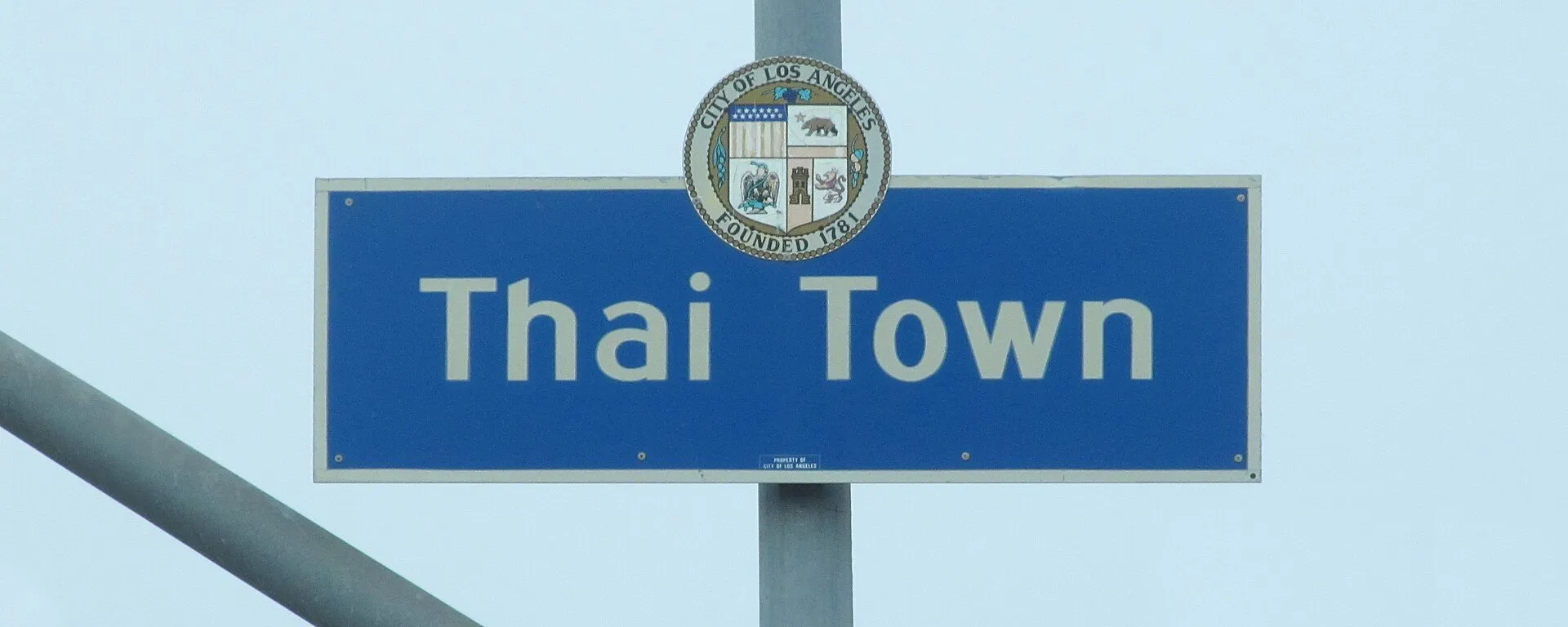
Located in East Hollywood along a stretch of Hollywood Boulevard between Western and Normandie Avenue, Thai Town was officially designated in 1999, becoming the first and still the only officially recognized Thai Town in the country.
The neighborhood’s location in Los Angeles is fitting. Los Angeles County is home to the largest Thai community outside Thailand, with an estimated population of around 50,000 Thai residents.
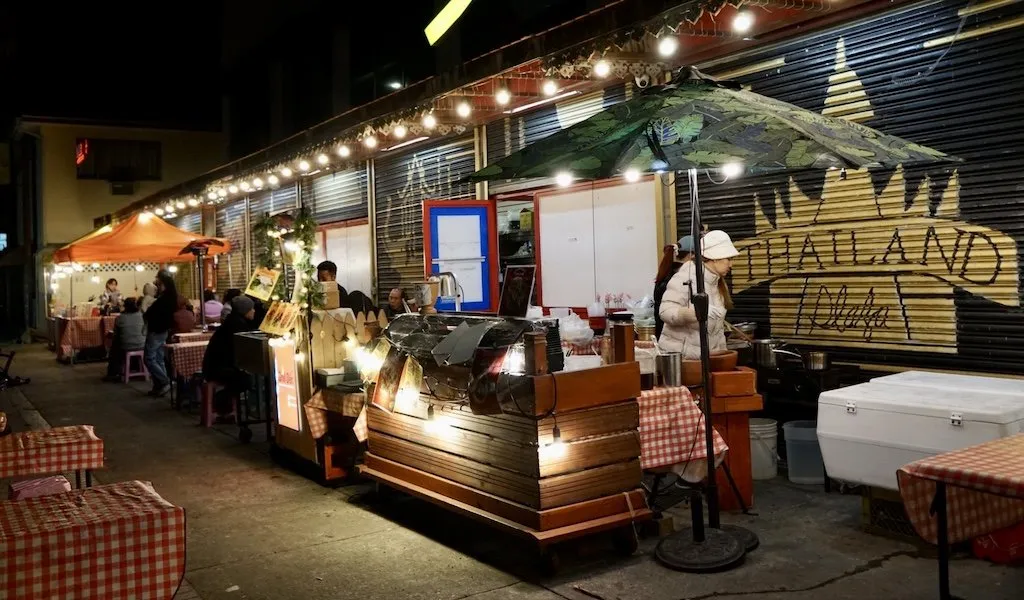
For many visitors, the neighborhood is introduced through food first. Thai restaurants, dessert shops, markets, cafes, and late-night spots line the street, and for a lot of Los Angeles residents, Thai Town has long been one of the city’s go-to areas for regional Thai cuisine.
But the neighborhood represents something bigger than restaurants alone. Over time, it has become an important cultural center for Thai Americans and Thai immigrant communities trying to preserve language, traditions, identity, and community life far from home.
Why the “Thai Town” designation matters
Source: Fiona Chandra
The official designation of Thai Town was important partly because it gave visibility to a community that had already existed in the area for years.
Thai immigrants began building lives in Los Angeles from the 1950s onward (with East Hollywood becoming a key point of entry and community hub from the mid-1960s), opening businesses, building community organizations, and creating informal support networks for newer arrivals. But unlike some other Asian communities in Los Angeles, the Thai community remained relatively less visible in the public imagination for a long time.
Creating an officially recognized Thai Town helped change that. It gave the neighborhood cultural recognition and helped preserve a sense of place at a time when immigrant communities across Los Angeles were facing increasing development pressure and rising costs.
Organizations like the Thai Community Development Center (CDC) also played a major role in supporting the area and advocating for the designation, seeing it not only as a cultural project but also as a way to strengthen economic opportunities and community support systems for Thai Americans.
Finding Thai identity in everyday culture
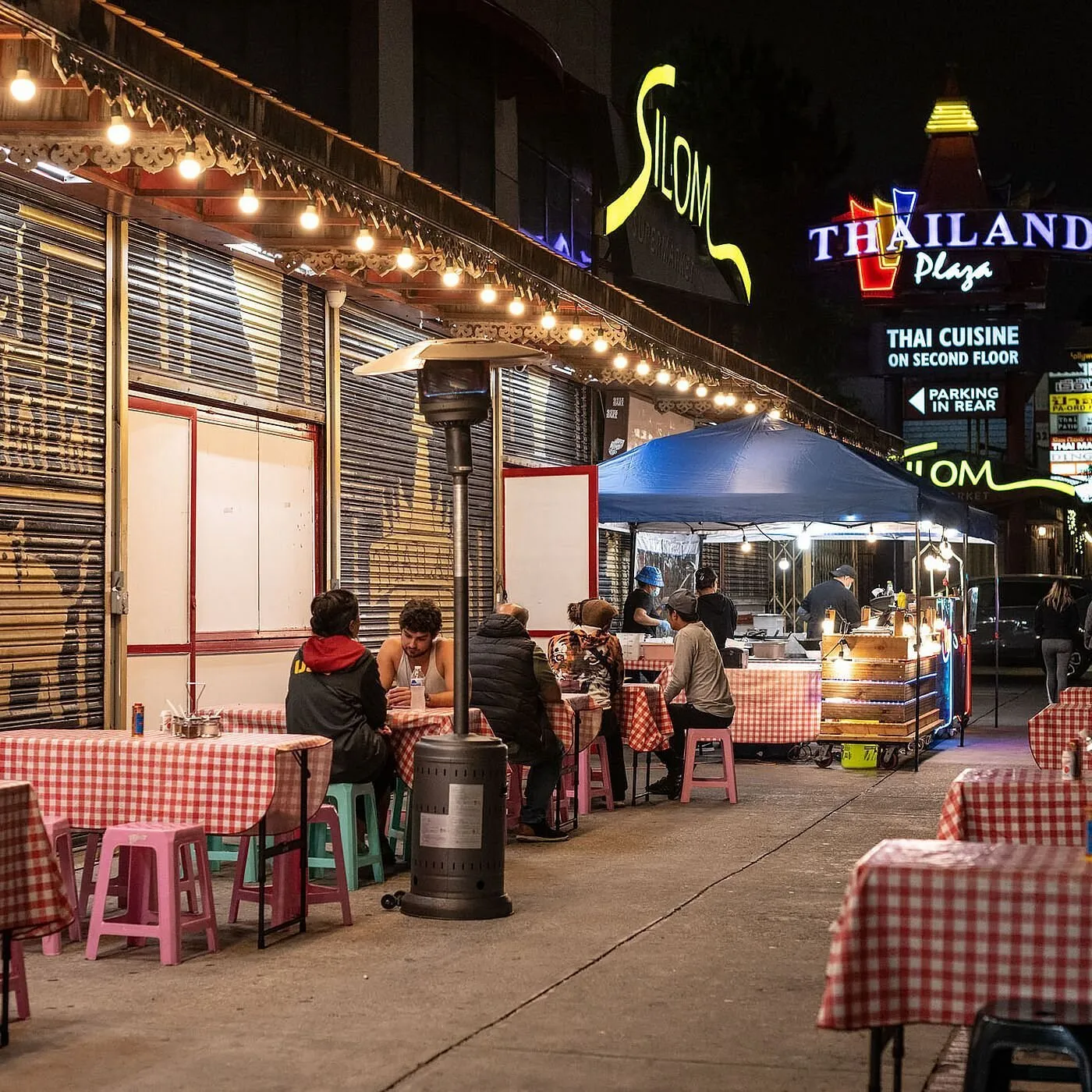
One of the interesting things about Thai Town is that a lot of its cultural presence comes from ordinary daily life rather than major tourist attractions.
There are murals depicting Thai traditions and mythology near the entrances to the neighborhood. Small boutiques sell Thai silk garments, dance costumes, and ceremonial pieces. Markets stock ingredients that are difficult to find elsewhere in the city. Dessert shops specialize in traditional sweets made with imported coconut products and recipes familiar to many Thai families.
Places like Thai Town Marketplace were developed as a public market and small-business incubator intended to support immigrant entrepreneurs and expand access to Thai food, products, and community space in East Hollywood. It brings together Thai groceries, small food vendors, and locally owned businesses in a setting that feels more neighborhood-oriented than tourist-oriented.
And then there’s the food itself, which has become one of the strongest cultural bridges between Thai communities and the wider Los Angeles public.
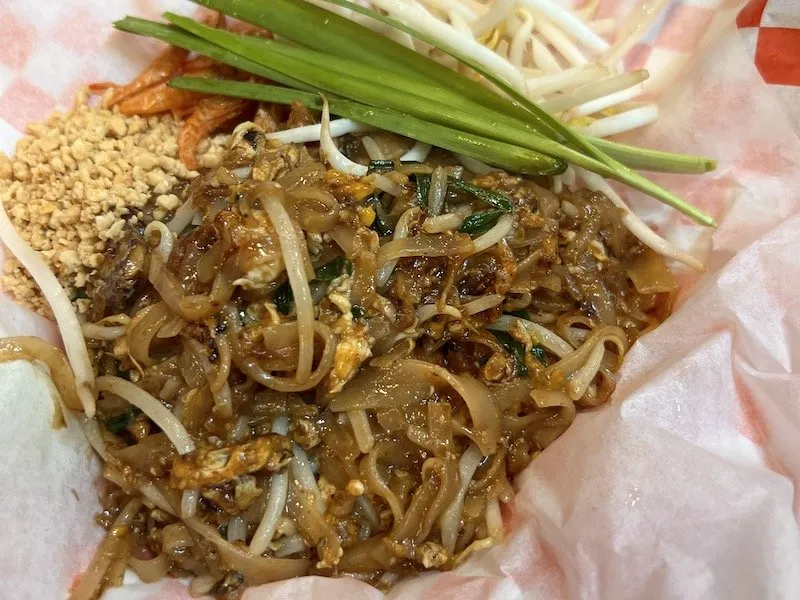
Over the years, Thai Town helped introduce many Americans to regional Thai dishes beyond the versions that had long dominated Western perceptions of Thai food. Southern curries, boat noodles, papaya salad, Northern Thai dishes, and late-night street food culture all became part of the neighborhood’s identity.
A different way to experience Thai culture abroad
Source: Fiona Chandra
What makes Thai Town interesting is not that it perfectly recreates Thailand. It doesn’t.
Instead, it reflects how cultural identity changes and adapts when communities build lives abroad. Traditions are preserved, but they also evolve through immigration, generational shifts, and everyday American life around them.
That’s part of why neighborhoods like Thai Town matter. They become spaces where people maintain connections to language, religion, food, art, and memory while also introducing those things to entirely new audiences.
For travelers visiting Los Angeles, Thai Town offers a very different perspective on Thai culture outside Thailand itself. Not as a performance or exhibition, but as something people continue living day to day.
And in many ways, that’s what has allowed the neighborhood to last. It functions as a real community shaped by the people who continue to live, work, cook, celebrate, and build their lives there.

 Paul Rujopakarn
  Thailand NOW