

Sitting on Thailand’s southern border, Yala is a charming cultural and culinary melting pot of Malay, Chinese, and Thai influences. Yet despite its obvious attractions, it has long been a hidden gem waiting to be discovered.
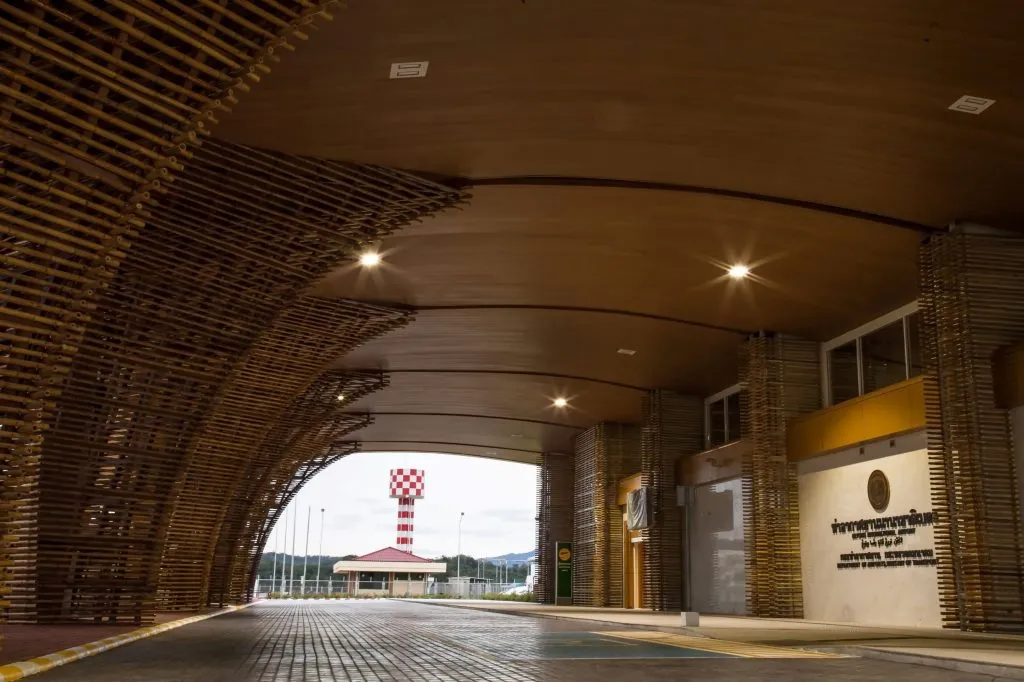
Betong Airport, set to open later this year, will no doubt make trips easier but even without it, people are beginning to visit this city.
“I’m surprised to see more visitors,” says Kumpee Phongphanit, a 41-year-old businessman and Yala native who returned home about 10 years ago to take over the family business and start one of his own, over breakfast at a local halal shop in front of the main fresh market. The table is groaning under heavyweight signature dishes from beef satay to roti and nasi dagang.
Adjacent to this unpretentious Muslim food shop is a newly established cafe, decorated in a fashionable loft style with lots of metal and glass.
In metropolitan cities like Bangkok, Chiang Mai, or Phuket, it’s common to see a uniformed barista making cappuccino in a chic cafe next to an ordinary chicken rice shop. Not so in Yala, a town that has long been stuck in a time capsule.
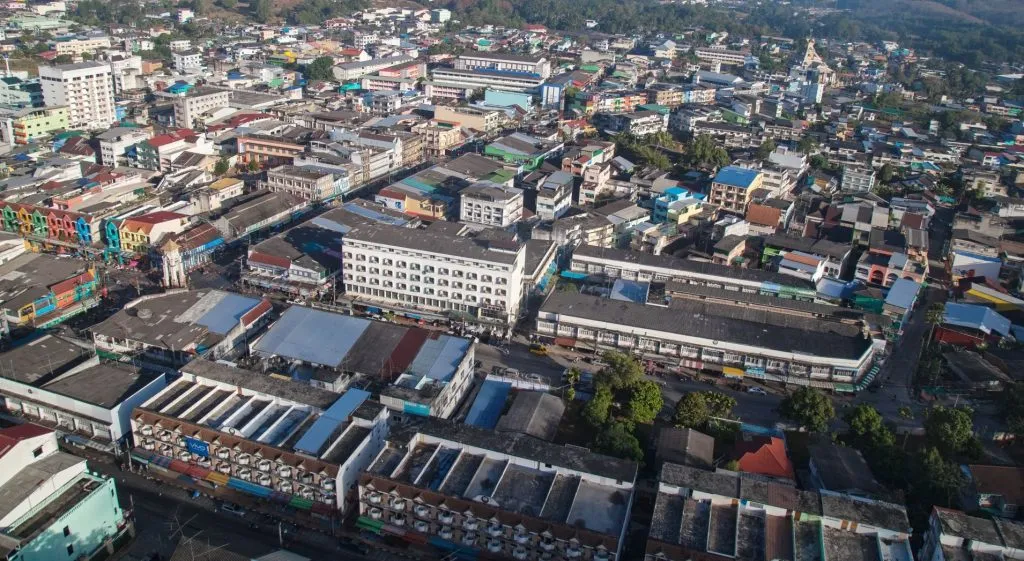
That is all changing. Today stylish cafes, chic restaurants, and boutique hotels rub shoulders with traditional shophouses, many painted in bright hues, on the main roads, and in small alleys. Indeed, the city is more colorful and its residents more relaxed that just a few years ago, though eyebrows are still occasionally raised when strangers walk into neighborhoods off the beaten track.
For almost two decades, Yala remained static with little in the way of property development. It wasn’t until 2016, that it started to re-emerge as a town rich in culture and nature and home to a bird contest that saw it branded Yala Bird City.
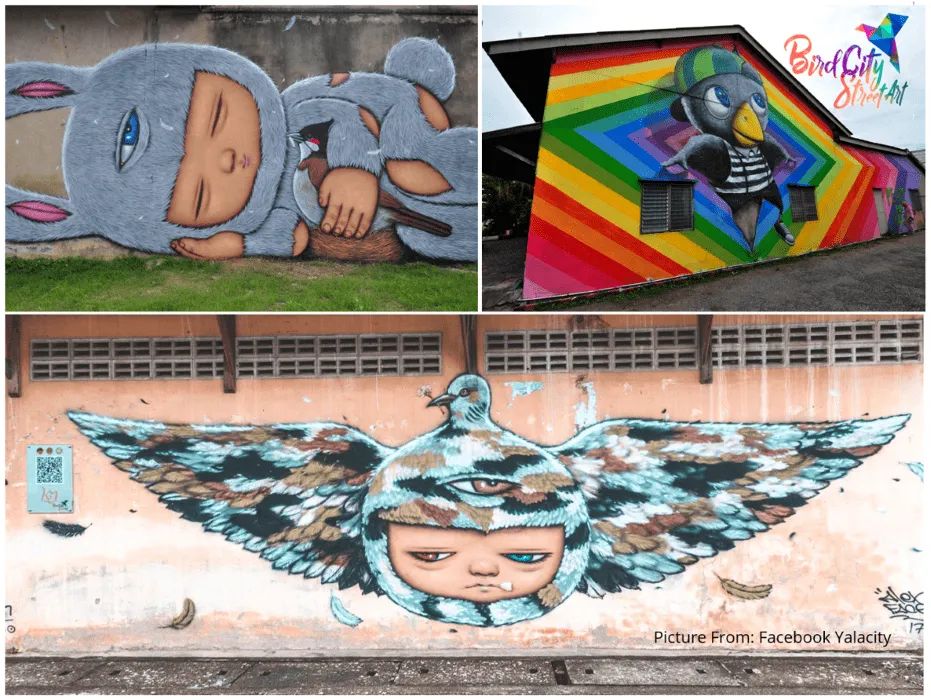
In 2018, a group of young and emerging businesspeople who wanted to continue these positive changes and draw more tourists to their hometown launched “Yala Bird City Street Art”. Renowned street artists including Alex Face, October 29, and BigDel were invited to turn the walls in an old community on Nuansakul Road into their canvas. The graffiti was meant not just to add more color to this old neighborhood, but also to give outsiders a new perspective of Yala.
Yala has long been known for its unique city planning and is laid out in three layers centered on a circular park. Covering just 19 square kilometers, the city’s 400 streets crisscross each other just like a spider’s web. Zoning has been meticulously designed, separating educational institutions, government offices, commercial districts, residential areas, and green spaces from each other, making it easy to maintain and develop the city.
“We’ve always been relaxed. We’ve heard and seen all the ‘situations’ since we were young. People just lived with it and took care not to be in a risk area,” said Kumpee, referring to the violence that has dogged Thailand’s three southernmost provinces for decades. The Southern region has been plagued by a distorted image of violence, ironically making it a much more peaceful region as fewer tourists choose to spend time in this hidden gem. This is a prime example of how important it is not to pre-judge by reputation but rather by direct experience.
Certainly, the people are more relaxed, and the city is much more colorful and modern than in the past. It’s common to see a cafe serving Italian-style coffee next to a traditional breakfast shop where an elderly man in a sarong is preparing roti and a woman wearing a hijab is mixing khao yam (steamed rice with mix sliced vegetables topped with budu sauce) for their customers who come from all walks of life.

While visitors to this part of the country should take time out to spend some time in peaceful Betong district and the untouched Bala-Hala Wildlife Sanctuary, they will also be delighted by the choice of food. For those who want to get even closer to nature may want to check out Ai Yerweng Skywalk in Betong. The newly-built 61-meter path sits on a peak 100 meters above the ground and will make visitors enjoy the sea of mist above the Ai Yerweng Lake.
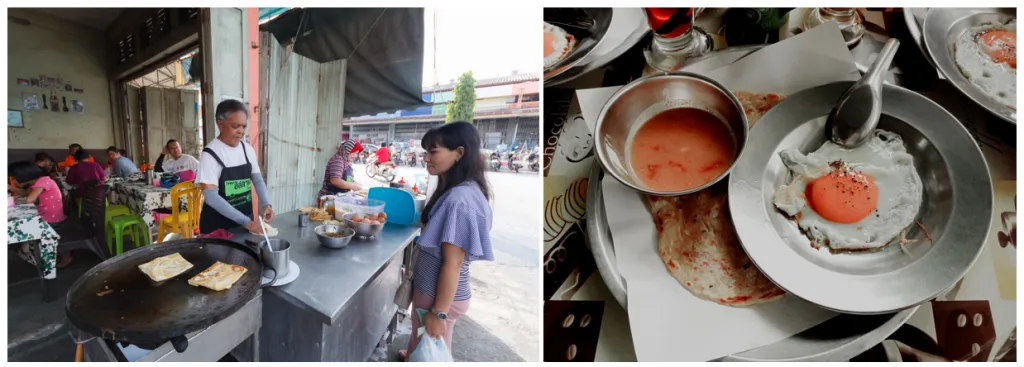
In Yala, you can dine on authentic khao yam, roti and Ceylon tea, biriyani mutton rice, and coconut ice cream at a simple, non-air-conditioned eatery, or go upmarket with snacks and cappuccino or cafe latte at the cozy The House Cafe & Life. The all-white Anna’s Breakfast offers authentic Muslim food in a relaxed ambience while Kirikhet Cafe & Resort has a huge variety of coffees to go with its a la carte menu. Other great options include Salam Coffee and Feel Design, and the less adventurous can even find comfort in coffee chains like Cafe Amazon. And like the range of cuisine, the mix of architecture between traditional shophouses from half a century ago and modern structures makes Yala an interesting city of contrasts.
One of these modern structures is a serviced apartment-cum-hotel owned by Kumpee tucked away in a Muslim community. The hotel is fully booked most of the time and recently welcomed a group of his friends who made a road trip to Yala.
Kumpee is delighted at Yala’s rebirth, pointing out that more modern accommodations and trendy cafes will attract tourists.
Wanwarang Ninkasorn, who opened Oxy Cafe in January, agrees, pointing out that Yala is a university town and young people want to hang out in chic cafes and restaurants.
Tucked away in a residential area, her cafe-cum-restaurant is a loft-style steel structure with a small garden, and since reopening after the COVID-19 lockdown has been serving up some 300 coffees a day. Students come to work at Oxy during the day, while families and local workers dine here in the evenings. The Lampang native who moved to Yala in 1999 is no stranger to the South and ran a successful bubble tea shop and pork BBQ buffet restaurant before opening her chic cafe.
Wanwarang, too, is hoping that her adopted town will attract tourists, but in the meantime, she’s confident the local businesses will be enjoyed by local residents and those from neighboring provinces.

 Teerin Julsawad
  Thailand NOW